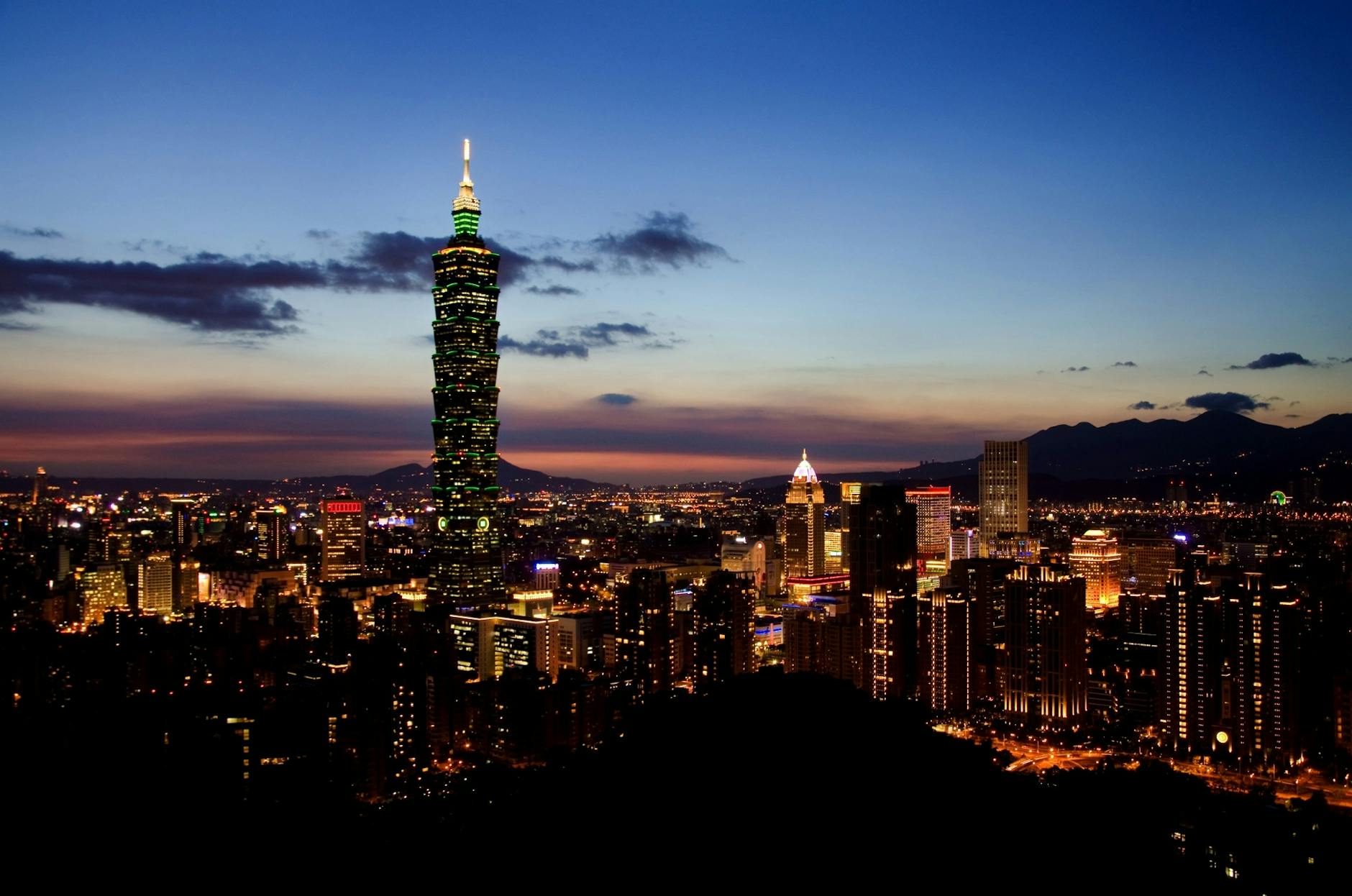
The qualifiers for the 2026 World Baseball Classic are about to begin, with one starting in Taiwan on Feb. 21 (although the first game will technically be Feb. 20 in North America) and another next month in Arizona.
The qualifiers this time around are a bit smaller than previously. While in past WBCs there were two pools of six or four pools of four, this time there will just be two pools of two. The four teams in each qualifying pool will play three games (one against each other opponent), with the top team at the end of the round robin automatically qualifying for the final tournament. The second and third place teams, meanwhile, will play a play-in game for the other spot in the final tournament. It’s unclear why it’s smaller this year, but it likely has to do with a mix of cost and the fact that the previous tournaments at times had some teams that were such long-shots (Pakistan went 0-4 and was outscored 4-43 in its qualifying history, for example) that perhaps organizers decided to just keep it a bit smaller this time around.
The first qualifier, as mentioned, is in Taipei, Taiwan. Go below the jump for more.
About the Venue: The Taipei Dome is among the premiere sporting venues in Taiwan, a covered stadium holding up to 40,000 for sporting events and more for concerts. The dome doesn’t have a permanent baseball tenant, instead used for special events like season openers and the like. The field has a symmetrical set-up, with 400 feet to center and 335 down the lines.
About the Pool: All four of these teams have made at least one WBC in the past, but Chinese Taipei is definitely the belle of this ball and the only team of the four to get to the second round of the main tournament (in 2013). Holding home field and coming off a title in the Premier12 tournament (the highest-caliber non-MLB international tournament and the successor to the old international baseball World Cup), they’ll be the team to beat and almost certainly will grab one of the qualifying spots. Nicaragua and Spain are the other two major contenders for a ticket to the main tournament, while South Africa will need to pull off an upset or two.
CHINESE TAIPEI:
About the country: In the late 1940s, after decades of Civil War (interrupted only for WWII), the Communists drove the Republic of China off the mainland, forcing them to flee to the island of Taiwan. Since then, the two Chinas have nervously eyed each other across the Strait of Taiwan, a dangerous flashpoint left over from the Cold War that has grown ever more intense in recent years as Chinese President Xi Jinping has pursued increasingly aggressive policies. Despite this, the two are incredibly reliant on each other, particularly in high-tech industries such as semiconductor manufacturing. The unique political situation that exists means Taiwan is usually represented internationally under the name “Chinese Taipei”, including in sports competitions like the WBC.
Baseball history: Baseball first came to Taiwan through the the Japanese, who occupied the island until the end of WWII. Its popularity came because it provided the island’s natives one of the few ways of beating their colonial occupiers. It also provided a rare ability to play alongside them as well- a team made up of Chinese, Japanese, and members of the island’s aboriginal communities once worked together and qualified for Japan’s famed Koshien tournament for high school teams, finishing second.
Baseball has remained a vital part of Taiwan’s heritage since the end of Japanese occupation and the exile of the Republic of China to the island, and the success of their Little League World Series teams are so respected that they have at times been depicted on their money. However, baseball has also been the subject of several horrible cheating or match-throwing scandals, which have at times threatened the sport’s place there.
Why they’re here: Team Chinese Taipei had some bad luck in the 2023 WBC, going 2-2 in the Taichung region but technically finishing last in a five-team pileup due to tiebreakers. As the fifth-place team, they got knocked back into qualifiers.
International baseball history: When it comes to international competition, the most famous teams from Taiwan are undoubtedly the teams that have represented the island in the Little League World Series, where they have won 17 times- the most of anyone besides the USA and the most of anyone period if you divide the USA teams into their home states. However, some of those victories infamously were not entirely on the up-and-up, as many of the teams sent were not representatives of any individual Little League, but rather the entire island! Perhaps not surprisingly, the Taiwanese have had less success since the rules started being better enforced, and they haven’t won a title since 1996, although a squad from there finished second in 2024.
As far as the actual national team, Taiwan was long in third place in adult competition among Asian countries, often struggling to defeat Japan and Korea. However, they were not without success: they have won five Asian championships, an Asian Games gold, as well as silvers in the 1992 Olympics and 1984 World Cup. In the WBC, their best finish has been eighth, in 2013.
However, the Chinese Taipei team finally broke through in a big way in 2024 Premier12 tournament. A tournament that is generally considered the highest-caliber regularly-scheduled tournament outside of the WBC, the team upset Japan in the Tokyo Dome to earn Chinese Taipei its first major tournament title at the senior level. The win, combined with success at the youth level, has propelled it to #2 in the WBSC world rankings.
Baseball league: The Chinese Professional Baseball League, or CPBL, was formed in 1990. At its height, it had seven teams, but a decline in popularity after gambling and cheating scandals decreased the league to just four. The CPBL has since recovered somewhat, however, and now consists of six teams.
The level of play for the CPBL is generally regarded as below that of Japan’s NPB and Korea’s KBO, probably somewhere in the A-Ball levels if we used a North American minor league hierarchy as comparison.
MLB players: Major League Baseball has seen 17 players from Taiwan make rosters in history, the most notable being one-time Yankees ace Chien-Ming Wang. A few MLB-experienced players are on the roster here, most notably Yu Chang. A veteran of 235 games across five seasons in the bigs with a variety of teams, the infielder returned home last season. He was one of the stars of the 2023 WBC, hitting .438 with two home runs and eight RBI, earning a place on the All-WBC team despite not advancing past the first round. Middle infielder Tzu-Wei Lin, who saw time in the bigs with Boston and Minnesota, is also on the team.
Notable names: One of the most notable names for Taiwan is actually someone who won’t be there: Lyle Lin. A Taiwanese catcher who moved to the USA in high school before becoming an All-Pac 12 star for Arizona State, he’s bounced around the minors for a few years. After starring at the Premier12 last year, he was expected back for the qualifiers… only to be signed by the Athletics and receive an invite to Major League camp, forcing him to pull out as he pursues a chance at the big leagues.
Highest achievers: The unquestionable star of Chinese Taipei is Chieh Hsien Chen. In nine seasons in the CPBL, the middle infielder and outfielder has slashed a remarkable .343/.419/.448. After hitting .625 with two home runs and six RBIs in the Premier12, he got interesting from several MLB and NPB teams, but it was too late for him to be posted or traded. Left-handed outfielder Tzu Hao Chen is the highest-paid player in CPBL history and was third in OPS in the league last year- and tops among players with no MLB experience.
Other notables include Yun Wen Chen (also romanized as Chen Yun-Wen), the all-time CPBL leader in saves, with 154. Infielder Nien Ting Wu started his career in Japan before returning to Taiwan.
Ones to watch: On the mound, young right-handed pitcher Jo Hsi Hsu will be one of the team’s most important starters. The 24-year-old was an impressive 7-4 with a 2.47 ERA in the CPBL last season. Others to keep an eye on include pitchers Po-Yu Chen (4.03 ERA for Pittsburgh’s AA affiliate last year), Wei-En Lin (a teenager signed by the Athletics who has yet to make a professional debut), and Chen Zhong-Ao Zhuang (another Athletics prospect). The Reds’ Sheng-En Lin, a 19-year-old utilityman and two-way player who has yet to go above rookie ball, adds further youth.
Manager/coaching staff: Manager Hao-Jiu Tseng (also romanized as Hao-Ju Tseng and Hao Chu Tseng) played 10 years in the CPBL before going into coaching and managing. Among his accomplishments include managing last year’s Premier12 champions as well as two appearances in the Taiwan Series as skipper of the Rakuten Monkeys. He was also the hitting coach for Chinese Taipei in the 2023 WBC. His coaching staff is made up of a variety of other Taiwanese baseball lifers, although none that will likely stand out to western audiences (reports that Chien-Ming Wang would be pitching coach appear to have been false). Perhaps the most notable is Cheng Min Peng, a five-time CPBL batting champ who finished his 19-year career with an absurd .333 batting average.
Outlook: Taipei has the best chance of getting out of this, with the home crowd with them and the best . It feels almost impossible that they won’t get through in some way and they likely will go 3-0 in the qualifier, but if they get upset and fall to the 2 vs. 3 play-in game it’s possible they could be shockingly excluded from the main tourney.
NICARAGUA
About the country: A diverse country that gained independence from Spain in 1821, Nicaragua has had an often complex and violent history, bouncing between the left and right wings of politics, between democracy and authoritarianism, and between wealth and poverty. It also has a lot of lakes and several volcanoes, which became a problem when Nicaragua tried to get the United States to dig a canal between the Atlantic and Pacific… only for fears of volcanism to lead the USA to instead built it in Panama. The capital of Nicaragua is Managua
Baseball history: Originally introduced in the 1880s by American businessmen, it became further entrenched when American soldiers played it during the occupation of the country in the early 20th century. While baseball’s popularity has gone up and down over the years, it remains the most popular sport in the country, particularly in areas like Managua.
Why they’re here: Nicaragua finished last in Pool D of the 2023 WBC, sending them back to qualifying rounds this time around.
International baseball history: Generally regarded (alongside Panama) as one of the best baseball programs in Central America, Nicaragua has seen some success in international competition, including two appearances in the Olympics, five second-place finishes in the old IBAF World Cup, and two silver medals at the Pan-American Games. They’ve struggled in the WBC, however, not even making the tournament until the 2023 installment. Nicaragua is currently 16th in the WBSC World Rankings.
Baseball league: The Nicaraguan Professional Baseball League has existed in its current form since 2004, although there were earlier professional leagues as well. Made up of five teams, it earned an invitation to the Caribbean Series in 2024 but wasn’t invited back for 2025.
MLB players: Nicaragua has sent 16 players to the big leagues, the biggest by far being Dennis Martinez. One Nicaraguan with MLB experience is on this year’s WBC qualifier team: pitcher JC Ramirez. Former MLB third baseman Cheslor Cuthbert was also set to take part, but had to pull out due to injury.
Notable names: There aren’t many notable names on the Nicaraguan team outside of Ramirez.
Highest achievers: Besides Ramirez, infielder Freddy Zamora is likely the most accomplished player for Nicaragua. Born in Nicaragua but raised in Miami, the defense-first infielder has reached as high as AAA. Pitcher Leo Crawford has also reached AAA but has spent most of the last several years abroad and in indy ball. Fellow pitcher Ronald Medrano has also done well in Caribbean leagues and the summer Mexican League.
Ones to watch: Young outfielder Elian Rayo is a prospect in the lower part of the Giants organization. While he hasn’t done well in affiliated ball so far, he hit two home runs during the U23 World Cup.
Manager/coaching staff: Sandor Guido, who has managed in Nicaragua and skippered the team at the 2023 WBC, returns to manage this year’s qualifier squad.
Outlook: While not as strong as they could be, they are still likely mildly the second-best team in the pool. However, unless if they pull an upset against Taipei, they’ll need to win the second/third place game for a shot at the main tournament, and in one game anything can happen.
SOUTH AFRICA
About the country: The largest economy in Africa and the home of a multi-ethnic society that has emerged in the decades after the end of Apartheid, the Republic of South Africa has eleven official languages and three capitals (one for each branch of the government). Due to the fact that some of the oldest hominid fossils on record have been found in South Africa, it has sometimes been dubbed the “cradle of humankind.”
Baseball history: Americans brought baseball to South Africa in the final years of the 19th century, when some miners looking for gold brought their favorite game to South Africa’s shores. Although there was some early success, including a small league, it has always remained an extremely niche sport, played on the local level but never being able to get much attention in a land obsessed with rugby, soccer and cricket. Some success was had (in 1966, for example, a South African was invited to Spring Training by the Minnesota Twins), and some tours were done by American amateurs. South African teams even began to play against European competition in the sixties. However, any progress South African baseball had made internationally was brought to a screeching halt when the nation was all-but-exiled by the international community beginning in the seventies over its shameful Apartheid policies. After the end of Apartheid, South Africa reemerged onto the international baseball stage, participating in the 2000 Olympics and the first two WBCs.
Why they’re here: The South Africans have been unable to qualify for the WBC ever since qualifying rounds were introduced ahead of the 2013 tournament- in the 2023 cycle, they went 0-2 in their qualifying pool.
International baseball history: Although the big fish of baseball competition in Africa, the South Africans have long struggled against nations outside of the continent. They won just one game in the 2000 Olympics, went winless in their two appearances in the main WBC tournament, and have gone 3-6 in qualifying tournaments since, their best finish coming as a runner-up to Australia in a 2017 qualifier. They are currently 31st in the WBSC world rankings.
Baseball league: There is no South African “league”, but instead many local leagues (covering certain areas or cities), all of which are under the national umbrella of the South African Baseball Union, which runs national championships among top local clubs.
MLB players: Only two players from South Africa have made big league rosters- infielder Gift Ngoepe and relief pitcher Tayler Scott. Neither are on the team, as Ngoepe has retired (he’s now a manager in the Diamondbacks organization) and Scott (now a member of the Astros) is working his way back from a thoracic spine strain that ended his season last year and likely wouldn’t have been able to play anyway unless the Astros gave him permission.
Notable names: While Gift Ngoepe isn’t on the team, his brother Tlou Victor Ngoepe is. The middle infielder never got above A-ball. He’s not the only brother on the team: Anthony Phillips and Jonathan Phillips both are playing. Anthony reached as high as AAA, while Jonathan also had a brief affiliated career. Their father, Alan, played in the 2000 Olympics, making them something of the first family of South African baseball.
Highest achievers: The player on Team South Africa who has accomplished the most is doubtless Dylan Unsworth. The right-handed starting pitcher went 58-56 with a 4.17 ERA in 773.1 career minor league games, reaching as high as AAA and at one point being selected to the Futures Game. While he never broke into the big leagues, he’s since played in high-level foreign leagues in Taiwan, Mexico, Venezuela, and Australia. Unsworth is expected to be the starting pitcher for South Africa in their opening game against Nicaragua. Another player with a long history in fairly well-regarded leagues is Justin Erasmus, a South African-Australian who pitched over a decade down under after his affiliated career ended.
Ones to watch: Three members of the squad played recently in the Under-23 Baseball World Cup for South Africa and represent the next generation for the team as players like the Ngoepes and Phillips age out. Joshua Tribe (born in Australia) is a pitcher at Junior College power Crowder College. Catcher Luke November has previously played NAIA ball in the USA. Finally, his brother (I presume) Josh November went 6-for-20 with seven walks during the U23s.
Manager/coaching staff: Manager Neil Adonis has been involved with South African baseball for decades, playing for the team in the 2000 Olympics and serving as a coach or manager in various forms since 2005, including at some past WBCs and WBC qualifiers. Former big league pitcher Erick Threets (an American) is one of the team’s pitching coaches.
Outlook: Not great, but not impossible. They’ll need to win at least one game and probably two where they won’t be favored, and will also likely find themselves in a 2/3 play-in game.
SPAIN
About the country: Spain isn’t exactly a country that needs any introduction. The largest nation on the Iberian Peninsula, Spain once was a global empire, spreading its influence throughout the world, but especially in the Caribbean. Although it lost what little was left of its imperial might after losing the Spanish-American War, to this day Spain remains one of the world’s largest economies and cultural centers. The capital of Spain is Madrid.
Baseball history: Spain’s original interactions with baseball were less than positive. After all, the Cubans who were trying to win independence from the Spanish were becoming increasingly enamored with the game, instead of such traditional Spanish sports such as bull-fighting. In fact, they even tried to ban the game, which of course only made the Cubans want to play it even more, simply to stick it to their Spanish overlords. Ironically, it would be the Cubans who would bring baseball back to Iberia, as immigrants from Cuba brought the sport back to the mother country. The country’s many soccer clubs took notice and began to field baseball teams. A article on Spanish baseball over at “Mop-Up Duty” even has a picture of a uniform used by a baseball team run by Real Madrid. However, by the 1970s the wide availability of soccer on TV doomed baseball to obscurity in Spain, with the relative exception of certain areas such as the Barcelona suburb of Viladecans, which hosted some of the baseball tournament at the 1992 Olympics.
Why they’re here: The Spanish qualified for the 2013 WBC, but finished last in their pool- and they’ve failed to get out of qualifiers in the two tournaments since, finishing third (with the top two qualifying) in their campaign in the 2023 cycle.
International baseball history: Spain has often been in the second-tier of European baseball, behind perennial powers like the Netherlands and Italy. Much of their success stems from their ability to take advantage of some of international baseball’s lax citizenship eligibility laws, which allow them to stock their team with Caribbean players who either have relatively recent Spanish ancestry or who have moved to Spain for a time. This has allowed them to continue to make appearances in major tournaments even as Spanish baseball had declined in popularity among Spaniards since the mid-20th century, and even allowed them to win some titles like the 2023 European Championship.
Baseball league: Spain’s top baseball competition is the Spanish Baseball League, formerly known as the Division De Honor, which Callum Hughson over at “Mop-Up Duty” once estimated as being about the level of good DII NCAA teams, mainly because the pitching is lacking.
MLB players: Four MLB players in history were born in Spain, but all of them moved away when they were young. However, thanks to the aforementioned lax citizenship eligibility laws, the team will have several players with MLB experience who either are of relatively recent Spanish descent or who have resided in Spain. They include outfielder Engel Beltre, as well as pitchers Vicente Campos, Rhiner Cruz, and Ramon Rosso. It’s unclear if Luis Guillorme, who was recently signed to a contract by the Astros organization, will take part. If he does, he’ll be by far the most MLB-experienced player on the team.
Notable names: Not notable for the name, per se, so much as where he’s from: relief pitcher Jorge Balboa is the only player on the roster who is actually born and raised in Spain.
Highest achievers: Aside from the players with MLB experience, some of the players in higher leagues include pitchers Elian Leyva (a Cuban national who has played in Mexico, Taiwan, and reached AAA with the Atlanta organization), Yoanner Negrin (another Cuban, he reached AAA with the Cubs and has played in Mexico for the past few years), Orlando Rodriguez (has had short stints in Mexico and done well in winter ball in Puerto Rico); catcher Gabriel Lino (who has done well in Mexico in recent years and once reached AAA in the Phillies organization), and outfielder Felix Stevens (who has reached AA in the Cubs organization).
Ones to watch: Friend of the Continuum Michael Clair, in his preview of this round, suggests keeping an eye on infielder Wander Encarnacion, who has torn it up in Spain and Italy and starred for Spain in their
Manager/coaching staff: Longtime minor league manager Nelson Prada returns to the dugout for Spain- he’s previously managed them in the 2023 WBC cycle as well as some installments of the European Championships. Bench coach Nestor Perez played in the minors before moving to Spain to play there, and has become a staple of Spanish teams and coaching staffs since. The most notable name, however, is former Orioles great Adam Jones, the team’s hitting coach. The beloved outfielder has spent a lot of time in Spain since his retirement and is looking to help them out on the world stage.
Outlook: Spain likely can get into the 2/3 play-in game, and once that happens… anything can happen.
PREDICTIONS: Taipei is first and South Africa is likely last, so the big fight will likely be for the second spot in the tournament. The showdown will likely come down to Nicaragua and Spain. I might give Nicaragua a slight edge, but it’s close due to Spain’s “passport players.”
- Chinese Taipei
- Nicaragua
- Spain
- South Africa
 The Baseball Continuum