Here’s the preview for Pool D of the World Baseball Classic…
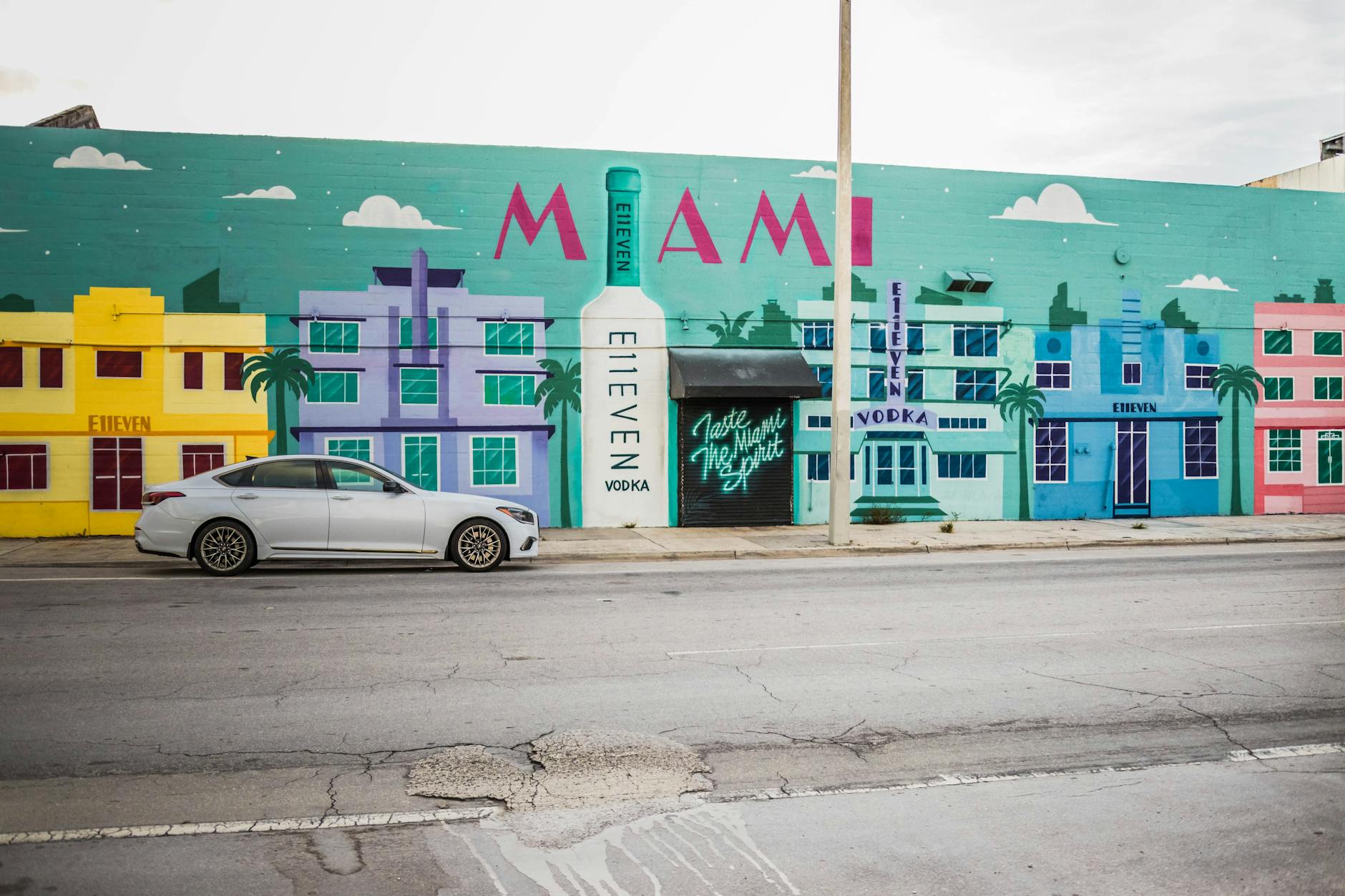
About the Venue: LoanDepot Park will be hosting games in every round this WBC, including the final for the second straight tournament. This is largely because the 36.7K-seat stadium was hopping throughout the last WBC, as Miami’s international population and world-renowned status led to some of the biggest and craziest crowds of the tournament.
About the Pool: The Dominican and Venezuela are the stars of this group, but the Netherlands should also impress, Israel has some notable players, and Nicaragua has also returned.
Go below the jump for the full preview.
Dominican Republic
About The Country: Taking up the eastern half of the island of Hispaniola (the rest of the island is Haiti), the Dominican Republic was visited by Christopher Columbus during his 1492 voyages, and its capitol of Santo Domingo is the oldest permanent western settlement in the Americas. Having gained independence in the 19th century and moved towards democracy during the 20th, it became fully democratic during the second half of the century. Although problems with corruption and poverty continue to plague the nation, the Dominican now has the largest economy in the Caribbean and has been one of the fastest growing economies of the last few decades.
Baseball History: The Dominican Republic’s great passion was introduced to it by Cubans in the 1890s fleeing their civil war. The rest is history, as the Dominican slowly but surely grew into the hotbed it is today. Baseball may be a pastime elsewhere, but in areas of the Dominican it is a way of life, with entire towns staking their futures on their top players.
International Baseball History: The Dominican is currently ranked 12th in the WBSC rankings. Their most notable tournament finishes are their first-place victory in the 2013 Classic, but they also won one installment of the old World Cup and had a bronze medal in the Tokyo Olympics.
Road to the WBC: Automatically qualified.
The DR’s Baseball League: There are two Dominican leagues of note: the Dominican Winter League and the Dominican Summer League. The winter league is the primary league and the one that connects to the Caribbean Series, while the summer league is for teams run by MLB organizations as a rookie league.
Dominican MLB Players: At least 936 players born in the Dominican have played in MLB-recognized leagues, and still more such as Manny Machado, Manny Ramirez, and Alex Rodriguez were born in the United States (or, in the case of Vladimir Guerrero Jr., Canada) but raised in the Dominican. Almost the entirety of this year’s team is on an MLB roster, and even those who don’t have MLB experience.
Notable names: Vladimir Guerrero Jr.! Manny Machado! Juan Soto! Ketel Marte! Julio Rodriguez! Fernando Tatis Jr.! The list goes on, and only a late injury took Jeremy Pena out of it. Aside from Team USA, this is the most famous and star-studded of all the rosters, at least as far as MLB players. One worry, though, is that the pitching isn’t as deep as, say, Team USA, although they still have guys like Sandy Alcantra, Luis Severino, Camilo Doval, Cristopher Sanchez, and Gregory Soto.
Highest Achievers: The two players who are not on an MLB roster still aren’t strangers to the big leagues. Junior Lake now plays in Mexico, but he still played parts of four seasons in the big leagues last decade. Relief pitcher Albert Abreu is currently in Japan, but has 108 MLB games under his belt.
Ones to Watch: There are no major prospects on Team DR, mainly because it’s just so deep, but Junior Caminero is still just 22, despite already being an All-Star.
Manager/Coaching Staff: The manager of Team DR is the one and only Albert Pujols. The future Hall-of-Famer has been managing in the Dominican winter league, winning a league title and the Caribbean Series in the 2024-25 season. Other members of the coaching staff include Placido Polanco, Jolio Borbon, Placido Polanco, and Fernando Tatis Sr.
Outlook: Rightfully one of the “Big Three” with USA and Japan, anything less than a semifinal appearance will be a disappointment and they must be considered one of the major favorites to win the whole thing.
Venezuela
About The Country: Venezuela was one of the first South American countries to become independent from Spain, and Venezuelans take great pride in the fact that South American freedom fighter Simon Bolivar came from there. More recent decades, however, have been tumultuous, as the country has seen economic hardship (despite sitting atop some of the most mineral-rich land in the Americas), political chaos, deteriorating human rights, rising crime, and a huge influx of refugees fleeing the country. Venezuela has been in the news a lot recently due to an American military operation that captured its president, Nicolas Maduro.
Baseball History: Baseball came to Venezuela in the late 19th century, introduced by Venezuelan students who had been studying abroad as well as workers from America and Caribbean nations where the game was already popular. Its popularity has been growing ever since, and is now a staple of the country’s culture and a source of great national pride even during difficult times.
International Baseball History: Currently ranked sixth in the WBSC rankings, Team Venezuela has had a third-place finish in the WBC (2009), three golds in the old World Cup (albeit back in the 40s), and a gold in the Pan-Am Games.
Road to the WBC: Automatically qualified.
Venezuela’s Baseball League: Venezuela’s winter league has existed in one form or another since the 1940s, and like most of the other winter leagues in the region has its champion go to the Caribbean Series. There used to be an MLB-affiliated summer league similar to the one in the Dominican, but the economic downturn and concerns about safety led to it being discontinued.
Venezuelan MLB Players: At least 500 Venezuelan players have made the big leagues.
Notable names: Many of the current squad are on big league rosters, including Ronald Acuna Jr., Luis Arraez, Jackson Chourio, Ranger Suarez, Eugenio Suarez, William Contreras, Wilson Contreras, and of course the Venezuelan catching icon, Salvador Perez.
Highest Achievers: Outside of the MLB players, former big-leaguer Andres Machado has done well as a reliever in Japan the last two seasons, while another former MLB pitcher, Ricardo Sanchez, has been active in Korea and Mexico.
Ones to Watch: There are four minor-leaguers on the Venezuelan squad, but only two can really be said to be young enough to be considered prospects, both 24-year-old pitchers: Anthony Molina of the Atlanta organization (who has seen some MLB action), and Christian Suarez from the Dodgers organization (who has reached as high as AA).
Manager/Coaching Staff: Omar Lopez, the bench coach of the Houston Astros, manages Team Venezuela. His coaching staff includes guys like Johan Santana, Miguel Cabrera, Gerardo Parra, and Robinson Chirinos.
Outlook: One of the “second tier” of championship contenders for the whole thing, the tough opening pool and a relative lack of depth compared to some of the inner-circle contenders like USA and DR could hinder the Venezuelans. However, in a short tournament, that may not matter.
The Kingdom of the Netherlands
About The Country: The Kingdom of the Netherlands is a union of several constituent countries that are all technically one sovereign state. Those countries are the Netherlands (AKA “Holland”) and the Caribbean islands of Sint Maarten, Aruba and Curacao.
While “The Netherlands” is usually used to stand simply for the European country and each country has different laws and traditions, the Caribbean countries are also technically part of the Netherlands, and it is not uncommon for Curacaoans, Arubans and St. Maarteners to represent the Netherlands in international sporting events, especially baseball, although there are occasionally independent Curacao or Aruba teams.
Baseball History: It’s hard to really say when baseball came to the Netherlands… mainly because, as mentioned above, “The Netherlands” is a very broad term.
First, let’s talk about the Netherlands itself. The Dutch were first introduced to baseball, at least seriously, by a Dutchman named J.C.G. Grasé, who had fallen in love with the game during a trip to America. It provided the Dutch a sport to play during the summer, when the soccer teams were off. In fact, for many decades the big Dutch soccer clubs also ran baseball teams, with some of their players being on both teams. According to Josh Chetwynd’s Baseball in Europe: A Country by Country History, some of Holland’s greatest footballers played baseball at least recreationally, including Johan Cruyff, who was in 1999 named Europe’s great soccer player of the 20th century. While the soccer clubs of Holland no longer sponsor baseball teams, the Hoodklasse of Dutch baseball remains in operation and the Dutch National team is one of the strongest in Europe.
The popularity of baseball in the Caribbean areas of the Netherlands is a bit harder to find information on, but likely has to do with their proximity to Venezuela and the United States, as well as some crossover with Dutch baseball. In the past few decades, the Antilles, especially Curacao, have become hotbeds of baseball activity, with Curacaoian Little League teams becoming a frequent sight in Williamsport.
International Baseball History: The Dutch are a mainstay of international competition, winning 25 European Championships, making four Olympics, finishing fourth twice at the WBC, and winning the 2011 World Cup. Like most Dutch national teams, they wear orange for the Netherlands’ royal House of Orange. They currently have a WBSC ranking of ninth.
Road to the WBC: Automatically qualified.
The Dutch Baseball League: The Honkbal Hoofdklasse, an eight-team league playing a 42-game schedule, is the main league in Holland. Games are generally played on weekends and until recently the league had a promotion-and-relegation style similar to European soccer.
The Caribbean nations also have leagues, most notably Curacao, which has at times played in the Caribbean Series.
Dutch MLB Players: A total of 11 people from Holland have played in MLB, while 17 from Curacao and six from Aruba have also played at least one MLB game. MLB players on this year’s roster include Ozzie Albies, Kenley Jansen, Xander Bogaerts, and Cedanne Rafaela. Jurickson Profar was going to be on the team, but had a PED suspension just minutes before their first exhibition game.
Notable names: Former big-leaguers on the squad include infielder Didi Gregorius (who is now playing in Mexico) and catcher Chadwick Tromp (who has played portions of six seasons in the bigs but currently is in the minors).
Highest Achievers: Shairon Martis had a fairly non-distinguished MLB career and hasn’t been in the big leagues since 2013, but he’ll always have the claim to fame of throwing a (mercy-rule shortened) no-hitter against Panama in 2026. Catcher Hendrik Clementina has never reached MLB but has been doing well in Mexico and other Caribbean leagues the last few seasons.
Ones to Watch: The most recognizable prospect is Andruw Jones‘s son, Druw Jones! The second overall pick from 2022, he hasn’t developed as well as Arizona has hoped due to injuries, but he still is a top defender and baserunner who could develop into a big league player. Right-handed pitcher Antwone Kelly is the No. 9 prospect for the Pirates and has reached as high as AA.
Manager/Coaching Staff: Andruw Jones is the manager of Team Netherlands. Another notable name on the coaching staff is former All-Star Jair Jurrjens.
Outlook: The Dutch will likely fight with the Dominican and Venezuela for the two tickets out of the pool, but aren’t as good as they once were and probably should be considered the third-best team in this group.
Nicaragua
About The Country: A diverse country that gained independence from Spain in 1821, Nicaragua has, like many nations, had an often complex and violent history, bouncing between the left and right wings of politics, between democracy and authoritarianism, and between wealth and poverty. It also has a lot of lakes and several volcanoes, which became a problem when Nicaragua tried to get the United States to dig a canal between the Atlantic and Pacific… only for fears of volcanism to lead the USA to instead built it in Panama.
Baseball History: Originally introduced in the 1880s by American businessmen, it became further entrenched when American soldiers played it during the occupation of the country in the early 20th century. While baseball’s popularity has waxed and waned over the years, it remains one of the most popular sports in the country.
International Baseball History: Nicaragua is a longtime participant in international baseball, taking part in two Olympics and 30 of the old World Cups- finishing second five times. However, they (somewhat controversially) weren’t invited to the earliest WBCs, and then they consistently failed in qualifying. As a result, 2023 was their first-ever WBC. They are currently ranked 16th in the latest WBSC world rankings.
Road to the WBC: After finishing last in their group in 2023, Nicaragua had to qualify — which they did by winning the Taipei qualifier last year.
Nicaragua’s Baseball League: The Nicaraguan Professional Baseball League has existed in its current form since 2004 and traces some roots back to the 1950s. Made up of five teams, it has occasionally played in the Caribbean Series by special invite.
Nicaraguan MLB Players: A total of 16 players born in Nicaragua have played in MLB. Carlos Rodriguez of the Brewers is the lone born-and-raised Nicaraguan on the roster who is also on an MLB roster right now, but Nicaraguan-American Mark Vientos will also be playing and pitcher Erasmo Ramirez has yet to retire and is still pursuing a contract.
Notable names: Former big-leaguers on the squad include Cheslor Cuthbert and J.C. Ramirez.
Highest Achievers: Infielder Jeter Downs, who had stints with Boston and Washington, has been in Japan the last two years. Brandon Leyton has been a star for Nicaragua in some recent international competitions.
Ones to Watch: Middle-infielder Freddy Zamora has reached as high as AAA for the Brewers. Pitcher Duque Hebbert is in the Detroit organization — he was signed after he impressed during the last WBC.
Manager/Coaching Staff: For some national baseball teams, it’s not a case of choosing a guy from your country, but instead finding somebody to help manage the program and give good guidance. And so, Nicaragua decided to instead hire Dusty Baker to manage Team Nicaragua. The future Hall-of-Famer and overall beloved manager hasn’t managed since his stint with the Astros, but he’s still got the bug for managing, at least for a few weeks. His coaching staff is an eclectic mix that includes Jacque Jones, Gary Pettis, Randall Simon, and Sandor Guido — who managed the 2023 Nicaragua squad.
Outlook: Nicaragua is likely the weakest team in this group, but not so bad that they have no chance to avoid getting relegated to qualifiers.
Israel
About The Country: Sitting ever perilously at the center of both international politics and the world’s three largest monotheistic religions, the current state of Israel came into existence in 1947. Despite its decades of tumultuous history, Israel is also a leader in science and technology.
Baseball History: Although some may joke that Israeli baseball began “in the big inning” that can be found when the beginning of the Book of Genesis is read aloud (it’s a lame pun, think about it for a second), Israeli baseball didn’t really begin until some Americans who had moved to Israel played it a bit. However, that was about it until, in 2007, a small professional league was created in Israel by American businessmen. While it folded after one season, its level of play was apparently pretty good, although only a small handful of the players in the league were actually Israeli. In fact, it has been rare for actual Israelis to play for Team Israel. Thanks to lax eligibility rules as well as the fact that it is quite easy for those of Jewish descent to be eligible for Israeli citizenship, most of the Israeli national teams that have competed in large tournaments have been made up of Americans and Canadians.
International Baseball History: Israel has only become a power recently, as efforts to have Jewish Americans play thanks to the lax eligibility rules of international baseball have increased. It’s had some success, getting Israel to the WBC and the 2020/21 Olympics and bringing the attention and funding that comes with that. Israel also won a silver at the 2021 European Championships (Israel generally plays in Europe internationally). Israel is 21st in the latest WBSC rankings.
Road to the WBC: Automatically qualified.
Israel’s Baseball League: Israel’s professional league only lasted one season, although smaller amateur leagues remain.
Israeli MLB Players: There is one honest-to-goodness not-just-there-due-to-the-right-of-return Israeli citizen in Major League Baseball: Dean Kremer, pitcher for the Orioles. Although born in California, his parents are both Israeli and he spent several months a year in Israel growing up. Hebrew is his first language. Kremer has had a pretty good career with the Orioles so far and should be considered the Israeli ace. Other players in MLB playing because of Jewish heritage include Harrison Bader, Spencer Horwitz, Max Lazar, and Garrett Stubbs (his brother C.J. is also playing).
Notable names: MLB-experienced players not currently on a big-league roster who are playing include Tommy Kahnle, Rob Kaminsky, Jake Fishman, Matt Mervis, Robert Stock, and Zack Weiss.
Highest Achievers: A nod must be given to the only born-in-Israel player on the team, outfielder Assaf Lowengart. He played college baseball in the state and had some brief stints in the independent leagues.
Ones to Watch: There are four MiLB players on the squad who are considered prospects by MLB.com: Shortstop Cole Carrigg (Rockies No. 6 prospect), outfielder RJ Schreck (Toronto No. 9), RHP Charlie Beilenson (Seattle No. 26), and RHP Harrison Cohen (Yankees No. 27).
Manager/Coaching Staff: Brad Ausmus, the current bench coach for the New York Yankees and former skipper of the Tigers and Angels, leads Israel. Other Jewish former big leaguers like Kevin Youkilis and Jason Marquis are also on the staff.
Outlook: The Israelis are out-gunned by the Dominican and Venezuela, but could threaten the Dutch and probably beat out the Nicaraguans. While they are unlikely to advance out of the pool, they should be able to avoid relegation if they beat Nicaragua.
Pool Outlook: This should be the Dominican’s pool, and likely Venezuela’s as well, but the Dutch could break into the party. Israel and Nicaragua are probably fighting to avoid relegation, with Israel holding the advantage.
- Dominican Republic
- Venezuela
- Netherlands
- Israel
- Nicaragua
 The Baseball Continuum