After last night’s amazing game at the Field of Dreams, it’s no surprise that people are already clamoring for another one (which they will get). But why stop there? After Iowa and previous games in places like Fort Bragg, Omaha and London, England, as well as the yearly game in Williamsport, why not expand the horizons even more?
Go below the jump for some ideas I have for future games outside of MLB stadiums.
Previously, I took a look at hypothetical dream teams for USA Baseball in the 1992 and 1996 Olympics. Today, it’s time to talk about how a dream team might have looked in 2000, at the Sydney Olympics.
Way back in 2012, I did a post discussing what a baseball dream team for Team USA would have looked like in an alternate world where MLB stars came to the Olympics when NBA stars did: the 1992 Summer Olympics in Barcelona. And while my formatting and grammar wasn’t great (it was the first year of the blog), I still think it was a neat exercise.
So now, with the 2020 (err… 2021) games in full-swing in Tokyo, I got to wondering: What would the dream team have been in 1996? Let’s move forward that clock and assume that Team USA’s Olympic Baseball Team won gold in 1992, although not nearly in such a dominant manner as the basketball team did since international baseball talent in 1992 was better than international basketball talent in 1992. What does the team look like in 1996 in Atlanta?
Since my previews went up, there have been some changes to the rosters:
First off, two members of the South Korean team were removed from the roster as part of a punishment for breaking social distancing. Those players, 2B Min-Woo Park and P Hyun-hee Han, have also been suspended the rest of the KBO season. Their replacements are rookie left-handed reliever Jin Uk Kim and former MLBer Seunghwan Oh, arguably the best reliever in Korea’s history. Jin-Uk is a bit of an odd choice, however, as his stats haven’t been very good this year. Also of note is that they did not add a new 2B to replace Park. Korea is facing other COVID-19 related issues: the first of their warm-up games, which would have been against a team of under-24 KBO All-Stars, has been called off due to pandemic restrictions.
Two members of Team Mexico have tested positive for COVID-19 and will not be making the trip. Hector Velazquez and Sammy Solis tested positive on Sunday before the team was set to leave for Tokyo, and now the team is in quarantine while they await further tests. It isn’t clear if Solis and Velazquez are being re-tested in case of a false positive and may end up making the trip, and I haven’t found anything yet to suggest who (if anyone) will replace them. The bigger question is what might happen should a large portion of the team have COVID. Would they forfeit all their games? Would they be allowed to quickly add a bunch of new players? These are some of the issues facing all the sports in this pandemic Olympics.
Team USA has been playing exhibition games against the USA National Collegiate Team to prepare for Tokyo. While obviously they are college kids, they are hardly slouches and most of them will likely go on to have professional careers. The Olympians won the 7-inning Game 1 8-3 on Sunday behind good days at the plate by Eddy Alvarez (3-4, HR, 2 RBI, SB) and Patrick Kivlehan (2-3, 2B, HR, 3 RBI). Scott Kazmir had 5 IP giving up 3 hits (one a home run to the University of Arizona’s Jacob Berry) and 2 ER while striking out 9. Game 2 was much closer as a pitcher’s duel took place, with Team USA edging the college team 1-0 thanks to a 6th-inning RBI by Alvarez. The teams are set to finish their exhibition series today at 1 p.m.
Team Israel, meanwhile, has been barnstorming through the East Coast. They have gone 6-2 against an eclectic bunch of amateur teams ranging from the FDNY baseball team to all-stars from the Cal Ripken College League. They have one more warmup game remaining.
I’ll have more on Olympic baseball as the start of that tournament nears.
Appearing in an Olympic baseball tournament for the first time, Mexico is a serious medal contender. They are managed by former Major League infielder Benji Gil, who now manages in the Mexican League. The roster can be found en españolhere.
About the Country: Gaining recognized independence in 1821 (11 years after it was declared), Mexico is built where the Olmecs, Mayans and Aztecs once lived. Mexico is home to a rapidly-modernizing economy, the largest metropolitan area in the Western Hemisphere (Mexico City, beating out New York), and a diverse ecology. However, it has also had to deal with inequality and crime, particularly related to the drug trade.
Baseball History: Although it is not nearly as popular in Mexico as futbol, baseball still holds a long and storied history there. Nobody is quite sure how it was first introduced, although it is likely the Americans were involved in some way. Notable events in Mexico’s baseball history include the formation of the Mexican League in 1925, the back-to-back victories of a Monterrey team in the 1957 and 1958 Little League World Series, and Fernando Valenzuela‘s debut with the Dodgers in the early 1980s.
Olympic History: Mexico has never participated in the Olympics in baseball.
Outside of baseball, Mexico debuted at the Olympics in 1900, but didn’t return until 1924. They’ve taken part in every summer games since, including hosting the 1968 Summer Olympics in Mexico City. They have also had sporadic participation in the winter games. Mexico has seen its most success in track, boxing, taekwondo, and diving. The top medalists in Mexican history are diver Joaquín Capilla, equestrian Humberto Mariles, and taekwondo practitioner María Espinoza.
Road to Tokyo: Mexico qualified for the Olympics through the 2019 Premier12 tournament by finishing as the best-finishing team from the Americas thanks to a bronze medal upset against Team USA.
Notable Names: The Mexican National Team possesses several former MLB players from Mexico or of Mexican descent. The most notable, no doubt, is Adrian Gonzalez. Born in San Diego but raised in Tijuana, the five-time all-star is now 39 and a member of the Mexican League team in Guadalajara.
Notable MLB experienced pitchers include but are not limited to Oliver Perez (now playing in Mexico), Manny Banuelos (who most recently was in Taiwan’s CPBL but who has returned to the Mexican League ahead of the Olympics), Hector Velazquez (now in the Astros system), Sammy Solis (now in Mexico) and Fernando Salas (who has a 0.00 ERA in 19.1 IP in Mexico this season).
Notable MLB experienced position players besides Gonzalez include Danny Espinosa, Brandon Laird (who is currently playing in Japan), Efren Navarro and Ramiro Pena. One of Team Mexico’s two catchers, Ali Solis, had two cups of coffee in the big leagues in the 2010s.
Ones to Watch: As expected, most of those without MLB experience on Team Mexico are active in the minors or the Mexican League (this is also the case for those with MLB experience, of course).
Joey Meneses, for example, has spent his career bouncing between Mexico, Japan, and affiliated baseball, winning the International League MVP award in 2018. The 29-year-old 1B/OF is currently playing in the Red Sox system. Another outfielder, Jonathan Jones, is a 31-year-old was a member of the all-tournament team in 2019’s Premier12. Now playing in Mexico, Jones also has experience in the affiliated minors, independent ball, and even a brief stint in Australia. A third outfielder, right-hander Jose Cardona, got as high as AAA but has now been in Mexico the last few years. Cardona has been hitting over .300 this season between two teams. In the infield, middle-infielder Isaac Rodriguez is a 30-year-old veteran of the Mexican League who is hitting .389/.455/.520 this season
Among the pitchers without MLB experience, notables include righty Manny Barreda, who joined the Orioles organization this season (primarily in AAA) after several years in Mexico after his initial affiliated career flamed out. Another notable is lefty starter Juan Oramas, who has a 3.17 ERA in 10 starts in Mexico this season. Like Banuelos, Teddy Stankiewicz (who is Mexican on his mother’s side) was active in the CPBL but has moved to the Mexican League ahead of the Olympics. Daniel Duarte is a 24-year-old righty in the Reds system, while Carlos Bustamante(3.20 ERA in 19.2 IP in Mexico this season) will be another right-hander out of the bullpen.
Outlook: The selection for this team have not been without controversy, with some saying that Benji Gil overly-favored players who have played for his Culiacan club. Regardless, Mexico is a dangerous but likely outgunned team in these Olympics, and would likely fall behind Japan, Team USA, the Dominican and perhaps Korea (in no particular order) in a power rankings ahead of the games. However, in a field this small and with a playing format so strange, it’s not out of the realm of possibility that they’ll pull out a medal.
You can find all the current Olympic Baseball previews here.
Here are some semi-organized thoughts on this past All-Star Game break, in rough order of events save for the preamble at the beginning:
First, the elephant in the room: it being in Denver instead of Atlanta. Outside of the occasional quick joke in some of my less-serious fare or things included for historical context, I generally avoid politics on this blog. I will do so here as well. However, from a pure event standpoint, it was unquestionably a good thing that this year’s All-Star Game and surrounding festivities were in Coors Field. The Coors Field factor and the flying baseballs that come with it helped make the Home Run Derby one of the best-ever, and also no-doubt helped contribute to one of the signature moments of this year’s All-Star Game: Vladimir Guerrero Jr.‘s 468-foot bomb that led Fernando Tatis Jr. to put his hands over his head in awe.
One neat change this year to the ASG festivities was having the draft in the ASG city beginning on Sunday night, mere hours after the Futures Game. While the Futures Game itself continues to be unfairly ignored due to being played even as regular season MLB games take place, I think having the draft on Sunday night instead of the traditional “final ESPN game of the first half that no team wants to be in because it makes their stars late to get to the All-Star Game city and takes away precious hours from their other players’ mid-year break” is a good move that in most years (not this year because of how screwed up the sports schedule continues to be due to COVID) will allow it to get much more attention than it traditionally has. Having the first round be on ESPN as well as MLB Network also puts it more on par with some of the other leagues like the NFL, allowing fans two different broadcasts and sets of analysts to choose from for more perspectives.
I’m still surprised Kumar Rocker fell all the way to the Mets, though.
As I said earlier, the Home Run Derby was one of the best-ever. While the ever-changing format (now you don’t have to wait for the ball to hit the ground for another pitch to happen) clearly causes some problems as far as the TV broadcast since they can’t really let how far some of these balls are sink in (perhaps they can add a 10-second break if someone goes over 480 feet?), it was a fun night all around. We had Juan Soto‘s upset of Shohei Ohtani (which no doubt annoyed ESPN’s producers but was still great television), we had Trey Mancini making it to the finals less than a year since finishing chemotherapy, we had baseballs going over 500 feet, and we had Pete Alonso. Nobody seems to love anything as much as Pete Alonso loves the Home Run Derby. My only big disappointment was that Joey Gallo apparently decided to have the worst possible time to have the worst BP of his life.
Speaking of Alonso, it’ll be interesting to see how his role in the Home Run Derby is going forward. He obviously is now going to get invited basically every year, and he seems to genuinely love the event in a way that even people like Ken Griffey Jr. or David Ortiz didn’t. If I rewrote Monday’s post he would almost certainly be on it. However, there is also the fact that his cockiness and supreme confidence rubs some people the wrong way, which may lead him to become the villain of the Derby. This isn’t a bad thing, per se: it’d allow MLB to build up a storyline around it (“Can anyone stop Pete Alonso?) and could possibly draw in some players to challenge the champ who otherwise might want to skip it.
Moving on to the game itself: It was a classy tribute to Henry Aaron to begin, which followed the classy tribute of having everyone wear 44 during the Home Run Derby.
It was bad enough that they were wearing league uniforms instead of their team uniforms during the All-Star Game, but the fact that the uniforms looked like some sort of space-age slow-pitch softball pajamas made it even worse. Next year, get back to the uniforms of the players’ teams.
While it wasn’t what many people hoped (no strikeouts, 0-2 at the plate), it’s hard to call Shohei Ohtani’s performance in the game a failure, especially considering how exhausted he looked after the Home Run Derby just one day before. Besides, getting Tatis Jr., Max Muncy and (homecoming favorite) Nolan Arenado out 1-2-3 is impressive by itself.
It was ultimately Vlad Jr.’s show. Whether it was hitting that bomb of a home run, driving in an RBI on a ground-out or hugging Max Scherzer after nearly beheading him with a line-drive, “Vladito” was the center of attention while he was the in the game and was a highly-deserving MVP.
Two moments from the All-Star Game that people are going to forget but shouldn’t: Freddy Peralta‘s striking out of the side (I mean it wasn’t Pedro Martinez or Carl Hubbell, but it was still really impressive), and Jared Walsh‘s nice catch in left to end the last attempt at a rally by the NL. Walsh is primarily a 1B and when he does play outfield it is usually RF, this was the first time he was in left.
Cedric Mullins should have gotten a hit on that ball up the middle and the official scorer of the game should feel bad.
Liam Hendriks being mic’d up went as gloriously wrong as we all would have expected.
As MLB itself said: It was a global game. The winning pitcher was Japanese, the save was by an Australian, the MVP was born in Canada and raised in the Dominican, other home runs were hit by people from Florida and Oklahoma, and the best “caught on microphone” moment besides Hendriks’ swearing came when a Canadian-American (Freddie Freeman) complained about looking small next to Aaron Judge.
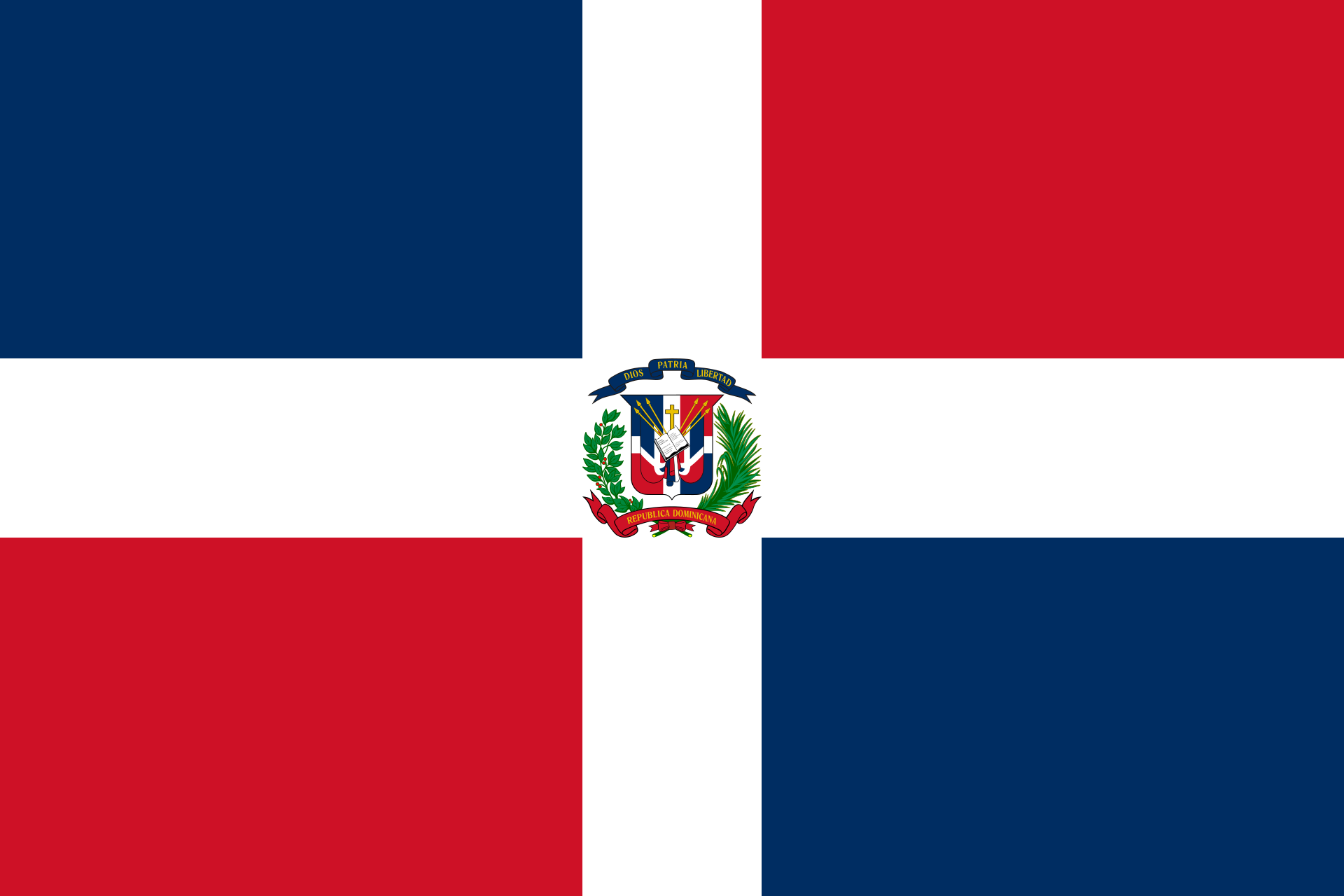
One of the traditional baseball powers, the Dominican Republic is managed by Hector Borg, a former minor leaguer who now runs Latin American development for the San Francisco Giants. The Dominican has never won a medal in the Olympic Games, and in fact has only qualified once before (not counting an appearance at the 1984 games, when baseball was a demonstration sport). Will this be a games of firsts? Their roster can be found here.
About the Country: Taking up the eastern half of the island of Hispaniola (the rest of the island is Haiti), the Dominican Republic was visited by Christopher Columbus during his 1492 voyages, and its capitol of Santo Domingo is the oldest permanent western settlement in the Americas. Having gained independence in the 19th century and moved towards democracy during the 20th, it became fully democratic during the second half of the century. Although problems with corruption and poverty continue to at times plague the nation, it has also been one of the fastest-growing economies in the world. Fun fact: Pico Duarte, the Caribbean’s tallest mountain, is located in the Dominican Republic.
Baseball History: The Dominican Republic’s great passion was introduced to it by Cubans in the 1890s fleeing the civil war there. The rest is history, as the Dominican slowly but surely grew into the hotbed it is today. Baseball may be a pastime elsewhere, but in areas of the Dominican it is a way of life, with entire towns staking their futures on their top players. The Dominican Republic won the 2013 World Baseball Classic.
Olympic History: As mentioned earlier, the Dominicans have been in two Olympic baseball tournaments before, although only once where baseball was an official medal sport. A team that featured Ramon Martinez (not to be confused with his little brother, Pedro) went winless at the 1984 games in Los Angeles, while the Dominicans came in sixth in Barcelona in 1992.
Outside of baseball, the Dominicans have won seven medals in their history, including three golds. Two of those golds came thanks to Félix Sánchez, an American of Dominican descent who twice won the 400 meter hurdles. The other gold came from Félix Manuel Díaz, who won the boxing gold in the light welterweight class in 2008.
Road to Tokyo: The Dominicans were the last team to qualify for the Tokyo Olympics. Their first attempt came at the 2019 Premier12, but that team was eliminated in the first round. Next, they took part in the Americas Qualifying Tournament, where they came in second to Team USA. So, they had to take part in the final qualifying tournament. That tournament had a greatly reduced field after three teams (“Chinese Taipei”, China, and Australia) had to drop out due to COVID-related travel precautions, meaning the DR was competing with Venezuela and the Netherlands for the final spot. The Dominican would end up winning the tournament, defeating Venezuela 8-5 in the final to finally advance to the Olympics.
Notable Names: The most notable name by far is six-time all-star Jose Bautista. He hasn’t played in MLB or affiliated ball since 2018, and at 40 this may be his last ride. He was the starting 1B for the Dominican during early qualifiers (although he missed the final round where they finally qualified) and it is likely that will continue. While the rest of the infield lacks the sort of pedigree that “Joey Bats” has, there are still some who may be familiar to MLB fans, such as corner infielder Juan Francisco (who played parts of six season in the majors) and utilityman Erick Mejia (who had cups of coffee with Kansas City the last two seasons and remains active in their farm system).
Elsewhere, the Dominican’s outfield will have quite a bit of MLB experience thanks toEmilio Bonifacio and Melky Cabrera. Yefri Perez also had a brief stint in Miami in 2016.
On the pitching mound, the player with the most MLB experience is Jumbo Diaz, the 315 lb. reliever who pitched in 173 games between 2014 and 2017. Since then, he’s been playing in the Dominican and Mexico. There is also Jhan Marinez, who pitched in 103 games in relief over parts of five seasons between 2010 and 2018. Other pitchers on the team with MLB experience include LHP Dario Alvarez, righty reliever Jairo Asencio, former Met and Mariner Gerson Bautista, Cuban-defected LHP Raul Valdes, and 31-year-old Angel Sanchez, who pitched eight games for the PIrates in 2017 before going to Asia where he has had some success in Korea and Japan.
Ones to Watch: Like Team USA, the inability to use players on 40-man MLB rosters has forced the Dominican to draw not just from former MLB players like above but also those overseas or in the minors who have never tasted MLB ball.
Probably the biggest name among these players is Julio Rodriguez. A top-five prospect regardless of what list you are reading, the Mariners-system outfielder is hitting .327 between High-A and AA this season and has been named to the Futures Game. The highest-achieving player on the roster without MLB service time, though, is Christopher Crisostomo. The left-handed pitcher has been a member of Japan’s Yomiuri Giants since 2018, having joined their system in 2017 after topping off at low-A in America.
While those are perhaps the two you should most keep an eye on, they are far from the only ones. Beginning our look on the mound, LHP Junior Garcia is in AAA for the Diamondbacks organization, where he has a 2.93 ERA in 15.1 innings pitched since being promoted. 24-year-old right-hander Denyi Reyes is at AA in the Red Sox organization and has a 2.72 ERA in 36.1 IP. Luis Felipe Castillo has, like Garcia, also reached AAA for the Diamondbacks. The reliever has a 2.25 ERA when combining his time in AA and AAA this season in 20 IP.
Looking at position players, the most notable player without MLB experience besides Rodriguez is possibly Johan Mieses. An outfielder in the Red Sox system, he has an OPS over one this season in time split between AA and AAA, with 14 HRs to help get him there. Shortstop Jeison Guzman, a Royals farmhand, is hitting .278 in high-A this year with nine stolen bases.
One area of concern for the DR is at catcher. Their only two listed catchers are Roldani Baldwin (who has struggled this year at AA in Red Sox organization) and Charlie Valerio (who has spent most of the past five-to-six years primarily in Indy ball).
Outlook: It could be argued that no team, not even Team USA, is hurt as badly by the inability to use 40-man roster players as the Dominican Republic, and it is further hurt by the fact that for various reasons the Dominican has often had lower participation rates in international play to begin with. Still, this is a team with some definite experience and, in some cases, upcoming talent. While I do not think they should be considered likely to make it to the gold medal game, they are a threat to get onto the podium if they can catch a break or two.
You can find all the current Olympic Baseball previews here.
With a team primarily of Jewish players from the USA who are eligible thanks to the infamously lax eligibility rules of international baseball, the Israeli baseball team will probably prove to be quite a curiosity to the world press. However, as the 2017 WBC showed, Team Israel is perfectly capable of pulling upsets and should not be underestimated. They are managed by Eric Holtz, the owner of a baseball training facility in Westchester County who played in Israel’s short-lived professional league and coached for college teams for decades. Israel’s 24-man roster can be found here.
About the Country: Sitting ever perilously at the center of both international politics and the world’s three largest monotheistic religions, the current state of Israel came into existence in 1947. Despite its decades of tumultuous history, Israel is also a leader in science and technology.
Baseball History: Although some may joke that Israeli baseball began “in the big inning” that can be found when the beginning of the Book of Genesis is read aloud (it’s a lame pun, think about it for a second), Israeli baseball didn’t really begin until some Americans who had moved to Israel played it a bit. However, that was about it until, in 2007, a small professional league was created in Israel by American businessmen. While it folded after one season, its level of play was apparently pretty good, although only a small handful of the players in the league were actually Israeli. In fact, it has been rare for actual Israelis to play for Team Israel. Thanks to lax eligibility rules as well as the fact that it is quite easy for those of Jewish descent to be eligible for Israeli citizenship, most of the Israeli national teams that have competed in large tournaments have been made up of Americans and Canadians.
Israel lost to Spain for a spot in the 2013 WBC before making the tournament in 2017, where they made it to the second round with a stream of upsets. Dean Kremer, a pitcher born to two Israeli parents and who has lived in Israel at times during summers where he hasn’t been pitching, became the first Israeli citizen drafted by MLB in 2015 and the first Israeli citizen to play in MLB when Kremer made his debut with the Orioles in 2020.
Olympic History: This is, of course, Israel’s first appearance in Olympic baseball. It isn’t the first time that there was an Olympic baseball team primarily made up of people from outside the country they were representing, however: the Greek national team in 2004 was made up primarily of Americans of Greek ancestry (most notably Nick Markakis).
For decades, Israel’s Olympic history had been (and continues to be) centered around 1972’s Munich massacre. It would not be until 1992 that an Israeli would win a medal, and to this day the country has won only one gold (windsurfer Gal Fridman in 2000). Every medal for Israel has come in either judo or a boating sport like sailing or canoe.
This year’s baseball team will be the first Israeli representation in a team sport since the Israeli soccer team made it to the quarter-finals of the 1976 Montreal games.
Road to Tokyo: Israel was actually the first team to qualify for the Olympics aside from the host nation of Japan. They came out on top of a 2019 qualifier in Italy for teams from Europe and Africa, winning the round robin thanks to holding a head-to-head tie-breaker against the Netherlands.
Notable Names: The former MLB players on Team Israel are, of course, Americans of Jewish heritage. The most notable is certainly Ian Kinsler, the four-time all-star second baseman and two-time Gold Glove winner. He was a member of Team USA’s WBC title team in 2017. He’s played a bit in the Atlantic League this year in preparation for the tournament.
Other players with MLB experience include Danny Valencia, who played third base for a variety of teams over a nine-year career and who is perhaps best known among degenerate baseballaholics like me for the fact that he always hit David Price exceptionally well (a career .600 BA) to the point where the Orioles, Red Sox and Blue Jays all made points of having him in the lineup for series against Tampa. Catcher Ryan Lavarnway played parts of 10 seasons in the big leagues and remains active in the affiliated minors on Cleveland’s AAA team in Columbus. Utilityman Ty Kelly played parts of three seasons between the Mets and Phillies and is a career .275 hitter in the minors. While less notable, the team also has MLB-experienced pitchers in Jeremy Bleich, Jon Moscot, Zack Weiss, and Josh Zeid.
Ones to Watch: First off, I want to the pay tribute to the actual people born in Israel that are on the team simply because on a team mostly of Americans they stand-out for… actually being from the country they are representing.
Shlomo Lipetz was born in Tel Aviv, fell in love with baseball during visits to New York, and later moved to the USA to pitch in college. He’s since played semi-pro ball and in the short-lived Israeli Baseball League while also working as a music booker at City Winery in New York City. Now 42, this is probably his last ride… but a ride it has been. Another Israeli-born pitcher on the team is Alon Leichman. Born in a kibbutz in the late 80s, Leichman fell in love with the game thanks to American relatives and moved to America to pitch in college. He’s since gone into coaching, where he is currently the pitching coach for Seattle’s AA Arkansas Travelers.
Among position players, there is catcher Tal Erel, born in Ramat Gan (near Tel Aviv). After playing in leagues in the Czech Republic and Netherlands, he moved to Florida where he played college ball on the JuCo and Division II levels. The final Israeli-born player is Assaf Lowengart, who now plays for DII Mansfield University.
Among the Americans on the team that haven’t played in the big leagues, names that stand out include LHP Jake Fishman (Miami’s AAA team in Jacksonville), LHP Alex Katz (Cubs organization), RHP Ben Wanger (University of Miami), SS Scott Burcham (AAA Colorado), utilityman Mitch Glasser (hitting .345 in independent Sioux Falls), and long-time minor league/indyball journeyman outfielder Blake Gailen.
Outlook: On paper, Israel is undoubtedly the worst team in the field. No other team in the tournament is rolling out college and semi-pro players to fill the back-end of their rosters, and most of their top professionals (such as Kinsler and Valencia) are in states of near-retirement. However, although it is unlikely that they can get to the medal stand they are still a good enough team where they may be able to pull an upset or two against stronger but potentially overconfident opponents.
You can find all the current Olympic Baseball previews here.
The South Koreans are, technically, the reigning Olympic champions, having defeated Cuba in 2008. The South Koreans are managed by Korean baseball lifer Kim Kyung-Moon, who managed that 2008 team. The roster can be found here.
About the Country: Like Japan and China, the history of the Korean Peninsula is long, complicated and often violent. Its current divided state, however, can be traced back to the end of World War II. Korea had been under occupation by Japan for most of the first half of the twentieth century, and when the dust settled from the war the United States and USSR agreed to administer one half of the peninsula until elections could be done in order for the Korean people to choose their own government. Cold War tensions led to this never happening, and soon two rival governments were formed: the Soviet-supported Democratic People’s Republic of Korea in the north and the US-supported Republic of Korea in the south. In 1950, North Korea invaded South Korea, leading to a US-led “police action” to save the peninsula from Communist rule. After the arrival of Chinese “volunteers” in late 1950, the two sides entered a stalemate until a truce was made in 1953. There is still no peace treaty, so the two Koreas remain at war. Since then, South Korea has grown into an economic powerhouse with a democratic government, while North Korea has become a dystopian dictatorship that spends more money on weapons than it does feeding its own people. Needless to say, the “Korea” that takes part in the the Olympic baseball tournament is South Korea.
Baseball History: Baseball came to Korea by way of an American missionary named Philip Loring Gillett, who also introduced basketball to the peninsula. However, baseball didn’t truly become popular until the Japanese annexed the Peninsula in 1910. During the Japanese rule of Korea, baseball became both a rare opportunity for conciliation between the two cultures but also a way for Koreans to challenge the Japanese. After WWII and the Korean War, baseball continued to be popular on an amateur level in South Korea, but it was not until the 1980s that a professional league was formed. The foundation of the Korean Baseball Organization was partially politically motivated, a way to give young men an outlet other than rebellious politics. Although Korean baseball has never truly lost its popularity, it was in a down period before Korea’s showings at the 2006 and 2009 WBCs, as well as the 2008 Olympics, led to skyrocketing attendance. Korean baseball saw a sharp increase in American attention in 2020 when ESPN broadcast games from the KBO to help fill time during the COVID-19 devastated sports schedule.
Olympic History: As mentioned earlier, South Korea is the reigning Olympic champion, defeating Cuba 3-2 in Beijing with a team that included future MLB players like Hyun-Jin Ryu, Seung-Hwan Oh, and Hyun-Soo Kim. Before that, Korea had also won bronze in 2000.
Outside of baseball, South Korea has competed at the Olympics since its independence, although some Korean athletes had participated as part of the Japanese Empire before then. They hosted the 1988 Summer Olympics in Seoul and the 2018 Winter Olympics in Pyeongchang. The most success for South Korea in the Olympics have generally come in archery, short-track speed skating, judo, and of course Korea’s national martial art of taekwondo. The most successful athletes in Olympic history for South Korea are sport shooter Jin Jong-Oh and archer Kim Soo-Nyung.
Road to Tokyo: South Korea qualified for the tournament by having the highest finish in the 2019 Premier12 tournament among teams from Asia or Oceania (exempting Japan, who of course already qualified). Korea ended up walking away with silver in that tournament, behind only the already-qualified Japanese.
Notable Names: There are two players with Major League Baseball experience on the South Korean roster. The more notable one is possibly Hyun-Soo Kim, an outfielder who played two season in MLB, including a 2016 campaign with the Orioles that saw him hit .302 with a .801 OPS in 305 at-bats. He was a member of the 2008 Olympic championship team. Third-baseman Jae-Gyun Hwang played 18 games with San Francisco in 2017. Surprisingly, Seung-Hwan Oh and Shin-Soo Choo are not on the roster despite being back in Korea and playing fairly well.
Ones to Watch: As expected, the roster is made up entirely of stars from the Korean Baseball Organization League. The KBO is usually regarded as being somewhere between AA and AAA in talent (compare to how the NPB is usually regarded as being somewhere between AAA and MLB), although it can vary wildly by team.
Starting with pitchers, 21-year-old righty starter Tae-In Won has had a breakout year this season and is 9-0 with a 2.59 ERA in 14 games. Won-Joon Choi has also been an impressive starting pitcher this year in KBO- the righty is 7-0 with a 2.40 ERA. Eui Lee Lee is just 19 but adds a left-handed pitcher to the starting rotation. In the bullpen, Sang-Woo Cho has 14 saves on the year. He’s one of just three pitchers who have returned from the silver-winning Premier12 team, alongside fellow relievers Woo-Suk Go and Woo-Chan Cha.
Among position players to watch, perhaps the biggest to keep an eye on is 1B Baek-Ho Kang. Only 21, he’s “slashing” (batting/on-base/slugging) a hilarious .398/.495/.571 in 309 plate appearances this season. For those of you who are big into OPS, that means he has a 1.066 OPS, which makes him essentially the Shohei Ohtani (hitting version) or Fernando Tatis Jr. of the KBO. By the way, nobody has hit .400 or over in the KBO since 1982.
Other position players to watch include veteran catcher Ul-Ji Yang (19 HRs, .352 BA, reigning Korean Series MVP), 22-year-old outfielder Jung-Hoo Lee (.342/.431/.505, considered a possibility to make a future jump to MLB or NPB), 31-year-old outfielder Hae-Min Park (who leads the KBO in steals with 28) and 22-year-old shortstop Hye-seong Kim (another threat on the basepaths with 27 SB).
Outlook: Korea is a bit of an enigma going into the Olympics. Some of the roster picks are a bit baffling. If you go to Baseball Reference and pull up the KBO leaderboard you’ll find plenty of good Korean players who probably should be on this roster who aren’t, while others on the roster seem like they don’t quite belong. Still, like Japan the Koreans are bringing (mostly) the cream of their domestic crop, and the small field means that they like most teams should have a good shot at a medal, potentially even gold.
You can find all the current Olympic Baseball previews here.




 The Baseball Continuum