With the 2026 World Baseball Classic about to begin, it’s time for my preview of the tournament. We begin in non-alphabetical order, starting with Pool C, as it begins before the other pools.
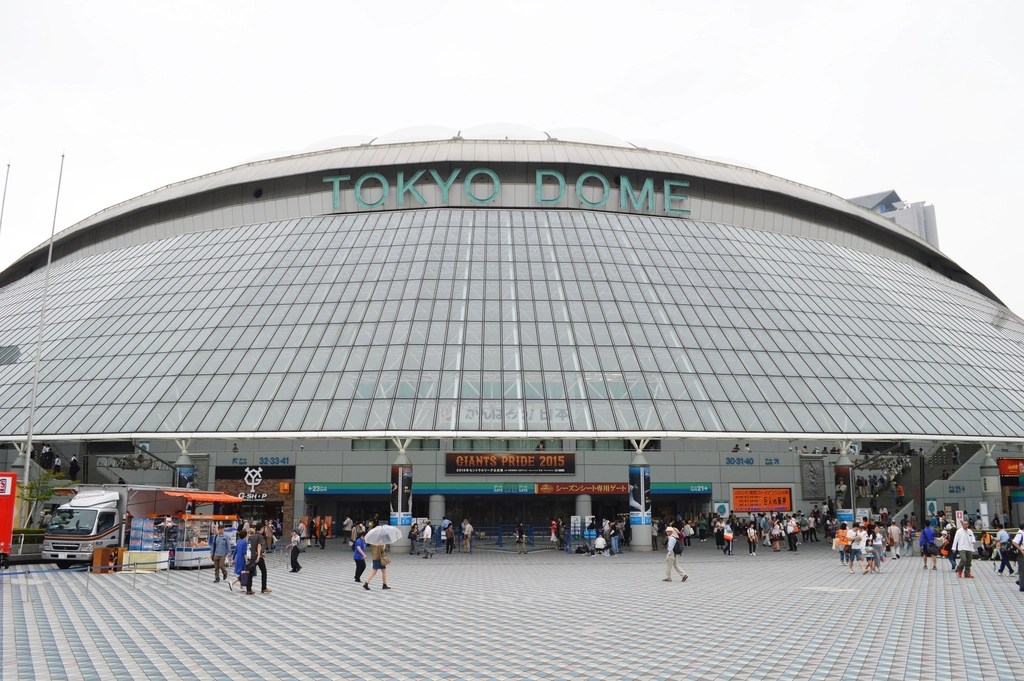
About the Venue: The Tokyo Dome is the largest baseball stadium in the largest metropolitan area in the world and the go-to place for MLB events in Japan. Holding over 45 thousand fans for baseball, the air-supported dome is normally home to the Yomiuri Giants, the most successful team in Japanese baseball. The “Big Egg” has symmetrical dimensions (329 to the corners, 375 to the alleys, 400 to center) and has over the years also played host to concerts, boxing (including Mike Tyson‘s infamous defeat at the hands of Buster Douglas), professional wrestling, NFL exhibition games, and mixed martial arts. It is also the location of Japan’s Baseball Hall of Fame.
About The Pool: This is somewhat similar to some of the previous Tokyo pools in the WBC, with Asian powers (Japan, Korea, and “Chinese Taipei”) placed together. Joining them are Australia and the Czech Republic. It would be a shock if the two teams to leave this round robin aren’t two of the three Asian teams, and it’d be especially shocking if one of those teams isn’t Japan, which is one of the overall tournament favorites and . Australia and the Czechs will likely be playing to avoid getting relegated to qualifying.
Go below the jump for the full preview.
Japan
About The Country: Japan is an ancient nation, traditionally said to have been founded in 660 BC. For most of that time, it existed with relatively little interaction with the outside world outside of the occasional war with Korea.
That all changed in 1853, when a small force of the United States Navy, led by Admiral Matthew Perry, arrived in Japan to demand that it be opened to traffic and commerce. The arrival of Western influence shocked the Japanese, leading to reforms and programs that led the nation to grow from hermit kingdom to one of the world’s leading empires within a century, a period that ended only with Japan’s defeat in WWII. Scarred by the war and with a new constitution that prevented it from actually having a true military (something it has only recently moved away from), Japan became an economic power as well as a hub of global trade and technological innovation. It remains the world’s third-largest economy despite slow growth since the late 1980s.
The capital of Japan is Tokyo.
Baseball History: Although there are some reports of even earlier introductions, Japan is traditionally said to have been introduced to baseball by a teacher named Horace Wilson, who introduced it to some of his students there in the early 1870s. In the decades after that, its popularity skyrocketed as Japan became more industrialized, although it remained strictly amateur until the 1930s. The beginnings of Japan’s professional baseball came about because of Major League Baseball in general and Babe Ruth in particular, as a barnstorming tour by the Great Bambino caused baseball to become even more popular than before. In 1936, the Yomiuri Shimbun newspaper conglomerate founded the first professional team in Japan, the Yomiuri Giants, primarily using players who had distinguished themselves against the Americans. After WWII, the Japanese again turned to baseball, founding Nippon Pro Baseball in 1950.
Although other foreign sports like soccer have made inroads, baseball remains the most popular sport in Japan. The National High School Baseball Championship, or Koshien, is a cultural phenomenon in the country perhaps even greater than America’s “March Madness” for college basketball.
International Baseball History: The Japanese have perhaps embraced international baseball more than any country since the start of the WBC, with “Samurai Japan” (the name for the national team) playing occasional friendly games even when there isn’t a big tournament coming up. This attention to the national team has helped lead Japan to the top spot in WBSC world rankings.
Japan has won three WBCs (the first two installments in 2006 and 2009 as well as the most recent 2023 edition), the 2020/21 Olympics (as well as the demonstration sport year 1984 Olympics), the 2019 Premier12, and 21 Asian Championships.
Road to the WBC: Automatically qualified.
Japan’s Baseball League: Nippon Pro Baseball, or the NPB, is generally regarded as the second-best baseball league in the world, behind only MLB. Usually thought to be somewhere between AAA and MLB in talent, the organization has 12 teams in two league playing 143 games (yes, they play an odd number of games).
The NPB also has farm leagues, and there are some independent leagues that play in areas of Japan that lack NPB franchises.
Japanese MLB Players: A total of 84 players born in Japan have played in at least one MLB game, although some of them have been the sons of US service-members stationed there. This year’s team includes eight players currently signed to MLB rosters, although two of them (Munetaka Murakami and Kazuma Okamoto) were signed this off-season and have yet to make their MLB debut. The other six? Pitchers Yusei Kikuchi, Tomoyuki Sugano, and World Series MVP Yoshinobu Yamamoto; outfielders Masataka Yoshida and Seiya Suzuki; and some guy named (checks roster) Shohei Ohtani.
Notable names: Those who watched the 2023 WBC may remember outfielder Kensuke Kondoh, who hit .346 with four doubles and a home run to be one of the top hitters for Samurai Japan. Well, he’s back, and in the time since 2023 he’s built on his resume, winning the 2024 Pacific League MVP and then playing a role in the Fukuoka Softbank Hawks’ 2025 Japan Series win. Taisei Ota, a bullpen workhorse who was the only Japanese pitcher to appear in four games of the tournament, also returns — he was named the Central League’s best setup man last season.
Highest Achievers: Shohei Ohtani is arguably THE highest achiever, period, even if he won’t pitch in this WBC. However, if we ignore the MLB players, this is still a team made up of the best the NPB has to offer, including two award winners from last season.
Shortstop Teruaki Sato, of the Hanshin Tigers, won the Central League’s MVP award last season after slashing .277/.345/.579 with 40 home runs and 102 RBI while also winning a Gold Glove award.
Hiromi Itoh won the Sawamura Award — Japan’s equivalent of the Cy Young (but for both leagues instead of one for each) — last season, finishing the year with a 14-8 record with a 2.52 ERA and 195 strikeouts in 196.2 innings pitched. Given the unfamiliarity that MLB players will have of him, don’t be totally surprised if he — not Yamamoto or Kikuchi — gets a big start against a team like the USA or Dominican.
Ones to Watch: While this is a fairly “old” team, there are some youngsters on it.
The youngest of them all is 23-year-old LHP Yumeto Kanemaru, a late addition to the tournament after San Diego’s Yuki Matsui sustained a groin injury. Kanemaru, who had been a star college pitcher in a league in a nation where many of the best players emerge from the high school ranks, went 2-6 for the Chunichi Dragons in his rookie 2025 year, but had a good 2.61 ERA in 96.2 innings pitched. Another pitcher, 24-year-old Hiroya Miyagi, was fourth in the Pacific League in strikeouts with 165, and already has some WBC experience, having pitched in one game in 2023 as a 21-year-old.
The youngest position player on Team Japan is outfielder Shota Morishita. Now 25, the right-handed hitter slashed .275/.350/.463 last season, hitting 23 home runs en route to being named to the “Best Nine” (something of a post-season All-Star team) in the Central League.
Manager/Coaching Staff: Skippering Samurai Japan is Hirozaku Ibata. Once an eight-time All-Star infielder in NPB who made the All-WBC team in 2013, While Ibata has never held an NPB managerial job, he has previously managed Japan in the 2024 Premier12 as well as its U-15 national team. His staff is full of other former NPB players, with many of them experienced in coaching from previous international tournaments. Although not an official member of the coaching staff, Yu Darvish reportedly will be working with the team as an advisor as he rehabs from injury and thinks about whether he will continue his illustrious career.
Outlook: Japan is one of the tournament favorites, and with good reason. Anything less than title will disappoint the people back home, and anything less than an appearance in the championship game will especially be a letdown for the Japanese faithful.
However, this team does have weaknesses. Injuries and Shohei Ohtani’s inability to pitch in the tournament hurt its pitching depth, and the squad’s defense in the outfield reportedly leaves something to be desired.
Still, the Japanese should easily make it through pool play and will be a force to be reckoned with in the knock-out rounds.
South Korea
About The Country: Like Japan, the history of the Korean Peninsula is long, complicated, and often violent.
Its current divided state, however, can be traced back to the end of World War II. Korea had been under occupation by Japan for most of the first half of the twentieth century, and when the dust settled from the war the United States and USSR agreed to administer one half of the peninsula until elections could be done in order for the Korean people to choose their own government. Cold War tensions led to this never happening, and soon two rival governments were formed: the Soviet-supported Democratic People’s Republic of Korea in the north and the US-supported Republic of Korea in the south. In 1950, North Korea invaded South Korea, leading to a US-led “police action” to save the peninsula from Communist rule. After the arrival of Chinese “volunteers” in late 1950, the two sides entered a stalemate until a truce was made in 1953. There is still no peace treaty, so the two Koreas remain technically at war.
Since then, South Korea has grown into an economic powerhouse with a democratic government, while North Korea has become a dystopian dictatorship that spends more money on nuclear weapons than it does feeding its own people. Needless to say, the “Korea” that takes part in the the WBC is South Korea.
The capital of South Korea is Seoul.
Baseball History: Baseball came to Korea by way of an American missionary named Philip Loring Gillett, who also introduced basketball to the peninsula. However, baseball didn’t truly become popular until the Japanese annexed the Peninsula in 1910. During the Japanese rule of Korea, baseball became a rare opportunity for conciliation between the two cultures but also a way for Koreans to challenge the Japanese.
After WWII and the Korean War, baseball continued to be popular on an amateur level in South Korea, but it was not until the 1980s that a professional league was formed. The foundation of the Korean Baseball Organization was partially politically motivated, a way to give young men an outlet other than rebellious politics. Although Korean baseball has never truly lost its popularity, the KBO has seen its attendance fluctuate since its founding, although it currently is hitting record highs.
International Baseball History: Korea is usually one of the best-ranked teams in the WBSC rankings, and is currently fourth in the most recent ranks. They’ve won the 2008 Olympics, the 2015 Premier12, the 1982 World Cup, and eight Asian Championships. They finished second in the WBC in 2009.
Japan-Korea is the biggest rivalry in international baseball, and Korea’s national team can largely be defined by how well they do against their Asian rivals. Every showdown between the two is going to be must-watch television.
Road to the WBC: Automatically qualified.
Korea’s Baseball League: The Korean Baseball Organization League, or KBO, is generally regarded as the second-best league in Asia (behind NPB) and one of the top outside of MLB. Most say that the KBO is probably between AA and AAA in level, although it can vary from team-to-team and player-to-player. There are ten teams in KBO and they play a 144-game schedule.
The KBO also has a minor league, the Futures League.
Korean MLB Players: A total of 29 players born in South Korea have played in MLB, although some of them were the sons of American service members or were adopted by American families at a young age. However, due to injuries and other issues, only a few players with MLB experience will be on the squad this year, and the most notable of them hasn’t played in MLB since 2023: Hyun Jin Ryu. The longtime pitcher for the Dodgers and Blue Jays returned to Korea in 2024 and remains a capable force on the mound.
Current MLB players from Korea who are on the team are Dodgers’ utilityman Hyesong Kim (who hit .280 in 71 games last season), and the team’s captain, San Francisco Giants outfielder Jung Hoo Lee. The son of KBO legend Jong Beom Lee (in fact, he was born in Japan during his father’s NPB stint), Jung Hoo has the great nickname of “Grandson of the Wind”, since his father’s nickname was “Son of the Wind.”
Adding MLB “Passport Players” in pitcher Dane Dunning, outfielder Jahmai Jones, and outfielder Shay Whitcomb further adds top-level experience.
Notable names: Woo-Suk Go was at one point one of the best relievers in the KBO and was posted for MLB teams to sign. However, once he came to America, he’s struggled and hasn’t made it out of the the minors. Regardless, his pedigree back in Korea and possible future in America makes him, well, notable.
Highest Achievers: The majority of Korea’s team is from the KBO, and that includes some of the best-of-the-best from that league. The big question mark is Do Yeong Kim, a third baseman who won the 2024 MVP at the age of 20, when he slashed .347/.420/.647 with 38 home runs. However, injuries kept him to just 30 games in 2025. Will he be back to form?
Other top achievers include outfielder Hae Min Park (who led KBO with 49 stolen bases last season), Min Jae Shin (All-KBO at 2B with a .313/.395/.382 slash stat), Ju Won Kim (All-KBO SS, .289/.379/.451), and Ja Wook Koo (All-KBO OF, .319/.402/.516).
The pitchers are a bit less distinguished, but the Koreans still count the KBO’s save leader from last year (Yong Hyun Park) and 34-year-old righty Young Pyo Ko, who went 11-8 with a 3.30 ERA last season while winning the KBO equivalent of the Gold Glove (oddly enough, the ACTUAL Gold Glove Award in KBO isn’t just about defense and is actually given to the All-KBO team).
Ones to Watch: The best young player on Team Korea is last year’s KBO Rookie of the Year and All-KBO outfield pick, Hyun Min Ahn. Just 22, the right-handed hitter slashed .334/.448/.570 while hitting 22 home runs.
Manager/Coaching Staff: Ji Hyun Ryu (also romanized as Ji-Hyun Yoo) was an infielder in the KBO during the 1990s and 2000s, and has coached and managed since, including during some previous international tournaments. The other coaches also come with KBO and international experience.
Outlook: Korea has a good time and will likely fight with Chinese Taipei for the second ticket out of the pool. It is unlikely that they will be a major threat for the overall title, however.
Chinese Taipei
About The Country: In the late 1940s, after decades of Civil War (interrupted only for WWII), the Communists drove the Republic of China off the mainland, forcing them to flee to the island of Taiwan.
Since then, the two Chinas have nervously eyed each other across the Strait of Taiwan, a dangerous flashpoint left over from the Cold War that has grown ever more intense in recent years as Chinese President Xi Jinping has pursued increasingly aggressive policies. Despite this, the two are incredibly reliant on each other, particularly in high-tech industries such as semiconductor manufacturing.
The unique political situation that exists means Taiwan is usually represented internationally under the name “Chinese Taipei”, including in sports competitions.
Baseball History: Baseball first came to Taiwan through the the Japanese, who occupied the island until the end of WWII. Its popularity came because it provided the island’s natives one of the few ways of beating their colonial occupiers. It also provided a rare ability to play alongside them as well- a team made up of Chinese, Japanese, and members of the island’s aboriginal communities once worked together and qualified for Japan’s famed Koshien tournament for high school teams, finishing second.
Baseball has remained a vital part of Taiwan’s heritage since the end of Japanese occupation and the exile of the Republic of China to the island, and the success of their Little League World Series teams are so respected that they have at times been depicted on their money. However, baseball has also been the subject of several horrible cheating or match-throwing scandals, which have at times threatened the sport’s place there.
International Baseball History: When it comes to international competition, the most famous teams from Taiwan are undoubtedly the teams that have represented the island in the Little League World series, where they have won 18 times — the most of anyone besides the USA and the most of anyone overall if you divide the USA teams into states. However, some of those victories infamously were not entirely on the up-and-up, as many of the teams sent were not representatives of any individual Little League, but rather the entire island! Perhaps not surprisingly, the Taiwanese have had less success since the rules started being better enforced — their victory in the 2025 LLWS was their first since 1996.
As far as the actual national team, Taiwan has long been in third place in adult competition among Asian countries, often struggling to defeat Japan and Korea. However, they are not without success: they have won five Asian championships, an Asian Games gold, as well as silvers in the 1992 Olympics and 1984 World Cup. Their biggest victory recently, however, is definitely their Premier12 title in 2024, a prestigious victory in the WBSC’s biggest non-WBC event. In the WBC, their best finish has been eighth, in 2013. They are currently second in the WBSC world rankings, although that is largely the result of their Premier12 title and good performance in youth competitions.
Road to the WBC: After infamously finishing in last in Pool A in the 2023 WBC (everyone finished 2-2, and they ended up last on tiebreakers), Chinese Taipei had to advance through a qualifying event in Taipei. Feeling overly confident, they sent a younger and largely untested team… and nearly paid for it, losing to Spain and Nicaragua before beating Spain 6-3 in the second-place game to advance.
Taipei’s Baseball League: The Chinese Professional Baseball League, or CPBL, was formed in 1990. At its height, it had seven teams, but a decline in popularity after gambling and cheating scandals decreased the league to just four. The CPBL has recovered somewhat, however, and now consists of six teams.
The level play for the CPBL is generally regarded as below that of Japan’s NPB and Korea’s KBO, probably somewhere in the A-Ball levels if we used a North American minor league hierarchy as comparison.
Taiwanese MLB Players: A total of 18 players born on the island formerly known as Formosa have appeared in MLB, although only two from there played in MLB games last season: infielder Tsung-Che Chen (who had a cup of coffee with the Pirates but is now on the Red Sox) and RHP Kai-Wei Teng (who pitched for the Giants but is now with the Astros). Chen is on the team’s roster, but Teng is not. Taiwan does have a “passport player” in the Taiwanese-American Stuart Fairchild, an outfielder with 277 career games under his belt, including 28 with Atlanta last season.
Notable names: However, there are a few other former big leaguers on the squad! The most notable of them is likely Yu Chang. The infielder was never much of a hitter during his five years in the big leagues, but he went nuts during the 2023 WBC, hitting .438/.500/.937 with two home runs. He was even named the MVP of Pool A. He’s been back in the CPBL the last two years. The other Taiwanese on the roster with MLB experience are utilityman Tzu-Wei Lin and pitcher Chih-Wei Hu,
Highest Achievers: Four members of the team play in the top level of NPB or did so last season: pitchers Ruei Yang Gu Lin, Yi-Lei Sun, Jo Hsi Hsu, and outfielder An Ko Lin.
As far as players from CPBL, this team feature’s last season’s CPBL leaders in batting average (Nien Ting Wu), RBI (Giljegilijaw Kungkuan), saves (Shi Xiang Lin), and several members of the league’s “Best Ten” (essentially an All-CPBL team).
Then there is Chieh Hsien Chen. The outfielder has long been one of the best players in the CPBL– a six-time All-Star, former batting champion, four-time Gold Glove winner, and MVP of the 2024 Premier12. A career .337 hitter, the left-hander has at times flirted with heading to one of the higher leagues — perhaps even MLB — but has never done the jump. Now 32, he’s coming off a relative down-year where he slashed .277/.357/.391, but he’s still a dangerous hitter who could make a big difference.
Ones to Watch: The Taiwanese players in Minor League Baseball that are on the team are in some cases legitimate prospects. Infielder Hao-Yu Lee, for example, is the No. 6 prospect of the Detroit Tigers, while left-handed pitcher Yu-Min Lin is Arizona’s No. 20 prospect. The Athletics have three of their top 30 prospects, all pitchers: Lefty Wei-En Lin (No. 19), and righties Chen Zhong-Ao Zhuang (No. 28) and Tzu-Chen Sha (No. 29).
Manager/Coaching Staff: Hao Chu Tseng has a history managing the Taiwanese squad, and has also managed in the CPBL. The most familiar name among the coaching staff, however, is the man who is unquestionably the greatest Taiwanese player in the history of MLB: Chien-Ming Wang.
Outlook: Chinese Taipei could be a sneaky threat in the tournament, and will likely battle with Korea for the second ticket out of Tokyo. At the very least, they shouldn’t have any worry about possibly having to qualify again.
Australia
About The Country: Long inhabited by an Aboriginal population, western colonization of Australia began in the 1780s when Great Britain began to ship prisoners there, forming a penal colony in what is now Sydney.
The nation became de-facto independent from the UK in 1901 with the adoption of a constitution, and slowly became more and more officially independent as the 20th century went on (finally becoming absolutely and completely independent in 1986 when some remaining technicalities were closed).
Australia is best known to outsiders for its unique wildlife, such as the kangaroo, koala bear and platypus. Its capital is Canberra.
Baseball History: The first baseball in Australia was played by American expats and their friends in the 1850s, but it wasn’t until the 1870s that the first organized teams were formed. The sport received more attention during the World Tours of barnstorming MLB players in the 19th and early 20th century. By the time American servicemen arrived in Australia during WWII, there was a small but devoted amateur culture of baseball, one that has survived to this day.
However, baseball has not yet been able to get permanently get past that amateur status, with two professional leagues (the Australian Baseball league of 1989-99 and the International Baseball League of Australia of 1999-2002) failing and a complete lack of professional baseball until the new Australian Baseball League was formed with MLB help in 2009.
International Baseball History: Australia currently sits 11th in the WBSC rankings. While never a true power, they have had a history of playing up to their opponents and pulling off stunning upsets, most notably their run in the 2004 Olympics, where they beat Japan en route to a silver medal. Australia hasn’t had as much success in the WBC, though, going 5-12 all-time. The 2023 tournament proved something of a break-out, however: an upset win over South Korea earned them a 3-1 record in pool play, sending them to the quarterfinals, where they fell just short of beating Cuba, 4-3.
Road to the WBC: Automatically qualified.
Australia’s Baseball League: The Australian Baseball League has struggled in the years since COVID, as delayed payments from an insurance company torpedoed its team in New Zealand (its best-attended squad) and aftershocks from the pandemic have caused issues for several squads. One of its best-run teams, the Melbourne Aces, left the league and has gone independent. Still, the league continues on with four teams, playing during the Northern Hemisphere’s winter (Southern summer) and often featuring players from the Minor Leagues, Japan, and Korea.
Australian MLB Players: A total of 35 players born in Australia have played in the big leagues. The lone current MLB player on the roster is Curtis Mead. Once a fairly-well regarded prospect, the infielder hasn’t turned out as well as many hoped in the big leagues, at least so far, and now is a member of a Chicago White Sox. Another current major leaguer, Liam Hendriks (neck-and-neck with Grant Balfour the title of greatest Australian pitcher of all time), is in the “Pitcher Pool”, but he’ll be unavailable in the first round as he returns from injuries and works in Twins camp.
However, there are several players who have played in the big leagues, who I’ll note below.
Notable names: As mentioned above, the Australians bring several players with big league experience to the tournament, even though they are not currently on a big league roster. While none of them were ever stars, they still bring good experience to the squad.
The most noteworthy is likely Warwick Saupold, who pitched parts of three seasons in Detroit before finding some success over two years in Korea. He’s a veteran now at 36, but has remained active down in Australia even after he left Korea at the end of the 2020 season.
More recent big leaguers who are on Australia include LHP Jack O’Loughlin (who had a cup of coffee with the Athletics in 2024), another lefty in Alex Wells (who played 13 games for the Orioles earlier this decade), and outfielder Aaron Whitefield had two brief stints in 2020 and 2022. Catcher Alex Hall briefly was called up in 2022 for Milwaukee, but never saw any actual game action.
Highest Achievers: Aside from Mead and some of the minor leaguers (most notably the one I’ll mention under “Ones to Watch”), the highest-achieving Australians play in Korea. Infielder Jarryd Dale reached as high as AAA with the Padres and slashed .297/.357/.398 in the Japanese minors last year, which has caught the attention of the KBO’s KIA Tigers, who signed him ahead of this season. Lachlan Wells, the twin brother of the aforementioned Alex Wells, reached as high as AA in the Phillies system as a LHP, and joined the KBO last season.
Among players who are best known for Australian Baseball League play, the most notable is Tim Kennelly, a 39-year-old outfielder who holds most of the ABL’s offensive career records. He’s been named team captain for Australia this WBC.
Ones to Watch: The biggest name on Team Australia has never played an MLB game but is one of the top prospects in the sport: Travis Bazzana. The 23-year-old second baseman from the suburbs came over to America to play at Oregon State, where he swiftly became a star. After a collegiate career that saw him win a Cape Cod League MVP and a Pac-12 Player of the Year, he became the first Australian ever drafted first overall when Cleveland selected him in 2024. While his trip to the majors has hit a few bumps related both to injury and performance, he remains a top-25 prospect in all of baseball.
Manager/Coaching Staff: Dave Nilsson is a living legend of Australian baseball, probably the first major baseball star from Australia, recording 105 home runs between 1992 and 1999 for the Brewers. His retirement at the age of 29 after 1999 — a year where he was an All-Star — was partly so he could be eligible to play in the 2000 Sydney Olympics. He remained active for the national team through 2009, and has managed, coached, or stayed otherwise involved since. Graeme Lloyd, another former big leaguer who worked as a reliever throughout the 1990s and 2000s, is also on the coaching staff.
Outlook: Australia is a bit of an enigma here. They are definitely below the Asian powers and definitely above the Czech Republic as far as talent. However, they are no so far behind the Asian countries as to have no shot, nor are they so above the Czechs that they are safe from a possible upset. The Aussies likely will end up third or fourth, but might be able to sneak through the opening round if they can pull an upset or two.
Czech Republic
About The Country: Once half of the nation of Czechoslovakia, the modern Czech Republic came into existence when it and Slovakia peacefully split in the early 90s, not long after the end of decades of Communist rule. It has since grown into a nation with an advanced economy that is part of the European Union and NATO.
The Czech Republic is also known as Czechia (the official “short” name for the country) and, historically, Bohemia. The capital is Prague.
Baseball History: For decades, then-Czechoslovakia had baseball banned, probably due to its western connotations (baseball was banned in the People’s Republic of China in the decades following the Cultural Revolution for similar reasons). By the eighties, however, baseball was again being played, and picked up further interest and government funding for a time when the sport was added to the Olympics.
In the 1990s, some baseball-specific facilities began to be built, and, as “Mop-Up Duty” notes, the “Prague Baseball Week” began, an event that Jim Caple of ESPN once named as one of the “Ultimate Baseball Experiences”. In 2005, the Czech Republic hosted the European Baseball Championship, some of which was televised on Czech television. Czech baseball got another boost of attention during the 2023 World Baseball Classic, when it both drew eyeballs back in Czechia and earned massive respect from Japanese baseball fans.
International Baseball History: The Czechs entered the 2023 World Baseball Classic as newcomers, but their 14th-place finish — ahead of established baseball nations such as Colombia and Nicaragua — has helped put them on the map. Their underdog story as a team made up primarily of semi-pros and straight-up amateurs going against powerhouses like Japan and Korea without getting mercy ruled, and beating a Chinese team to ensure they wouldn’t fall back into qualifiers, endeared themselves to many, especially the Japanese.
The Czechs have continued to see success since the 2023 WBC, finishing third — their best finish ever — at the 2025 European Championships.
Road to the WBC: Automatically qualified.
Czechia’s Baseball League: The Czech Baseball Extraliga is a semi-pro league formed in 1993. While not on the level of the leagues in the Netherlands, Italy, or Germany, it has come to be regarded as one of the better baseball leagues in Europe. The great power of the eight-team league is Draci Brno, which have won 26 titles.
Czech MLB Players: Four ballplayers born in what is now Czechia have made the majors, although none since Frank Rooney appeared in 12 games in the Federal League in 1914. Hugo Bezdek — the only man to manage in MLB and head coach in the NFL — was born in Prague. However, due to the use of “passport players” there is one player on the roster with MLB experience: Terrin Vavra, a second baseman and outfielder who has appeared in 68 games for the Orioles over part of three seasons.
Notable names: The Czechs are possibly the most anonymous team in this tournament, especially with the Sogards (who served as “passport players” in previous tournaments) not here this time. However, you may remember some of their names from the stories that exist about them: most of these guys are true semi-pros who work for a living. There’s pitcher Ondrej Satoria, an electrical engineer who became a minor cult figure when he struck out Shohei Ohtani in 2023. Then there’s Martin Schneider, a fireman and two-way player who may be in his last WBC at age 40. Pitcher Lukas Hlouch, who played in the Little League World Series as a youth, is a nuclear equipment operator, while another pitcher, Lukas Ercoli, is also the team’s communications director. And outfielder Martin Muzik, who hit an important three-run home run to beat China in the 2023 WBC, also works as a groundskeeper.
Highest Achievers: The highest achiever aside from Vavra, if we’re talking about level of play, is probably Marek Chlup. A Czech born-and-raised player who caught the eye of NC State and played there for two seasons before transferring to Division II North Greenville. His performances after graduation in the 2023 WBC and indy ball caught the eye of NPB’s Yomiuri Giants, where he played in the Japanese minor leagues before getting a two-game cup of coffee in NPB proper in 2025 before getting injured. He’ll be playing in the Mexican League this season.
As far as North American affiliated ball is concerned, the highest achiever is Martin Cervenka. The Prague-born catcher reached as high as AAA in the Orioles and Mets organizations.
Other players on Team Czechia with affiliated experience include infielder Vojtech Mensik (who played a season of A-ball in the Angels organization and who played with Chlup at NC State), LHP Jan Novak (who played parts of two years in the low minors for the Orioles in the 2010s), and RHP Marek Minarik (who had stints in the Phillies and Pirates system in the 2010s). RHP Daniel Padysak had a stint in the Japanese minors.
Ones to Watch: A few players on the squad are still in college, and could be interesting to see develop. Pitcher Michal Kovala pitched at Georgia Tech in 2024 but now plies his trade at a Junior College in Florida. Young catcher Matous Bubenik is on the roster for Division I UNC Wilimington. Third-baseman Jan Pospisil is hitting well in Division II North Greenville this season, hitting .286 in 36 at-bats in the young campaign.
Manager/Coaching Staff: Oh, you thought it was just the players who are part-timers? The Czechs’ manager, Pavel Chedim, is normally a neurologist. He’s managed not only the national team, he also coached a Little League team that made it to Williamsport in the past!
Outlook: On paper, the Czechs are in deep trouble here. They are, without question, outmatched by every team in this pool, and seem doomed to relegation into qualifying. However, the are good enough where they could pull off an upset on Australia or keep pace long enough with the Asian powers to perhaps shock the world. While it’s likely they go 0-4, it’s not destiny… that’s why they play the games, after all.
Pool Outlook:
This is, of course, Japan’s to lose. Even if they lose a game, it’s likely that they’ll grab one of the top two spots. The question then becomes who takes the second spot. It will almost certainly be Korea or Taiwan, but Australia could surprise. Personally, looking over the rosters, I think I may actually give Taiwan a slight edge over Korea right now — they’ve done better in international play recently, plus the possess some good young talent.
Czechia, sadly, will likely be sent to qualifiers with a last place finish.
My prediction:
- Japan
- Chinese Taipei
- Korea
- Australia
- Czech Republic
 The Baseball Continuum