(Blogathon ’16!) The Sliding Scale of Fictional Baseball Realism

This post is part of the 2016 Baseball Continuum Blogathon For Charity, benefiting the Roswell Park Alliance Foundation. The Roswell Park Alliance Foundation is the charitable arm of Roswell Park Cancer Institute and funds raised will be “put to immediate use to increase the pace from research trials into improved clinical care, to ensure state-of-the-art facilities, and to help improve the quality of life for patients and their families.” Please donate through the Blogathon’s GoFundMe page.
Earlier today, in my look at Touch, I mentioned that you can make a 0-10 scale of baseball realism in works of fiction, with zero being baseball-in-name-only and ten being actual footage of a game.

Well, I’m going to expand upon that:

0: Baseball In Name Only

In this category, it’s not really baseball at all. They may call it baseball, but it certainly isn’t the actual sport that we know. The Moe Cronin version of baseball fits here.

1: Utterly Absurd

In this category, while it’s clearly meant to be baseball, the rules of the game and the laws of physics have clearly taken a vacation. Some classic cartoons fall into this category.

2: Very Absurd, but still with some realism

In this category, the work might have cartoonish physics and occurrences, but it still is grounded in reality enough to have the rules of baseball still be mostly the same. In theory, a baseball movie where the rules are not consistent or are wildly different but where everything else is played straight could also qualify here. Classic cartoons that aren’t “utterly absurd” usually fall in this category.

3: Absurd, but mostly consistent

Works in this category are clearly absurd and cartoonish, but are at least consistent: the laws of physics may not be what they are in the real world, but they don’t suddenly change mid-game, nor do the rules suddenly change simply because the story demands it. Most “cartoon” baseball video games, like Backyard Baseball and the Mario Baseball series, fit in this category.

4: Many absurd elements

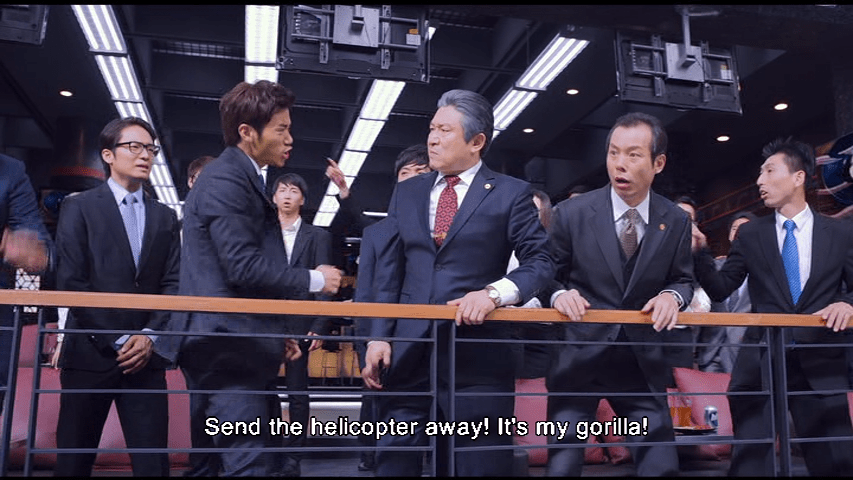
While clearly meant to be a realistic world that has our baseball’s rules and our laws of physics, the amount of absurd, cartoonish or unrealistic elements in the work make it more strange than realistic. Consider Mr. Go, for example, which has two baseball-playing gorillas, a little girl acting as a first-base coach and a finale that involves the baseball coming undone into a million pieces, which sort of overwhelms what would probably otherwise be a 6 if, say, it only had one gorilla.

5: Equal Mix of Realism and Fantasy

A work that sort of teeters between being realistic and being bizarre. This is more of a transitional spot on the scale, as it’s rare that anything ever stays at 5, inevitably going to 4 or 6 instead.

6: Realistic, but with one or two “big lies”

This is mostly realistic but it has one or two big elements (or the equivalent of one or two big elements made up of lots of smaller elements) that keep it from being something that you can honestly expect to ever happen in the real world. Sidd Finch could fit here, as could most of the movies in which a kid becomes a big league skipper or ballplayer.

7: Realistic, but highly unlikely

There’s nothing in this work that couldn’t happen, but it’s highly unlikely and any real event like this would probably instantly become one of the most notable things in baseball history. You could argue that Major League fits here, sort of.

8: Near total-realism

While some rules might be bent or not enforced on a strict basis, and some things might happen that are unlikely (although not nearly as unlikely as things that fall at seven on the scale), this is pretty realistic. Casey At The Bat, the classic poem, could be considered as this, with only the ability of everybody to seemingly hear everything keeping it from being a nine.

9: Utter realism

The only things that are not realistic in works of this category are omnipresent techniques like camerawork and editing for time, or stylish touches added in to indicate, say, that a player is angry. Bull Durham could, in theory, fit in this category, as could most (but not all) fairly true-to-history biopics and most realistic baseball video games.

10: Actual Baseball Footage used/Documentary

If you are watching an actual baseball game, or watching a documentary that uses baseball footage and does so without changing things for dramatic effect, you are watching a 10.


Feel free to consider where on the sliding scale your favorite piece of baseball fiction would fall!

6 PM: First References

This post has been part of the 2016 Baseball Continuum Blogathon For Charity, benefiting the Roswell Park Alliance Foundation. The Roswell Park Alliance Foundation is the charitable arm of Roswell Park Cancer Institute and funds raised will be “put to immediate use to increase the pace from research trials into improved clinical care, to ensure state-of-the-art facilities, and to help improve the quality of life for patients and their families.” Please donate through the Blogathon’s GoFundMe page.


(Blogathon ’16) Musings on AAA Baseball

This post is part of the 2016 Baseball Continuum Blogathon For Charity, benefiting the Roswell Park Alliance Foundation. The Roswell Park Alliance Foundation is the charitable arm of Roswell Park Cancer Institute and funds raised will be “put to immediate use to increase the pace from research trials into improved clinical care, to ensure state-of-the-art facilities, and to help improve the quality of life for patients and their families.” Please donate through the Blogathon’s GoFundMe page.

And now, random musings about AAA Baseball:

AAA baseball is the best baseball in North America outside of the Major Leagues and perhaps certain fall/winter leagues (it varies). This is not in doubt. The athletes who play in cities like Sacramento, Buffalo, Charlotte, New Orleans, and Rochester are some of the best ballplayers on the planet.

However, they are not necessarily the best prospects. This is something often forgotten. Oh, to be sure, many of the best players in the majors have stopped in AAA for at least some time, but the idea that the minors is a ladder where players go up rung by rung is for the most part out of date. The truth is that, with certain exceptions, the vast majority of players in AAA are not prospects anymore, but rather players who have reached or are close to reaching their ceiling, but aren’t good enough to play for their MLB club. AAA has the most accumulated talent outside of MLB, but it doesn’t have the players with potential talent. No, it’s increasingly common that those players with the potential talent skip over AAA, only going back if they get injured or are clearly out of their league in the Majors.

Most people, however, don’t realize that. They still expect that every major prospect will come through, regardless. When Miguel Sano and (for a time) Byron Buxton skipped over Rochester last season, some fans took it as a betrayal. Never mind that, at the time, the Red Wings were pretty set in outfield and third base, or that the two of them were so clearly better than AA that only a fool wouldn’t call them up to the big leagues to help in an unexpected playoff hunt, as the Twins were in.

The solution to this, if there even needs to be a solution (aside from the fact that it might be in baseball’s best interest to have the more-populated cities of AAA see more future stars than the less-populated AA cities, there really isn’t a true problem to be solved), is unknown. Perhaps eliminating the very lowest of the minor leagues- the Arizona and Gulf Coast Leagues, could recombobulate the systems a bit and lead to it becoming more of a rung-by-rung set-up again. Who knows?

Perhaps because of the fact that you are watching the-best-who-aren’t-the-best in front of crowds filled with people just there for beer and/or fireworks, AAA can be a surreal place, especially if you sit behind the visitor’s dugout.

I have heard the late Jose Lima tell a group of half-drunken bros to be polite to the ladies and to remember that kids are around. I have seen Dmitri Young talk down a heckler and then proceed to hit for the cycle on a rehab assignment. I once spent something like 18 innings watching a game with the immortal Corky Miller standing in front of me, his mullet protecting him from a chilly Rochester night.

All of this for the price of a ticket that probably wouldn’t even get you in the door at many MLB stadiums, much less close enough to hear a reliever swear and throw his glove after a bad performance, inevitably leading to Mary, the first lady of the third-base side, telling him that it wasn’t the glove’s fault.

That there is not a Mike Trout Zooperstar is obscene. I mean, c’mon, it’s so obvious.

At one point, Jenny Finch’s husband, Casey Daigle, was a member of the Red Wings. Hopefully their kids get their mother’s arm, because it felt like every time he came on the mound, something bad happened. I don’t know if this is statistically true, but it sure felt like it.

Finally, a story. The Rochester Red Wings are owned by shareholders in the community, the result of lawyer Morrie Silver’s stock drive to buy the team from the Cardinals, who wanted to move the team.

However, I never had been able to get stock. While in practice the shares have no true value, in reality they can be really expensive and it’s really hard to get active shares. This is mainly because many of them have lapsed in the half-century-plus since the stock drive and many that do go up are reportedly bought by the Silver family. In addition, there is the fact that, unlike other community-owned teams like the Packers, there have never been additional sales of stock, which is kind of ridiculous from both a PR standpoint as well as the fact you’d have to imagine that the sales of shares could help fund stadium improvements (this, by the way, is why the Packers did their most recent shares-drive).

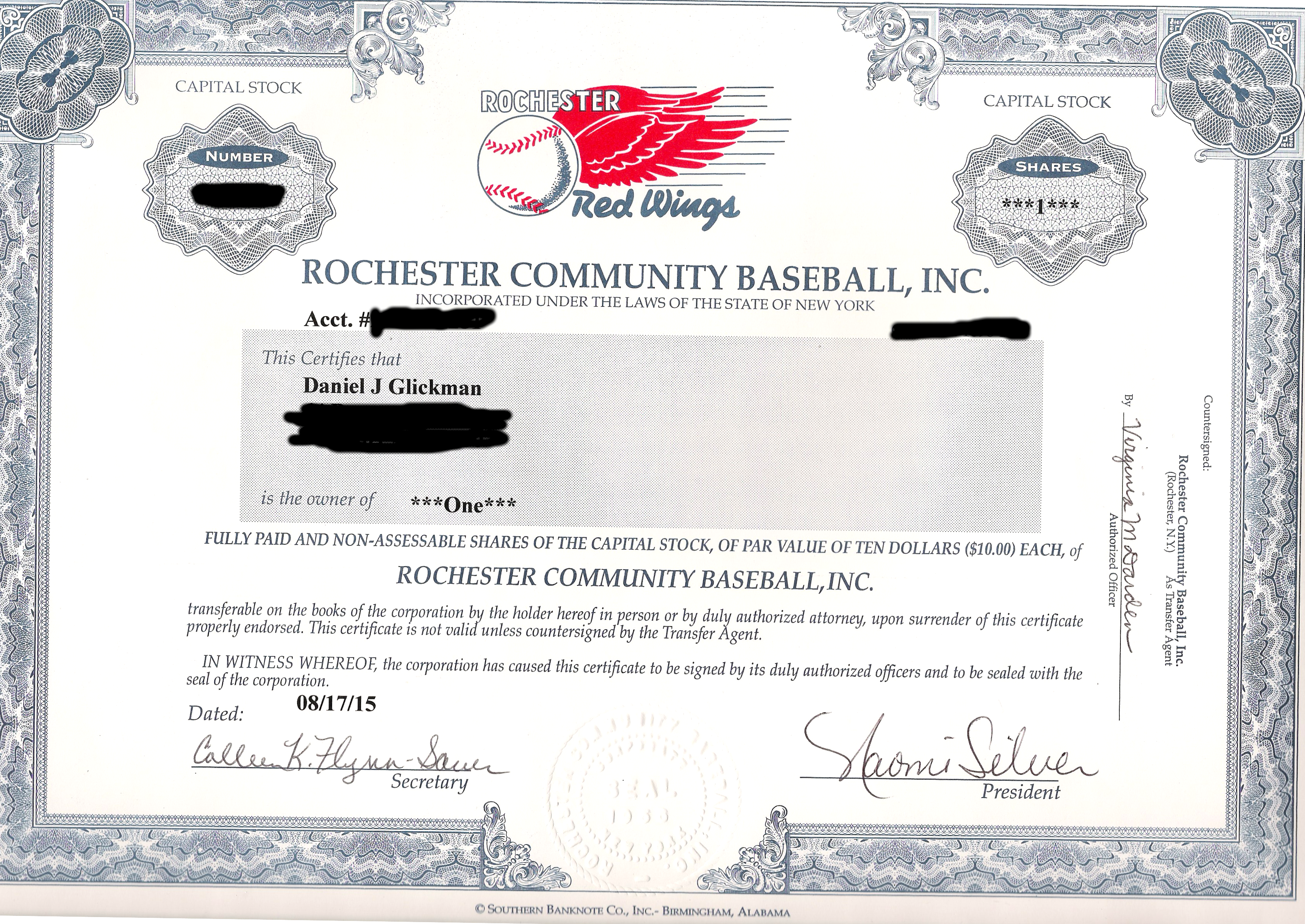
At one point, I thought I’d gotten one, but it turned out that it had expired and been given to the state (in theory I could have gone through New York State to get it back, but that would have required me finding the heir of the guy who had bought it originally and a bunch of other complicated things). But, this past year, I finally got one. I became a owner of Rochester Community Baseball:

RCBstockWhat does it mean? Officially, nothing. One share isn’t enough to get me a personal luxury box, or give me the power to demand that they bring back those Abbott’s Milk Shakes, or even get me a ring if they were to win a Governor’s Cup next season. But it does provide something that is unique about small-city baseball in America: a sense of ownership.

You see, when I go to the ballpark this summer, I’ll be going knowing that, in a very small way, this is my team, my field, and my souvenir cup with Kyle Gibson and Logan Darnell on it (well, that’s what it was last year, probably will be different this year). Fans in St. Louis or Boston can claim they own their favorite team, but they are only speaking in metaphor. For me, it’ll be reality, no matter how small or insignificant that reality is.

And that’s something that AAA will hopefully always have over the majors, no matter how many uber-Prospects jump directly from AA.

(Seriously though, if any Twins front office members are reading this, can we at least have Max Kepler for a month before he gets called up? Please?)

At 5 PM: The Sliding Scale of Fictional Baseball Realism

This post has been part of the 2016 Baseball Continuum Blogathon For Charity, benefiting the Roswell Park Alliance Foundation. The Roswell Park Alliance Foundation is the charitable arm of Roswell Park Cancer Institute and funds raised will be “put to immediate use to increase the pace from research trials into improved clinical care, to ensure state-of-the-art facilities, and to help improve the quality of life for patients and their families.” Please donate through the Blogathon’s GoFundMe page.

(Blogathon ’16) Mr. Go, if adapted for American audiences

This post is part of the 2016 Baseball Continuum Blogathon For Charity, benefiting the Roswell Park Alliance Foundation. The Roswell Park Alliance Foundation is the charitable arm of Roswell Park Cancer Institute and funds raised will be “put to immediate use to increase the pace from research trials into improved clinical care, to ensure state-of-the-art facilities, and to help improve the quality of life for patients and their families.” Please donate through the Blogathon’s GoFundMe page.

Mr. Go. The classic tale of a girl, a gorilla, and the Korean Baseball Organization. Truly, one of the greatest Bizarre Baseball Culture entries of all time, and one you should totally consider purchasing if you are a fan of such things. But what if it was brought to American screens? How would it be adapted?

I have a few ideas:

The cute little Chinese girl, Weiwei, would stay, as would the backstory of her and her gorilla, Ling Ling. Similarly, the main antagonist of the film would be Liao Xiaogang, AKA “Tianjin Guy”, a corrupt nouveau-rich businessman/gangster.

This is a purely economic move. China is now one of the leading movie-going countries in the world, and the only way a baseball movie is going to get any attention there is if it has a Chinese person in it. Also, so much of what drives the plot is the fact that Weiwei is an outsider just trying to keep her friends and circus at home from being folded up.

The jerk-with-a-heart-of-gold scout, Sung Choong-Su, would instead be an American named Samuel “Sunny” Chance, played by James Franco.

For one thing, James Franco has experience with apes, and also he is able to do both comedy and drama, which this film would require. Also, I think civilization in general needs to see James Franco make drunken confessions to a baseball-playing gorilla who is also drunk.

Instead of going to the Doosan Bears, Ling Ling/Mr. Go would be a member of the San Diego Padres.

Don’t try to argue with me on this, you aren’t going to win.

The general manager of the Padres will have an expanded role and be played by John Goodman.

Because, really, imagine John Goodman delivering this line:

Jonah Hill would make a cameo as a sabermetrics expert who suggests how they can best use Mr. Go.

Both because he’s always in movies with James Franco, and as a reference to Moneyball.

There would be a subplot about how some people think Mr. Go isn’t playing the game the right way after he unleashes an epic bat-flip.

It’d provide realism to the affair.

After Mr. Go’s rampage, Weiwei and him would go on Jimmy Kimmel to prove he isn’t a monster.

Of course they would.

Instead of a bidding war between the Chunichi Dragons and Yomiuri Giants, it would be the Red Sox and Yankees.

Because of course it would be.

The veterinarian’s role would be expanded and made into a female love interest for Franco’s character, probably played by somebody quirky like Zooey Deschanel or wittily sarcastic like Anna Kendrick.

Because every goddamn movie, it seems, needs a love interest of some sort, and it sure as heck isn’t going to be Weiwei and Franco.

The NC Dinos, the main opponent of Doosan, would be replaced by the Dodgers. Also, the Division Series at the end of Mr. Go would be replaced with a final regular season series where the NL West title is on the line.

This both would better explain why every game is a home game for Mr. Go (in the Korean movie, they come up with an excuse about renovations at NC’s stadium) while still providing plenty of drama.

Leiting, the evil pitching gorilla who faces Mr. Go, will be renamed “Lightning” instead of “Zeros”.

Because Zeros was a dumb name.

The ending would be left more open to the “Football-playing Gorilla” sequel than the original movie was.

Every movie needs to have a opening for a sequel.

And, finally, it goes without saying that Andy Serkis would be playing Mr. Go.

Duh.

At 4 PM: AAA.

This post has been part of the 2016 Baseball Continuum Blogathon For Charity, benefiting the Roswell Park Alliance Foundation. The Roswell Park Alliance Foundation is the charitable arm of Roswell Park Cancer Institute and funds raised will be “put to immediate use to increase the pace from research trials into improved clinical care, to ensure state-of-the-art facilities, and to help improve the quality of life for patients and their families.” Please donate through the Blogathon’s GoFundMe page.


(Blogathon ’16!) Renaming Moved Teams

This post is part of the 2016 Baseball Continuum Blogathon For Charity, benefiting the Roswell Park Alliance Foundation. The Roswell Park Alliance Foundation is the charitable arm of Roswell Park Cancer Institute and funds raised will be “put to immediate use to increase the pace from research trials into improved clinical care, to ensure state-of-the-art facilities, and to help improve the quality of life for patients and their families.” Please donate through the Blogathon’s GoFundMe page.

There are four teams in MLB who have kept their names despite moving to different cities (or at least parts of a town where it’s enough where they change the first words of the team): The Angels, the Dodgers, the Athletics, and the Giants. What, however, if they had had to change their names? And, no, I’m not letting them just take their old Pacific Coast League team-names.

Let’s go place by place:

Los Angeles Angels of Anaheim, Orange County, California, USA, North America, Northwestern Quadrant, Planet Earth, Sol System, Milky Way, Local Group, The Universe

There was a very good reason why the Angels were originally called the Angels when they started playing: they were actually in Los Angeles, playing at Chavez Ravine. In addition, the LA Angels had been one of the flagship franchises of the Pacific Coast League, so the name had history. But as they moved to Anaheim and went by “California Angels” and then “Anaheim Angels” and now “Los Angeles Angels of Anaheim”, they have become more and more detached from the name. So what if they had abandoned the “Angels” moniker as soon as they left Chavez Ravine? Assuming that they had adopted California as their “first name” after leaving the ravine, perhaps they would be California related, perhaps the “California Bears” or the “California Trout” (ha). Or maybe they’d be more Anaheim-focused, with a name like “Oranges”. Personally, I think they would have to go with “Anaheim Mice”. In addition to the obvious Disneyland connection, there is the fact that mice are said to scare elephants, which would be a nice little poke at the Athletics. Well… it would be if…

The Oakland Athletics

Kept their Elephant logo despite changing to a new name. I think it’d be cool if they still had an old-timey sort of name. How about the “Oakland Eurekas”, after the California State Motto? (For the curious, the Pacific Coast League Oakland team was called the Oaks.)

Los Angeles Dodgers

If the Dodger brand hadn’t been so firmly established in Brooklyn, it feels likely they would have been renamed when they headed west. After all, “Dodgers” has basically nothing to do with Los Angeles. But what would they have been called? I personally think that they would take advantage of Hollywood and go with the name “Los Angeles Stars”. Oh, yeah, that was the name of Hollywood’s PCL team, but, guess what, it wasn’t LA’s, so it counts. So, “Los Angeles Stars” it is.

San Francisco Giants

The San Francisco Prospectors, or “Pros”. That was easy.

At 3 PM: MR. GO!

This post has been part of the 2016 Baseball Continuum Blogathon For Charity, benefiting the Roswell Park Alliance Foundation. The Roswell Park Alliance Foundation is the charitable arm of Roswell Park Cancer Institute and funds raised will be “put to immediate use to increase the pace from research trials into improved clinical care, to ensure state-of-the-art facilities, and to help improve the quality of life for patients and their families.” Please donate through the Blogathon’s GoFundMe page.


What can you get if you donate to the 2016 Blogathon?

Hello, everybody. Taking a quick break from frantically writing the back half of my portion of the blogathon to tell you about what, exactly, you are eligible to possibly receive as a giveaway if you donate to our GoFundMe page:

  • Playing With The Enemy by Gary W. Moore
  • A “Living Baseball Card” mini-documentary on Andre Dawson
  • 2007 AAA Baseball Heroes comic
  • Signed copy of 501 Baseball Books Fans Must Read Before They Die by Ron Kaplan (contributed by Kaplan)
  • Wild and Inside by Stefan Fatsis (Contributed by Kayla Thompson)
  • Signed Copy of The Baseball Codes by Jason Turbow and Michael Duca (contributed by the authors)
  • One of three copies of Out of the Park Baseball (Contributed by Out of the Park Developments)
  • Hank Greenberg: The Hero of Heroes, by John Rosengren (Contributed by Sean Lahman)
  • The Last Hero: A Life of Henry Aaron,  by Howard Bryant (Contributed by Lahman)

Some of these are connected to the blogathon itself. For example, Ron Kaplan and Jason Turbow both will be contributing articles to the guest portion of the blogathon, while Kayla Thompson will be reviewing Wild and Inside and I will be utilizing Out of the Park Baseball for an installment of Breaking OOTP. So, if you want a shot to receive some of these great books, comics or video games, please donate. It won’t take long, and your donation to Roswell Park Alliance Foundation will be “put to immediate use to increase the pace from research trials into improved clinical care, to ensure state-of-the-art facilities, and to help improve the quality of life for patients and their families.”

Thank you.

At 2 PM: Name-Changing.

This post has been part of the 2016 Baseball Continuum Blogathon For Charity, benefiting the Roswell Park Alliance Foundation. The Roswell Park Alliance Foundation is the charitable arm of Roswell Park Cancer Institute and funds raised will be “put to immediate use to increase the pace from research trials into improved clinical care, to ensure state-of-the-art facilities, and to help improve the quality of life for patients and their families.” Please donate through the Blogathon’s GoFundMe page.

(Blogathon ’16) Three Mini-Book Reviews

This post is part of the 2016 Baseball Continuum Blogathon For Charity, benefiting the Roswell Park Alliance Foundation. The Roswell Park Alliance Foundation is the charitable arm of Roswell Park Cancer Institute and funds raised will be “put to immediate use to increase the pace from research trials into improved clinical care, to ensure state-of-the-art facilities, and to help improve the quality of life for patients and their families.” Please donate through the Blogathon’s GoFundMe page.

And now, short reviews of three baseball-related books I’ve read somewhat recently:

Spalding’s World Tour: The Epic Adventure that Took Baseball Around the Globe – And Made It America’s Game, by Mark Lamster: Fun book on the Spalding world tour of 1888-89, set alongside the backdrop of the emergence of America as a world power, Spalding’s entrepreneurial and publicity-seeking abilities, and early labor tensions in baseball. Informative and entertaining about an interesting topic that isn’t wide known, and also provides several examples of Cap Anson being such an asshole you want to find a time machine in order to go back and throttle him. Seriously, Cap Anson was just the worst.

Yes, It’s Hot in Here: Adventures in the Weird, Wooly World of Sports Mascots, by AJ Mass: Written by a former Mr. Met turned ESPN fantasy sports writer, this book is a funny look at the world of mascots, and includes disputes with the Famous Chicken, the Mets’ front office being clueless, and looks at the many different people who don the mascot costumes. Not exactly hard-hitting and deep, but it doesn’t need to be.

Nuclear Powered Baseball: Articles inspired by The Simpsons episode “Homer at the Bat”, edited by Emily Hawks and Bill Nowlin: This e-book from SABR reprints biographies and articles about the classic “Homer at the Bat” episode, as well as a faux-“bioproject” entry for Homer Simpson himself, a listing of baseball players referenced on the show, and Joe Posnanski’s article on “MoneyBART”, the episode of The Simpsons about sabermetrics. Available free to SABR members (but available for sale to non-members), I don’t know if I’d pay money for it, but it’s definitely a fun tribute to one of the greatest baseball episodes in TV history.

At 1 PM: A short break to let you know what is available as giveaways if you donate to the Blogathon.

This post has been part of the 2016 Baseball Continuum Blogathon For Charity, benefiting the Roswell Park Alliance Foundation. The Roswell Park Alliance Foundation is the charitable arm of Roswell Park Cancer Institute and funds raised will be “put to immediate use to increase the pace from research trials into improved clinical care, to ensure state-of-the-art facilities, and to help improve the quality of life for patients and their families.” Please donate through the Blogathon’s GoFundMe page.

(Blogathon ’16) 2017 WBC Team Dominican Republic projections Version 0.1

This post is part of the 2016 Baseball Continuum Blogathon For Charity, benefiting the Roswell Park Alliance Foundation. The Roswell Park Alliance Foundation is the charitable arm of Roswell Park Cancer Institute and funds raised will be “put to immediate use to increase the pace from research trials into improved clinical care, to ensure state-of-the-art facilities, and to help improve the quality of life for patients and their families.” Please donate through the Blogathon’s GoFundMe page.

We are over a year from the 2017 World Baseball Classic, and the road will no doubt be filled with commitments, pull-outs, unusual nationality switches, injuries, trades, new contracts, personal decisions and god-knows-what-else still on the way. But, for now, let’s just imagine everybody is available: who’d be on Team Dominican in the 2017 World Baseball Classic?

Perhaps it would look something like this. Now, a reminder of the WBC roster rules:

  • Any player coming off a major injury or who has a history of injuries is unlikely to participate. This is especially true for the pitchers. (This “rule” is being ignored for version 0.1)
  • Players that will be on new teams are less likely to participate, but shouldn’t be completely ignored, with the exception of pitchers. (This “rule” is being ignored for version 0.1)
  • Teams are made up of 28 players, of which 13 of them must be pitchers and two of them catchers.
  • The pitch count rules make relievers extremely important.

Here we go:

Catchers (3): Wellington Castillo, Francisco Pena, Pedro Severino

First Baseman (3): Albert Pujols, Carlos Santana, Edwin Encarnacion

One of them would presumably also DH, obviously.

Second Baseman (1): Robinson Cano

Third Baseman (2): Adrian Beltre, Maikel Franco

Oh, Adrian Beltre will be in his late 30s in 2017, you say? That is true, but I wouldn’t bet against him.

Shortstop (2): Erick Aybar, Jhonny Peralta

Designated Hitter/3B/Who-The-Heck-Knows (1): Miguel Sano

Outfielders (4): Jose Bautista, Nelson Cruz, Carlos Gomez, Starling Marte

Starting Pitchers (4): Johnny Cueto, Carlos Martinez, Danny Salazar, Francisco Liriano

Relief Pitchers (8): Jeurys Familia, Kelvin Herrera, Arodys Vizcaino, Pedro Strop, Santiago Casilla, Luis Garcia, Antonio Bastardo, Alexi Ogando

And so, that’s Version 0.1 of my TeamDR projections. Version 1.0, which will include actual consideration as to whether I think somebody will actually take part or not, will come out sometime in the future. But until then…. feel free to imagine how the team would do if it looked like this.

At Noon: Mini-Book Reviews!

This post has been part of the 2016 Baseball Continuum Blogathon For Charity, benefiting the Roswell Park Alliance Foundation. The Roswell Park Alliance Foundation is the charitable arm of Roswell Park Cancer Institute and funds raised will be “put to immediate use to increase the pace from research trials into improved clinical care, to ensure state-of-the-art facilities, and to help improve the quality of life for patients and their families.” Please donate through the Blogathon’s GoFundMe page.


(Blogathon ’16) 2017 WBC Team USA Projections Version 0.1

This post is part of the 2016 Baseball Continuum Blogathon For Charity, benefiting the Roswell Park Alliance Foundation. The Roswell Park Alliance Foundation is the charitable arm of Roswell Park Cancer Institute and funds raised will be “put to immediate use to increase the pace from research trials into improved clinical care, to ensure state-of-the-art facilities, and to help improve the quality of life for patients and their families.” Please donate through the Blogathon’s GoFundMe page.

We are over a year from the 2017 World Baseball Classic, and the road will no doubt be filled with commitments, pull-outs, unusual nationality switches, injuries, trades, new contracts, personal decisions and god-knows-what-else still on the way. But, for now, let’s just imagine everybody is available: who’d be on Team USA in the 2017 World Baseball Classic?

Perhaps it would look something like this. Now, a reminder of the WBC roster rules:

  • Any player coming off a major injury or who has a history of injuries is unlikely to participate. This is especially true for the pitchers. (This “rule” is being ignored for version 0.1)
  • Players that will be on new teams are less likely to participate, but shouldn’t be completely ignored, with the exception of pitchers. (This “rule” is being ignored for version 0.1)
  • Teams are made up of 28 players, of which 13 of them must be pitchers and two of them catchers.
  • The pitch count rules make relievers extremely important.

Catchers (3): Buster Posey, Stephen Vogt, Derek Morris

First Baseman (2): Paul Goldschmidt, Anthony Rizzo

Second Basemen (1): Dee Gordon

Third Basemen (2): David Wright, Josh Donaldson

David Wright is basically the closest thing that Team USA has to a given and after his performances in 2009 and 2013 he’s probably in if he has any sort of good season in 2016. If we were going strictly by performance, it’d be Donaldson and Manny Machado (who might play for the Dominican), with Kris Bryant also being a very real possibility.

Shortstop (2): Troy Tulowitzki, Brandon Crawford

Utility (1): Ben Zobrist

The greatest utility player of his generation.

Outfield (4): Bryce Harper, Mike Trout, Giancarlo Stanton, Kevin Kiermaier

Or maybe Adam Jones. Or maybe Lorenzo Cain. Or maybe A.J. Pollock. Or maybe Jason Heyward. Or maybe…. really, even ALL FOUR of the guys I have in this pie-in-the-sky version 0.1 were to pull out (doubtful, as I seem to remember Harper and/or Trout saying they wanted in for 2017 shortly after they said he wasn’t in for 2013), it’s likely that Team USA will have one of the best outfields in the event.

Starting Pitchers (4): Zack Greinke, Clayton Kershaw, Jake Arrieta, Max Scherzer

Like outfield, the sheer depth of American pitching means that it’s likely they will, on paper, have one of the best staffs in the WBC even if there are plenty of pull-outs. And, given that this is the WBC and the starting pitchers are the hardest players to have participate, there will be plenty of pull-outs. Madison Bumgarner, Dallas Keuchel, the various Mets, Sonny Gray, etc. are all possibilities.

Relief Pitchers (9): Wade Davis, Darren O’Day, Dellin Betances, Trevor Rosenthal, Tony Watson, Zach Britton, Carson Smith, Ken Giles, Will Harris


And so, that’s Version 0.1 of my Team USA projections. Version 1.0, which will include actual consideration as to whether I think somebody will actually take part or not (for example, I doubt Zack Greinke would play), will come out sometime in the future. But until then…. feel free to imagine how the team would do if it looked like this.


At 11 AM: Dominican Republic WBC Projections 0.1

This post has been part of the 2016 Baseball Continuum Blogathon For Charity, benefiting the Roswell Park Alliance Foundation. The Roswell Park Alliance Foundation is the charitable arm of Roswell Park Cancer Institute and funds raised will be “put to immediate use to increase the pace from research trials into improved clinical care, to ensure state-of-the-art facilities, and to help improve the quality of life for patients and their families.” Please donate through the Blogathon’s GoFundMe page.

(BLOGATHON ’16!) International Baseball Culture: Mitsuru Adachi’s “Touch”, Part 1, which ironically doesn’t have much baseball in it

This post is part of the 2016 Baseball Continuum Blogathon For Charity, benefiting the Roswell Park Alliance Foundation. The Roswell Park Alliance Foundation is the charitable arm of Roswell Park Cancer Institute and funds raised will be “put to immediate use to increase the pace from research trials into improved clinical care, to ensure state-of-the-art facilities, and to help improve the quality of life for patients and their families.” Please donate through the Blogathon’s GoFundMe page.

In International Baseball Culture, I look at baseball-related entertainment from outside the USA that isn’t bizarre, but is interesting, perhaps learning some new things along the way!

In 2005, the Japanese television station TV Asahi held a special on the 100 most popular anime (animation) in history, as voted on by Japanese viewers. While many of the most popular programs were fantasy, adventure or science fiction, such as the Gundam series of giant robot programs (at number two) or Dragon Ball (at number three), the top ten also had a baseball anime: Touch, which was seventh.

What is Touch? Well, to put it in simple terms, it’s a tale of two stories: the baseball one and the off-the-field one. It’s about three teenagers (twin boys and their girl-next-door neighbor) who navigate high-school, relationships and their pitfalls while trying to bring their school glory on the diamond as they try to reach Koshien, Japan’s national high school baseball tournament, which is like March Madness and a Friday night in Texas combined.

Needless to say, it struck a nerve with Japanese audiences, and the 2005 program’s polling was not that out of the ordinary: A follow-up list that included votes from after the TV Asahi special was aired also had Touch in the top ten, at number nine. Nor was this a recent phenomena, either: during it’s original run in the 1980s, it was, according to some sources, the most watched anime in the history of Japan. Ever.

The series was, in itself, adapted from a manga (comic) of the same name, written and illustrated by Mitsuru Adachi, that saw it’s volumes sell over an estimated 100 million copies. Just to put that in perspective, in 2010 the population of Japan was around 128 million. Of course, that doesn’t mean over three out of four Japanese people owned at least one copy of a volume of Touch… but it does mean that those who did liked it very much, buying every volume.

From what I’ve read about the series, it’s not hard to see why it would have such broad appeal, as it apparently has something for everyone. It has baseball action (and also some detours into boxing and other sports) for the boys, romance for the girls, and drama and comedy for everyone. And apparently all of those things are done well enough where even people who normally can’t stand stuff like that seem to like it- I’ve come across several reviews that include lines like “I don’t even like baseball but I was enthralled by the game episodes” or “the romance plot is actually realistic and well-handled.”

And yet, despite the fact that Touch is one of the most successful anime and manga in the history of Japan, it has never seen official release in the United States, and it’s unlikely that it will anytime soon, either (the anime and manga import market is mainly focused on recent releases, and what old ones that do happen are usually Sci-Fi or Fantasy). However, there is apparently a unspoken agreement between the Japanese entertainment industry and it’s English-speaking fans that they won’t sue anybody who translates and distributes translated versions of the show/book, so long as they stop doing it if an actual agreement to distribute them in the USA is made, so I was able to find copies of both the anime and manga online.

But anyway: a baseball-centric story that is one of the most popular and well-regarded anime/manga in Japanese history, and it’s almost completely unknown to American audiences? What better way to start International Baseball Culture? (after the jump)

Continue reading

(Blogathon ’16) WBC News for January 29, 2016

This post is part of the 2016 Baseball Continuum Blogathon For Charity, benefiting the Roswell Park Alliance Foundation. The Roswell Park Alliance Foundation is the charitable arm of Roswell Park Cancer Institute and funds raised will be “put to immediate use to increase the pace from research trials into improved clinical care, to ensure state-of-the-art facilities, and to help improve the quality of life for patients and their families.” Please donate through the Blogathon’s GoFundMe page.

It’s time for a World Baseball Classic update! With the first qualifiers coming up, more news has started to come out. Let’s take a look at some of the news:

Sydney Qualifying Pool Rosters and Schedules released:

On Wednesday, the rosters and schedules for the Sydney qualifying pool came out. They can be found over here on Baseball America. I’ll have a more thorough preview as we get closer to the event, but it’s definitely a case where Australia should be considered the heavy favorite, full of players with experience in MLB or the Minors. After Australia, it’s a fight for the second spot to face them in a winner-take-all game to get to the main tournament. Clay Rapada is probably the most notable player outside of the Australians, as he will be playing for the Philippines, the country of his father’s birth, before retiring. Former All-Star Jason Bartlett, also of Filipino descent, was also expected to play, but I don’t see him on the roster.

News from other qualifying pools:

As I mentioned last time, the qualifiers, unlike the main tournament, are not events where MLB teams are required to allow 40-man roster players to take part if there’s an overlap with official team acitivites. This will most hurt a team like Mexico, where the Blue Jays are unlikely to allow their three Mexican players from taking part in the March qualifier in Mexicali.

Jon Morosi, one of the best people to follow for WBC news, had information on his Twitter feed on the German team, who will be managed by Garth Iorg (yes, that Garth Iorg). Depending on what difficulties Mexico has, they could be a threat in Mexicali, even with Max Kepler likely skipping as he tries to win a spot on the Twins, they will have Donald Lutz, one of the few Germans with MLB experience.

Bruce Chen, who retired last season, is apparently willing to pitch for Panama.

Other WBC News:

Ozzie Guillen is totally up for managing Team Venezuela in 2017.


And that’s it… for now.

Keep an eye out for more WBC news on the Baseball Continuum as it occurs.

At 9 AM: International Baseball Culture

This post has been part of the 2016 Baseball Continuum Blogathon For Charity, benefiting the Roswell Park Alliance Foundation. The Roswell Park Alliance Foundation is the charitable arm of Roswell Park Cancer Institute and funds raised will be “put to immediate use to increase the pace from research trials into improved clinical care, to ensure state-of-the-art facilities, and to help improve the quality of life for patients and their families.” Please donate through the Blogathon’s GoFundMe page.