With the 2026 World Baseball Classic about to begin, it’s time for my preview of the tournament. Here’s Pool A.
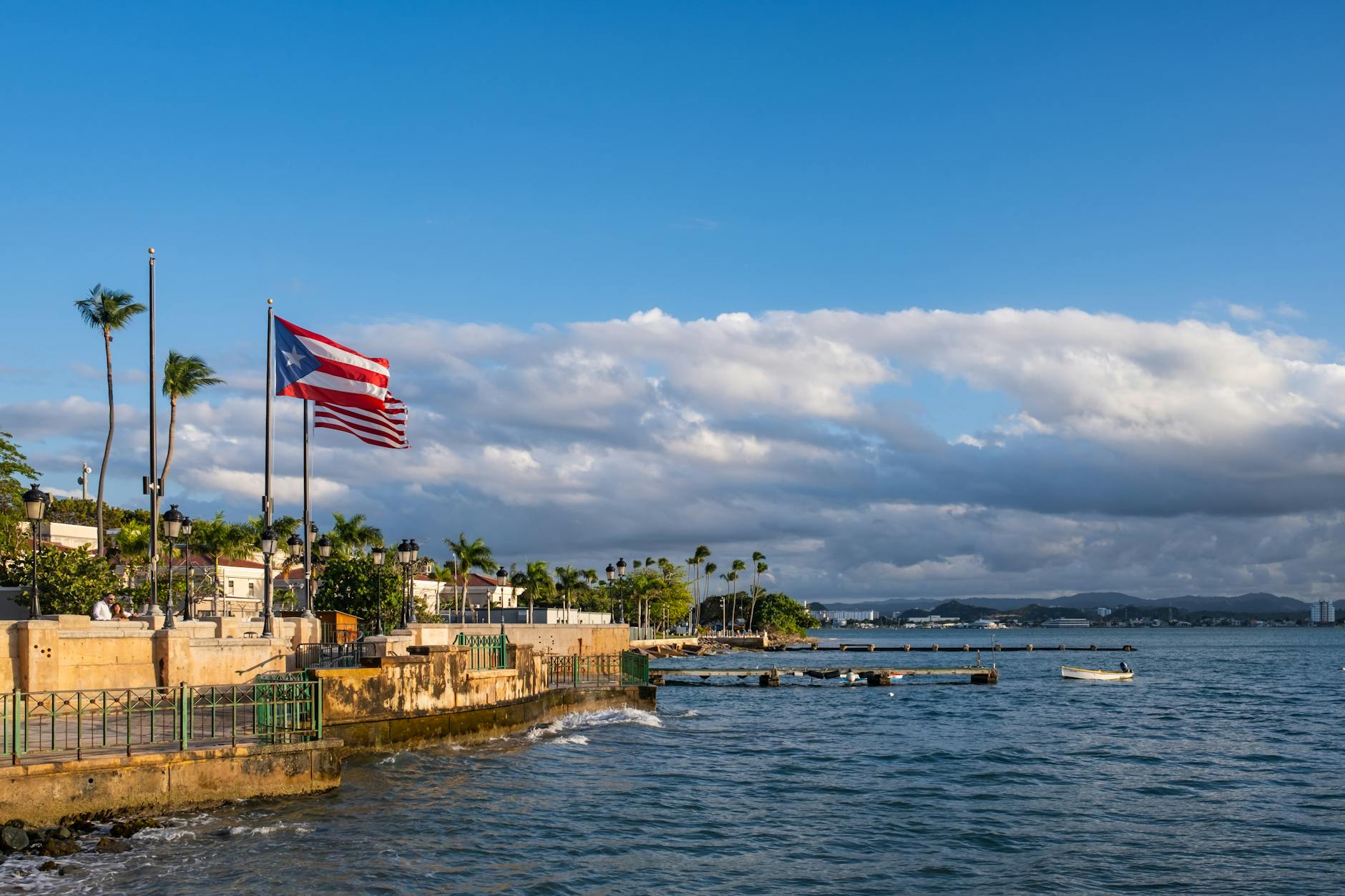
About the Venue: Named for the first Puerto Rican to play in the big leagues, Hiram Bithorn Stadium holds over 19,000. It’s the go-to place for MLB events in Puerto Rico, and infamously hosted the Montreal Expos during their residencies in San Juan.
About the Pool: This is the hardest pool to predict. Every team here can win the pool, but I can also probably make an argument for every team in this pool save for maybe Puerto Rico and Canada being the one who finishes last and gets bounced to qualifying.
Go below the jump for the full preview.
Puerto Rico
About The Country: An unincorporated territory or “Commonwealth” of the United States (which gained the island after the Spanish-American War), Puerto Rico’s residents are US Citizens but do not have voting representatives in Congress and are also unable to vote in presidential elections (although they are able to vote in party primaries).
The status of Puerto Rico is something of a question mark, with some Puerto Ricans wanting to become the 51st state, others wanting full independence, and others wanting to maintain something like the status quo. Puerto Rico’s capitol city of San Juan is the oldest European-founded city under the control of the United States.
Baseball History: Baseball was introduced to the Puerto Ricans by Cubans before the Spanish-American War, and it was nurtured as the United States took over the Island after the war. Traveling teams from the Majors, Negro Leagues and Cuban Leagues would regularly visit to island to train and play games, further entrenching the game. A semi-pro and then a professional league was formed, and Puerto Rico became a baseball hotbed producing some of the baseball’s earliest Latino stars. Chief among them, of course, is Roberto Clemente, who remains a hero and icon to the people of Puerto Rico
International Baseball History: Puerto Rico has been playing in international competition since the 1940s. Notable results include two second-place finishes at the WBC (losing to the Dominicans and the USA in 2013 and 2017), a gold in the 1951 World Cup, a bronze finish in the demonstration sport baseball tournament at the 1988 Olympics, and a gold at the 2019 Pan-Am Games. Puerto Rico is currently ranked seventh in the WBSC world rankings.
Road to the WBC: Automatically qualified.
Puerto Rico’s Baseball League: The Puerto Rican Winter League, officially the Liga de Béisbol Profesional Roberto Clemente, has existed in one form or another since the late 30s. It had financial issues in the late 2000s, even missing a season, but is now firmly back in operation with six teams. The winning team goes to the Caribbean World Series. Puerto Rico also has a summer league, but it is amateur in nature.
Puerto Rican MLB Players: About 309 Puerto Ricans have played in leagues considered MLB-level, although it may be a little more or a little less due to some not being literally born in Puerto Rico or because of somewhat haphazard record-keeping in older or Negro Leagues. Not surprisingly, a lot of players on this year’s squad are in MLB or have been… but not as many as they hoped. Due to issues with how insurance is acquired for the tournament, as well as injuries and in one case an old marijuana suspension, several MLB players aren’t there: Francisco Lindor, Javier Baez, Carlos Correa, Jose Berrios (although he may appear later in the tournament), etc.
However, there are still some MLB names on the squad. For example: Edwin Diaz, Heliot Ramos, Willi Castro, Eddie Rosario, Christian Vazquez and Puerto Rican-Americans like Nolan Arenado and Seth Lugo.
Notable names: Outside of the main MLB players, you may recognize some recent MLB players who now play elsewhere, such as pitchers Jose De Leon (now playing in Mexico) and Yacksel Rios (trying to make his way up again in the Cubs organization). That you probably don’t recognize or only vaguely recognize those names is a testament to how badly hurt the roster has been hit by insurance issues, injuries, and the like.
Highest Achievers: Infielder Emmanuel Rivera has played in the big leagues the last few years without making too much of an impression, but he’s entering the WBC red-hot after a great year in the Puerto Rican Winter League, slashing .348/.410/.404 and 21 RBI in 161 plate appearances. If he can keep up his winter league success, it could be a huge help to Puerto Rico.
Ones to Watch: If there is one plus for how decimated Puerto Rico’s roster has been by injury and insurance issues, it’s that it could allow for some rising prospects to shine. Shortstop Edwin Arroyo is the No. 8 prospect in the Reds’ organization and slashed .284/.345/.371 in AA last season, but the really big prospect to watch is right-handed pitcher Elmer Rodriguez. The No. 3 prospect in the Yankees’ system and No. 82 in all of baseball, he finished second in all of the minors in strikeouts last season, with 176. He was also eighth in the minors in ERA (2.58) and opponent batting average (.192).
Manager/Coaching Staff: The managerial staff of Puerto Rico is a who’s who of past Puerto Rican ballplayers, helmed overall by Yadier Molina. Also on the staff: Edgar Martinez, Juan Gonzalez, Sandy Alomar Jr., Joey Cora, Alex Cintron, and Juan Nieves.
Outlook: The outlook for Puerto Rico is nowhere near as good as it could have and should have been. The loss of the team’s heavy middle-infield depth as well as a few big-time pitchers have turned a team that could have been a big favorite in this pool into merely one of several. Can those they do have step up?
Canada
About The Country: The world’s second-largest country in land area, its border with the United States is the world’s longest. Among the things Canada has given the world over the years include the modern concept of peacekeeping forces, lacrosse, ice hockey, and, of course, William Shatner.
Baseball History: Canada’s history with baseball is almost as old as the game itself, with some evidence that they were playing a game called baseball (but not necessarily the baseball we know) as early as 1838, one of the earliest references to the sport. Throughout baseball’s history, there have been some Canadians playing in America, although they did not begin arriving in large numbers until the past few decades.
Professional Canadian teams have played against American ones since at least the 1870s, when a London, Ontario club played in the International Association (an early minor league). Clubs from Toronto and Montreal were mainstays of the International League before they gained Major League teams.
International Baseball History: Canada probably has the dubious distinction of being the best baseball country to never reach the second round of the WBC — it’s not helped that they usually are in the same pool as the USA and Mexico, admittedly. Their most notable WBC moment is likely upsetting Team USA in the first round in 2006. Canada has played in two Olympics (finishing fourth in 2004), won two Pan-Am Games, and grabbed two bronzes in the old World Cup.
Canada is currently ranked 20th in the WBSC World Rankings, although this is partly a result of them not having many major events last year, which skewed the rankings.
Road to the WBC: Automatically qualified.
Canada’s Baseball League: Canada doesn’t have a true national baseball league, instead being joined at the hip to America’s baseball system (MLB, the Minors, the Indy Leagues, etc.). However, there are some high-quality amateur and semi-pro leagues that are entirely based in Canada, such as the Intercounty League in Ontario, which has recently rebranded to the “Canadian Baseball League” and announced it will become fully professional this year. This will make it the first truly professional baseball league with all of its teams in Canada since a short-lived previous incarnation of the Canadian Baseball League played a half-season in 2003.
Canadian MLB Players: Canada has had at least 271 players make official appearances at the major league level, including two Hall-Of-Famers: Fergie Jenkins and Larry Walker. It is likely that Joey Votto will one day join them. However, it should be noted that some players born in Canada, most notably Vladimir Guerrero Jr., were only born there due to circumstance (such as their father playing in Montreal).
Regardless, many of the top Canadian players in baseball are here. Both Josh Naylor and Bo Naylor are playing, as are Tyler O’Neill, Jameson Taillon, and Michael Soroka. In fact, there are 14 players on the roster who are considered likely enough to make an MLB club that you can say that they are MLB players, and another (James Paxton) who was an MLB player up until his recent retirement. Of particular note are outfielders Owen Caissie and Denzel Clarke of the Marlins and Athletics, respectively, who are two young outfielders who, though still early in their careers, could grow to become the leaders of the next wave of Canadian MLB talent.
One notable mainstay of Canada’s WBC teams that won’t be appearing is Freddie Freeman. Although born and raised in California, both of Freeman’s parents are Canadian, he holds joint citizenship, and he has traditionally played for Team Canada in tribute to his mom, who passed away when he 10. This time, however, he has taken a pass, citing personal issues. Given the well-known medical issues of one of his sons, here’s hoping that everything turns out alright.
Notable names: James Paxton isn’t the only pitcher in the rotation who has come out of retirement to play for Canada this year. Although not nearly as successful as the 11-year MLB veteran, Phillippe Aumont still pitched parts of four seasons for Philadelphia in the mid 2010s. Although he retired after COVID to (I’m not making this up) become a farmer in Quebec, he still suits up for Canada in international competitions.
Another notable name is Cal Quantrill, the son of Canadian baseball legend Paul Quantrill. He’s had an uneven career so far in the bigs, and struggles the last few seasons have left him trying to make it back to a big club with Texas. No doubt he’s hoping a good performance in the WBC will help catch the eyes of other clubs if the Rangers pass him up.
Highest Achievers: Aside from the obvious MLB players, the top player on the squad is likely Matt Davidson. Although he played part of six seasons in the bigs, the Canadian-American infielder has really found his stroke in Korea, where he’s hit 82 home runs over the last two seasons.
Other players coming from high-level international leagues include pitchers Brock Dykxhoorn (CPBL), Jordan Balazovic (CPBL), and Logan Allen (Mexican League).
Ones to Watch: Besides the aforementioned Owen Caissie (who hasn’t had enough MLB games to stop qualifying as a prospect), the biggest prospect for Canada is a fascinating left-handed pitcher named Adam Macko. Born in Slovakia and raised in Ireland before moving to Canada as a teenager, he’s the No. 21 prospect in the Toronto system. He struggled at AAA last season but is still well-regarded and considered a future member of the Blue Jays’ pitching staff.
Manager/Coaching Staff: Ernie Whitt may have been born in Detroit, but he is Mr. Canadian Baseball, having managed the team in nearly every major competition since the 2004 Olympics. His coaching staff includes many of the best Canadian players of recent decades, such as Justin Morneau, Russell Martin, and Paul Quantrill.
Outlook: This is probably the best team Canada has put together for a WBC in years, and in a surprisingly wide-open pool, this is likely their best chance to finally escape the opening round. And while they are nothing compared to the big favorites like Team USA, Dominican Republic, or Japan, they could threaten them in a single game of a knockout, making them a potentially dangerous dark horse in the tournament overall.
Colombia
About The Country: Named after Christopher Columbus, Colombia is an incredibly diverse country biologically, ideologically, and geographically. It has had to (and continues to) deal with drug lords, insurgent guerillas, ideological divides, and general crime over the years, but has also in recent decades built South America’s third-largest economy.
Baseball History: Baseball has been played in what is now Colombia since perhaps as early 1870s or 1880s, although it may have been being played even earlier in Panama (which was for years a part of Colombia). It definitely was being played there by the early 20th century,
Baseball has largely remained popular over the years only in the coastal areas of the country, such as Baranquilla and Cartagena — it has largely struggled to catch on in more inland areas such as the capitol city of Bogota, where soccer and boxing reign supreme.
International Baseball History: Colombia has a surprisingly long history of play in international baseball, including winning two amateur World Cups that it hosted (although notably these happened in years where Cuba didn’t take part due to political tension between Cuba and Colombia at the time) and a Gold Medal in the Pan-Am Games in 2023. They qualified for their first WBC in 2017, finishing 12th.
Colombia is currently 13th in the WBSC World Rankings.
Road to the WBC: After finishing last in their pool in 2023, Colombia had to go through qualifying, where they earned a spot with a first-place finish in an event in Arizona last year.
Colombia’s Baseball League: Colombia has had professional baseball on-and-off since the late 1940s, but the current league (the Colombian Professional Baseball League) dates back to 2004. Playing in the Northern Hemisphere’s winter, its size has fluctuated over the years between four and six. At times, the league times sent its champion to the Caribbean Series, winning in 2022.
Colombian MLB Players: A total of 34 players born in Colombia have played in the majors. Many of those players who have been active over the last few years will be on the squad, although Nabil Crismatt had to step away due to surgery. The most notable players from MLB rosters or who will likely see MLB action this year are former All-Star pitcher Jose Quintana (who actually trails only Edgar Renteria in career WAR for a Colombian) and infielder Gio Urshela. Donovan Solano might also get picked up by a team.
Notable names: Although no longer in MLB, it’d feel wrong not to mention Julio Teheran. The two-time All-Star hasn’t played in the bigs since 2024, but he remains one of the greatest players to ever come out of Colombia.
Highest Achievers: The best player on Team Colombia to never make the big leagues is probably Reynaldo Rodriguez. The 39-year-old first baseman has hit 286 home runs across a variety of leagues and continues to rake in Mexico, but hit a ceiling in AAA in America. He’ll be one of Colombia’s main power threats in the tournament.
Ones to Watch: Michael Arroyo is a shortstop prospect for Seattle who rates fifth in the organization and 67th overall. A spray-hitter with some pop, he slashed .262/.401/.433 with 17 home runs across A-ball and AA last season.
Manager/Coaching Staff: A former catcher, Jose Mosquera has managed in the low minors of the Pirates system the last few years, and has also seen success in the Colombian League, even managing the 2022 Caribbean Series champion squad. The most noteworthy name on the coaching staff overall is probably Jhonathan Solano, Donovan’s brother who played parts of three MLB seasons.
Outlook: Colombia is likely on the lower-end of the teams in this pool, but can definitely beat any team in this pool on a good day… or lose to any of them on a bad one. While they are unlikely to challenge for a title, they still have a shot at getting into the knock-out rounds.
Cuba
About The Country: The island that is now Cuba was claimed for Spain by Christopher Columbus, and it remained Spain’s until 1898, when the United States aided Cuban rebels in overthrowing the Spanish hold on the island during the Spanish-American War. For the next half-century or so, Cuba went through a series of governments but remained friendly to the United States, until dictator Fulgencio Batista was overthrown by communist rebels led by Fidel Castro in the late 1950s.
Since then, the history of Cuba has been filled with incidents that anyone who paid any attention in history class would recognize, the Bay of Pigs Invasion and the Cuban Missile Crisis chief among them.
There remains an embargo by the United States upon the country, which is now led by President Miguel Diaz-Canel, the first non-Castro to hold the office since the revolution.
Baseball History: Baseball first became popular in Cuba as a form of revolution against their colonial Spanish overlords. By playing baseball, and not soccer or bullfighting, the Cubans were building a new culture, separate from the old culture of the colonial power.
When they became free from the Spanish after Spanish-American War, they continued to play it. Cuba was a hotbed of baseball, producing some of the best players in the world- although the tragedy of segregation kept many of their finest players from ever playing in Major League Baseball. Such was the popularity of baseball that from 1954 to 1960 Havana even had its own team in the International League, the Havana Sugar Kings.
The rise of Fidel Castro and the Communist Party’s nationalization of Cuba’s baseball structure, as well as the US boycott on the island nation, changed everything in the 1960s. Since then, Cuba has been the forbidden isle of baseball, with its technically-amateur national team dominating international competition until professionals began to arrive in the 2000s.
As an aside, the tale that Fidel Castro was offered a contract by a Major League organization when he was young is almost certainly false. Castro was by some accounts a pretty good amateur pitcher with an okay curveball, but not a top prospect by any means.
International Baseball History: Cuba was once the unquestioned power of international baseball, winning 25 of the old World Cups, 12 Pan-American Games golds, and three Olympic golds. However, this was largely due to a quirk of how many international sports worked before the 1990s and 2000s: only amateurs were allowed to play, meaning that the state-sponsored Cuban National Team alone was able to send out its best players. Once professionals were allowed to play internationally, however, Cuba’s advantage went away, most famously when they were upset by Ben Sheets and the 2000 USA Olympic Team. Although the Cubans were able to remain one of the main powers of international baseball afterwards and even snagged a second-place finish in the first WBC, increased defections over the years have caused them to fall into relative also-ran territory in international baseball, although they still get the occasional good showing, such as a fourth-place finish in the 2024 WBC.
Cuba is currently 10th in the WBSC World Rankings.
Road to the WBC: Automatically qualified.
Cuba’s Baseball League: Cuba has two leagues: the main Cuban National Series and the Cuban Elite League. The National Series is the larger of the two and plays in the winter, while the Elite League is meant to be more of a showcase league made of the top teams from the National Series. Both are technically amateur, in keeping with Cuba’s Communist approach to sports.
Cuban MLB Players: At least 401 players born in Cuba have appeared in leagues that MLB considers MLB-level, including the Negro Leagues. But only one current MLB player is on the roster: Yoan Moncada. While the Cubans have opened up the national team to some defectors and allowed some players to go to Mexico or Japan to play professionally, they still won’t let some defectors play, and plenty of defectors don’t want to play for them. And so this year only Moncada is playing for Cuba among MLB players.
Notable names: That said, there are some Cubans with MLB experience who will be suiting up. The most notable is 44-year-old former All-Star Alexei Ramirez. The 44-year-old infielder was a member of the very first Cuban WBC team, and in between he’s defected, played nine years in the majors, been an All-Star, won two Silver Sluggers, retired, and moved back to Cuba. Another “undefector” is Erisbel Arruebarrena, who moved back to Cuba after a brief and disastrous stint with the Dodgers last decade. Yariel Rodriguez may pitch in the majors again, but is currently off the Blue Jays’ 40-man roster .
Highest Achievers: The biggest name on the team without MLB experience is undoubtedly Alfredo Despaigne. The 39-year-old OF/DH has had stints in Japan and Mexico but currently just plays in Cuba. He holds the record for all-time career HR in the WBC, with seven. This probably is his last WBC, but then again I wouldn’t be surprised if people said that last time as well.
Then there is Livan Moinelo. A pitcher who has been allowed to ply his trade in Japan, he won the MVP of the Japanese Pacific League last year when he finished with a 1.56 ERA and 172 strikeouts in 167 innings. Other Cuban players in Japan include outfielder Ariel Martinez and pitcher Raidel Martinez.
Ones to Watch: There aren’t many great Cuban players who haven’t either defected or gone to play summer ball in a foreign country, but outfielder Yoelquis Guibert may be an exception. Aside from one very brief stint playing for Quebec in the independent Frontier League, he’s never left Cuba for one of the main summer leagues. The 31-year-old hit well in the last WBC, with a .333 batting average. It’ll be interesting to see if he keeps it up.
Manager/Coaching Staff: German Mesa, a star player for the Cuban squad in the 80s and 90s, will skipper the team this year. He’s spent most of his retirement coaching or managing in Cuba or in non-embargoed countries like Nicaragua. The rest of the coaching staff is also, not surprisingly, Cuba-based, with the most notable names being Pedro Luis Lazo and Omar Linares, arguably two of the best Cuban players of their era never to defect.
Outlook: Without many of its defectors, this Cuban squad is a shadow of what it once was. However, it remains dangerous and could easily get through the group. It could also, however, possibly end up getting sent to qualifiers — something once thought unthinkable.
Panama
About The Country: Perhaps no other country is more defined in the world’s mind by a work of engineering as Panama is: the Panama Canal is the first thing a person thinks of when one thinks of the country, the southernmost in Central America. This is with good reason, as the Canal was in some ways the reason Panama exists as an independent nation: the United States aided the country’s secession from Colombia in the early 1900s in exchange for the right to build and then control the Canal (the Canal has been back under Panamanian control since the turn of the 21st century).
The capitol of Panama is Panama City.
Baseball History: Baseball came to Panama during the construction of the canal, and it has been a staple of Panamanian culture since. Omar Moreno, Manny Sanguillen, and Hall of Famer Rod Carew were born in Panama. While Panama’s baseball establishment has had its problems since the 1970s, it still produced a certain right-handed reliever named Mariano Rivera.
International Baseball History: Panama has often been an also-ran compared to the other Latin baseball powers, although they still gained three medals in the old IBAF World Cup. The WBC team infamously fell flat in the first two tournaments (2006 and 2009), at one point even getting mercy-rule no-hit by the Netherlands in 2006. They then failed to qualify for the 2013 or 2017 tournaments despite hosting the pools before finally returning to the WBC in 2023. However, the Panamanian team has seen some nice results recently, including a fourth-place finish at the Pan Am Games in 2023 and a fifth-place finish at the 2024 Premier12.
Panama is currently eighth in the WBSC world rankings.
Road to the WBC: Automatically qualified.
Panama’s Baseball League: The Panamanian Professional Baseball League, or Probeis, has been running off-and-on in various forms (at times taking quite long hiatuses) since the 1940s. There’s also a well-regarded amateur league.
Panamanian MLB Players: There have been 81 Panamanian-born players in MLB-level history, including two Hall-of-Famers (Rod Carew and Mariano Rivera). Six players currently on MLB roste are on Team Panama, including Logan Allen, who is an American of Panamanian descent. The most notable is definitely Jose Caballero of the Yankees. The shortstop led the entirety of the majors last year with 49 stolen bases, although his hitting still leaves something to be desired. Other MLB players on the team include Cubs’ catcher Miguel Amaya, St. Louis catcher Ivan Herrera, and infielders Leo Jimenez and Edmundo Sosa.
Notable names: Some former (and possibly future) big-leaguers on Team Panama include Christian Bethancourt, Javy Guerra, Johan Camargo, Ruben Tejada, and Paolo Espino.
Highest Achievers: Alberto Baldonado had a brief stint in the majors for the Nationals, but has become one of the best relievers in Japan the last few years. Another former MLB player from Panama now playing in Japan is Humberto Mejia, who mainly worked in relief last season.
Ones to Watch: There are two players on the roster who make MLB.com top prospect lists: outfielder Enrique Bradfield Jr. of the Orioles (their No. 10 prospect) and another catcher (Panama makes good catchers), Leonardo Bernal (St. Louis’ No. 6 prospect and MLB’s 98th top prospect overall).
Manager/Coaching Staff: Jose Mayorga has managed in Panama and in the Blue Jays system the last few years. Carlos Lee is probably the coach whose name you most recognize.
Outlook: Panama, like many of the teams here, can beat anyone but lose to anybody. Personally, I feel they are on the lower end of this pool, though. That may just be a vibe, however.
Pool Outlook: This is a pool where I honestly have no clue what’s going to happen, but just to be on the record, here’s my prediction:
- Canada
- Puerto Rico
- Colombia
- Cuba
- Panama
 The Baseball Continuum