“30 Teams, 30 Posts” (2016): The Orioles Physicals

In 30 Teams, 30 Posts, I write a post (of varying amounts of seriousness) about every MLB team in some way in the lead-up to the beginning of the 2016 season. Earlier installments can be found here. Today, I talk about the most trying trial in sports: the Baltimore Orioles’ physical process, which has infamously torpedoed several deals in the past.

From: Peter Angelos

To: Orioles Training Staff

Subject: Physicals


Gentleman,

As you know, we here at the Baltimore Orioles pride ourselves on having players who are in top physical form. We cannot risk somebody getting injured, we are putting too much money into them to have that happen. Therefore, I’d like to remind you of our process:

  1. The usual stuff the other teams do. They don’t go far enough, but they are on the right track.
  2. We then do the usual stuff again a second time, just to make sure.
  3. The doctor shall slowly toss a baseball to the the player. They must catch it. We need to make sure that they have good reflexes!
  4. There is a heavy bat in the clubhouse that only the truly healthy can lift. The would-be acquisition must lift this bat to prove their vigor. Yes, even the pitchers. Especially the pitchers.
  5. Crabcakes. They must eat them. No Baltimore Oriole can be expected to not eat crabcakes. If they cannot eat crabcakes, or are allergic to them, they are not worthy of being Baltimore Orioles.
  6. We then do the usual again for a third time, again to make sure.
  7. 10 push-ups. No exceptions.
  8. Sadly, we have been told we can no longer have would-be signings swim across Baltimore Harbor naked. In lieu of this, we’ll just have to do the usual stuff for a fourth time.
  9. They must allow us to stare into their souls. It’s awkward to just sit there while a doctor or trainer stares at you, but it is necessary.
  10. Ask me if I actually want to pay them that much money or for that many years. If I say no, just say you found something wrong.

Sincerely,

P. Angelos

Over at @HOVG: “Wisdom and Links” has Random Thoughts

Aside

Over at Hall of Very Good, I do the last installment of “Wisdom and Links” before games start and I suddenly have more material by having five random thoughts. It includes the first and probably only reference to Hamilton in “Wisdom and Links” history. Check it out.


“30 Teams, 30 Posts” (2016): The Giants Will Win Because It’s An Even Year

In 30 Teams, 30 Posts, I write a post (of varying amounts of seriousness) about every MLB team in some way in the lead-up to the beginning of the 2016 season. Last year’s installments can be found here. Today, we get the easy part out of the way, with the sure-to-be-2016 champion San Francisco Giants.

The San Francisco Giants have won the World Series in 2010, 2012 and 2014.

They did not win the World Series in 2009, 2011, 2013 or 2015. In fact, they didn’t even make the playoffs.

So, clearly, history tells us that there is no way that the Giants don’t win the World Series this year. It is inevitable, like the sun rising in the east or a spring training report that somebody is in the best shape of their lives.

Why have the Giants done so well in even years? Maybe it’s just random circumstance. Maybe it’s some strange effect related to President Obama being in office, and it will end once his second term is up. Maybe the Giants like Olympic years.

But for whatever reason, every even years has ended with Buster Posey giving a big hug to somebody. That will, clearly, happen again this year. The only question is who he will be hugging and what team they will be beating.

World Baseball Classic Qualifier Preview: Sydney (Australia, New Zealand, the Philippines, South Africa)

The first qualifier for the World Baseball Classic will feature an eclectic group of three “Commonwealth” nations in addition to the Philippines, and while it’s likely that the host Australians will come out on top, it will be interesting to see how the others do, especially New Zealand, which arguably has the fastest-growing baseball program in the world.

Go below the jump for the more:

Continue reading

World Baseball Classic Update for February 9, 2016

As we barrel towards the World Baseball Classic Qualifiers, here’s the latest news:


The Run-Up to the Sydney Qualifiers:

First off, the most important news for all of us is how we’ll be able to watch it. And good news! In the USA and Canada, all games will be on the World Baseball Classic website! Go to the link to see how else you can watch it, as select games will be on TV on MLB Network and all games will be on ESPN in the Pacific Rim area, although some games will be tape-delayed.

There have been some changes to rosters since they were first announced. Perhaps the most notable addition has been that infielder Gift Ngoepe has been added to South Africa. Probably the best African baseball player in history, Gift is now on the Pirates’ 40-man roster, which probably delayed it being official.

Various teams have been playing informal warm-up games in the run-up to the qualifiers. You can see pictures and info on some of New Zealand’s play on their Facebook page, for example.

The New Zealanders will be wearing #37 on their uniforms in memory of Lincoln Holdzkom, who died in a car accident last year.

In other WBC news:

Tickets are now on sale for the Panama City portion of the Qualifiers.

Attention Britons and people with fairly close British ancestry: the United Kingdom’s baseball team is holding open tryouts on Sunday, March 6th!

Athletics catching prospect Bruce Maxwell, who was born in Germany, will be part of the German team in their qualifying tournament.

There are a few other stories I’ve missed, but I’m hard at work on the WBC Qualifier preview for Sydney, so those other stories will have to wait until next time!


(Blogathon ’16) Jen Mac Ramos: Baseball Bonds

This guest-post is part of the 2016 Baseball Continuum Blogathon For Charity, benefiting the Roswell Park Alliance Foundation. The Roswell Park Alliance Foundation is the charitable arm of Roswell Park Cancer Institute and funds raised will be “put to immediate use to increase the pace from research trials into improved clinical care, to ensure state-of-the-art facilities, and to help improve the quality of life for patients and their families.” Please donate through the Blogathon’s GoFundMe page. Also, please note that the opinions and statements of the writer are not necessarily those of the Baseball Continuum or it’s webmaster.

I was 16 when I first took an interest in baseball. I didn’t grow up with sports and I leaned more toward art than anything else.

Something changed, though. I watched an NLDS game on a whim in 2007 and thought, “Hey, I actually like this sport.” I grew more invested as the Postseason went on and I knew this wasn’t going to be something that leaves me.

***

My father was a Mets fan when he lived in New Jersey in the 1980s. He can tell you stories about watching the 1986 Mets.

Growing up, a love of baseball was never instilled in me, though. Instead, I was the one who brought baseball into the family.

At first, my father thought that I had gotten interested in baseball because my friend at the time loved baseball.

I remember getting into a fight about it with him before my first game—Boston Red Sox at Oakland Athletics, May 24, 2008. He told me that it wasn’t something that I had ever been interested in before, but I know that I was going to be interested in it for a long time.

***

I dragged my father to more games. I was about 18 then and I didn’t have a car. After a while, I guess he realized that I truly loved the sport and everything surrounding it.

He began watching games when I wasn’t around. I had gone to college in Oakland—about two hours away from my hometown—and he would call me after the Giants game to talk about it. He would also watch A’s games, because my brother became a fan after that game in 2008.

***

2014 came around and my dad and I went to New Jersey. I had originally planned to go to Trenton alone to see the Richmond Flying Squirrels, the Giants’ Double-A affiliate, take on the Thunder. My dad wanted to come with and drive me there, so we did.

As the Flying Squirrels came out of the dugout, I started greeting the players—most of them responding with, “Hey, what are you doing here!” I had covered the team when they were in High-A the year before and most were surprised to see me in New Jersey.

Matt Duffy came out of the dugout and I said hi to him. Excitedly after, I told my dad that Duffy is one to watch.

***

August rolls around and Matt Duffy gets called up. I remember telling my dad, “Remember him?? We saw him in Trenton with the Flying Squirrels!” My dad didn’t forget. Not because he was intrigued by the way he played, though I’m sure that’s a part of it, but because he was surprised Duffy had remembered me from his short time in the California League.

From then on, whenever Matt Duffy did anything great for the Giants, we would call each other up and say, “DID YOU SEE MATT DUFFY DO THAT.”

***

The Giants made the postseason. Even year and all that. I decided to buy two tickets to Game 4 of the NLDS against the Washington Nationals. My dad had never gone to a postseason game before and I figured this would be a great father-daughter bonding moment.

This game ended up being the Hunter Pence Fence Catch game and I had never seen my dad more into baseball than at that game.

I wanted to take my dad to a World Series game, but so many factors derailed that idea. He told me to go, though, because he wanted me to go to a World Series game.

***

When the Giants won the World Series, I called my dad up immediately. I yelled, “MATT DUFFY GETS A RING.” Instantaneously, my dad started recalling how we saw him in Trenton and how he remembered me and now he’s a World Series champion.

***

It’s 2016 now. My dad still reminds me of that time in Trenton and asks me if I’m ever going to interview Matt Duffy now that he’s a fully fledged big leaguer.

Duffy placed second in National League Rookie of the Year voting in 2015, which exceeded my expectations for how well he would perform at the Major League level.

“You should interview Duffy at spring training,” my dad continues to tell me.

“I’ll try, Dad,” I say. “I’ll try.”


Jen Mac Ramos is a writer who is currently a grad student at the University of Southern California and has a bachelor’s degree in English. As a life-long resident of the Golden State, Jen grew up in Northern California and roots for most sports teams in the area. Their work can be found at Purple Row and Today’s Knuckleball. When they’re not writing, they can be found on Twitter talking about a variety of different subjects at @jenmacramos, or knitting.

This guest-post has been part of the 2016 Baseball Continuum Blogathon For Charity, benefiting the Roswell Park Alliance Foundation. The Roswell Park Alliance Foundation is the charitable arm of Roswell Park Cancer Institute and funds raised will be “put to immediate use to increase the pace from research trials into improved clinical care, to ensure state-of-the-art facilities, and to help improve the quality of life for patients and their families.” Please donate through the Blogathon’s GoFundMe page. Also, please note that the opinions and statements of the writer were not necessarily those of the Baseball Continuum or it’s webmaster.
(Blogathon ’16) David Brown- Taters, tobacco and terror: Baseball in the Future

This guest-post is part of the 2016 Baseball Continuum Blogathon For Charity, benefiting the Roswell Park Alliance Foundation. The Roswell Park Alliance Foundation is the charitable arm of Roswell Park Cancer Institute and funds raised will be “put to immediate use to increase the pace from research trials into improved clinical care, to ensure state-of-the-art facilities, and to help improve the quality of life for patients and their families.” Please donate through the Blogathon’s GoFundMe page. Also, please note that the opinions and statements of the writer are not necessarily those of the Baseball Continuum or it’s webmaster.

In the year 2025 — if man is still alive, anyway — attending a Major League Baseball game might be very different than what fans experience today. Sound unlikely on the surface? Just look at what’s going on in the news recently. Changes won’t happen overnight, but…

In the year 2025…

• Pitchers, like the great Bartolo Colon, might not hit for themselves anymore in the National League. And not just because Colon would be in his early 50s by then.

• Sluggers like David Ortiz might not dip smokeless tobacco when they stroll the plate. Grab yourself, spit and repeat.

• Fans like you and me might not be allowed to consume ballpark food such as hot dogs, popcorn, peanuts and Cracker Jack because of ISIS.

Taters, tobacco and terror. What in the name of Aldous Huxley is going on here?

Granted, we’re in the annual baseball no-man’s land right now, in which we’ve got more time and less to write about. Free-agency has stalled, spring training isn’t ready yet. We’re caught between seasons and we’ve got writers digging deep into the minutiae.

In other words, the NL isn’t about to adopt the designated hitter in 2016 or 2017. The sight of tobacco isn’t going to disappear from MLB ballparks overnight, no matter that it will be illegal at three stadiums in 2016. And there’s no chance you won’t be able to try the 9-9-9 challenge (consuming nine hot dogs and nine beers over nine innings) in the coming season.

But in another decade, it might be different. Can you handle it?

Anyone who has grown up with baseball over the past 40 years has done so with the DH in the AL and eight-men lineups in the NL. With the introduction of interleague play in 1997 and the elimination of the league presidents, the differences between leagues are not so distinct anymore. The DH is really the only thing. And its existence represents a competition issue. It’s not fair for either side when it comes to regular season or the World Series. Beyond the quaintness of it all, MLB should have one set of rules.

Although he has since “hit the brakes,” on expanding the DH, MLB commissioner Rob Manfred is on the record saying that it’s more likely to come to the NL than it was, say, 20 years ago. This is him, via ESPN:

“Twenty years ago, when you talked to National League owners about the DH, you’d think you were talking some sort of heretical comment,” Manfred said Thursday. “But we have a newer group. There’s been turnover. And I think our owners in general have demonstrated a willingness to change the game in ways that we think would be good for the fans, always respecting the history and traditions of the sport.”

While lots of owners, players and fans like the status quo, the quality of hitting among pitchers has really waned. Not that it ever was great. But they can’t all be Madison Bumgarner or Colon, who at least entertains if not produces at the plate.

Smokeless tobacco is in the news because Los Angeles became the third major city Tuesday to ban chaw at ballparks — from municipal Little League fields to Dodger Stadium. Boston, with Fenway Park, and San Francisco, with AT&T, have done likewise. You can’t dip if you sit in the stands or play on the field. Some will complain about government continuing to meddle in individual lives, and they have a point — although worrying about what the NSA does is a little more troubling — but it’s also a public health issue. It’s a disgusting and dangerous habit, and kids don’t need to see ballplayers doing it.

That’s how representatives of the San Francisco Giants look at it — somewhat surprisingly — via MLB.com:

After considering the issue carefully, left-hander Madison Bumgarner issued a statement: “Hopefully it will be a positive thing for us players. It’s not an easy thing to stop doing, but I support the city.”

Manager Bruce Bochy approved of the law.

“It’s a step in the right direction,” he said. “I think it can be a good thing. It’s going to be hard to enforce. It’s a tough habit to break.”

Smokeless-tobacco use has been banned in the Minor Leagues since June 15, 1993. Major Leaguers cannot be prohibited from chewing or dipping tobacco without an agreement from the Players Association.

Still, Lenny Dykstra, you know? The sight of a ballplayer putting a pinch between his cheek and gum, hocking a loogie and swinging the bat is indelible. Dipping tobacco, while disgusting, is “baseball tradition,” as John Ferrell put it. It’s ubiquitous with the sport. If it disappeared tomorrow, we’d all be better off. But it would be weird.

The last big change would be the weirdest. No concessions, at least as we’ve come to know them, at the ballpark. Jeh Johnson, the Secretary of Homeland Security, suggested last week that MLB parks could be made safer by not selling food. Marlins president David Samson said as much via ESPN:

According to Samson, Johnson told the group a stadium could be 100 percent secure if additional steps were taken, such as prohibiting fans from bringing any bags and eliminating food and food-services workers. Checking the trunks and bottoms of cars entering parking lots outside ballparks could be another step discussed at some point.

No pitchers hitting. No tobacco. No hot dogs. What’s next? No beer? Baseball in the future sounds fun! When do we get there?

A member of the Baseball Writers Association of America, Dave has worked for CBS Sports, Yahoo, the Northwest Herald, and the Associated Press. He grew up in Chicago and resides with his family in Kansas City.

This guest-post was part of the 2016 Baseball Continuum Blogathon For Charity, benefiting the Roswell Park Alliance Foundation. The Roswell Park Alliance Foundation is the charitable arm of Roswell Park Cancer Institute and funds raised will be “put to immediate use to increase the pace from research trials into improved clinical care, to ensure state-of-the-art facilities, and to help improve the quality of life for patients and their families.” Please donate through the Blogathon’s GoFundMe page. Also, please note that the opinions and statements of the writer were not necessarily those of the Baseball Continuum or it’s webmaster.


(Blogathon ’16) The Author of @OldHossRadbourn: Three Catches

This guest-post is part of the 2016 Baseball Continuum Blogathon For Charity, benefiting the Roswell Park Alliance Foundation. The Roswell Park Alliance Foundation is the charitable arm of Roswell Park Cancer Institute and funds raised will be “put to immediate use to increase the pace from research trials into improved clinical care, to ensure state-of-the-art facilities, and to help improve the quality of life for patients and their families.” Please donate through the Blogathon’s GoFundMe page. Also, please note that the opinions and statements of the writer are not necessarily those of the Baseball Continuum or it’s webmaster.

I would have enjoyed seeing Game 6 of the 1947 World Series.  It was yet another Dodgers/Yankees affair, when both the event and the outcome seemed inevitable.  It had been a hell of a Series, including a stunner in Game 4: the Yanks’ Bill Bevens pitched a ten-walk no-hitter into the ninth when, with two outs and two runners on in a 2-1 game, Cookie Lavagetto smacked a game-winning double to right — the last hit of his career! — that Tommy Henrich could not reach. Game to the Dodgers.

By Game 6 the Yanks were up 3 games to 2 with Allie Reynolds, in his first year in the Bronx, on the mound. He had nothing, and was done in the third.  Relief ace Joe Page also got lit, though the Yankees slowly crept back. Down 8-5 in the 6th, Joe DiMaggio came up to bat with 2 on and 2 out. He crushed Joe Hatten’s pitch to left center. Left fielder Al Gionfriddo raced toward the visitors’ bullpen, over 400 feet from home plate, and managed to jjuusstt make the catch. DiMaggio, sure he’d just lost at least a double, did something extremely rare: he showed emotion, and kicked a patch of dirt between first and second. Inning over.  The Yankees would go on to lose 8-6.

This catch has been on my mind after a recent bit of baseball reading.  What stands out after looking at three works — Roger Kahn’s The Era 1947-1957; David Halberstam’s Summer of ‘49; and Richard Ben Cramer’s Joe DiMaggio: The Hero’s Life, — is how differently they portray this one catch, DiMaggio’s reaction, and the man himself.

I have mixed feelings about Kahn.  I’m the father of a special needs son, and reading his description in The Boys of Summer of Carl Erskine raising a “Mongoloid” is a nice reminder that, despite Kahn’s desire, the glory days of the past have no place in my present.  But, goddammit, the man can tell a story.  He describes the catch over several pages, focusing on Gionfriddo’s reaction, including (according to Gionfriddo) comments made by DiMaggio about the man who stole his hit: “…[he] never gave up and he made the greatest catch that anybody ever made in the whole history of baseball.”

It’s not hard to imagine DiMaggio, even then aware of his aura, describe the catch this way.  Only the greatest catch of all time denies the Yankee Clipper his glory.  DiMaggio would return to this topic years later: asked to evaluate Willie Mays’ catch off Vic Wertz in the ‘54 Series (a catch, one scribe noted, that would “have left any other park than the Polo Grounds, including Yellowstone”), DiMaggio invoked his past, telling Kahn “…Mays had plenty of room. Running back, all he had to worry about was the ball. On my drive, Gionfriddo had to worry about the ball and those iron gates. He had to worry about running out of room, about getting hurt. With all that, I say he made the greater catch.”

DiMaggio, as Kahn portrays him, is aware of his image, proud of it, and ceaselessly builds on it. Not so in Cramer, who describes the catch as follows:

As DiMaggio rounded first, he could see the outfielder Al Gionfriddo dancing a spirited tarantella — unsure where to run, which way to turn, how to get under the ball. Joe was digging for second base when Gionfriddo, in an act of God, stumbled under the ball, stuck his glove over the wire fence and — Cazzo! Figlio di putana! — stole the home run away from DiMaggio.

This . . . well, this is different.  It’s not a good catch.  It’s a lucky grab by a fool who stumbled to just the right place to become a part of history.  The tone here is also different.  Cramer’s DiMaggio is a miserable figure, aloof and alone, proud only of his legacy, and a prisoner of it.  After the game, in the locker room, came the following:

“The Catch” might not have burned Joe up, if Gionfriddo hadn’t been out of position, clueless in that outfield, and a busher in the first place . . . after the game, he didn’t answer questions, and told the photographers: no pictures. The next day, when one cameraman asked Joe to autograph a picture of that home run theft, DiMaggio snarled him away: “Whyn’cha get the other guy? He made the catch.”

Two takes, two tones.  There’s overlap, sure, but Cramer’s DiMaggio comes across again and again as just a colossal son of a bitch.  This version of DiMaggio will not compliment the bush-league Gionfriddo on his catch. It’s unlikely he saw it as superior to Mays’.

And then there’s Halberstam, who has a pretty significant deviation:

During the 1947 World Series, in a rare burst of emotion, he kicked the ground near second base after a Brooklyn player named Al Gionfriddo made a spectacular catch, robbing him of a three-run home run. The net day while he was dressing, a photographer who had taken a picture of him kicking the ground asked him to sign a blowup of it. At first DiMaggio demurred and suggested that the photographer get Gionfriddo’s signature. “He’s the guy who made the play,” DiMaggio said. But the photographer persisted, and so reluctantly DiMaggio signed it. Then he turned to a small group of reporters sitting by him. “Don’t write this in the paper,” he said. “but the truth is, if he had been playing me right, he would have made it look easy.”

Again a different take.  This is a bad catch once again – DiMaggio would have effortlessly made it – but this time, you’ll note, he signs the photo.  This DiMaggio is graceful.  Halberstam is writing about a man in his early thirties, but it’s hard not to see the silver-haired, immaculately dressed gentleman of DiMaggio’s later years leaning over to reporters with a conspiratorial wink and telling them how he really felt about that catch.  The legend is strong here.

Does any of this matter?  I don’t know.  We have one catch, three stories, and three somewhat different men featured in each.  I am reminded, however, of what is so fascinating and frustrating about history: at the end of the day, I have no idea what DiMaggio thought about that catch.  I know what our authors thought of it, and of the man himself.  Cramer gives us a DiMaggio fierce in his misanthropy, alone with nothing except the memory of his greatness.  I’m not sure Kahn or Halberstam get us closer to the truth.  Kahn, like all old men, wants us to remember an era better than our own, when giants walked the land.  So, too does Halberstam, though he understands baseball – as Bill James reminds us – perhaps the least of these three authors.   In the end we’re left with three sources describing a catch made under an October sky, a man so shrouded by a legacy that his thoughts are lost, the mentalités of three historians imposed upon the past, and the recession of an event from history to myth.

The Author of @OldHossRadbourn is the individual behind the @OldHossRadbourn Twitter account.

This guest-post has been part of the 2016 Baseball Continuum Blogathon For Charity, benefiting the Roswell Park Alliance Foundation. The Roswell Park Alliance Foundation is the charitable arm of Roswell Park Cancer Institute and funds raised will be “put to immediate use to increase the pace from research trials into improved clinical care, to ensure state-of-the-art facilities, and to help improve the quality of life for patients and their families.” Please donate through the Blogathon’s GoFundMe page. Also, please note that the opinions and statements of the writer are not necessarily those of the Baseball Continuum or it’s webmaster.

(Blogathon ’16) Jessica Quiroli- The Minor League Baseball Lawsuit: Wealth vs. the Working Class

This guest-post is part of the 2016 Baseball Continuum Blogathon For Charity, benefiting the Roswell Park Alliance Foundation. The Roswell Park Alliance Foundation is the charitable arm of Roswell Park Cancer Institute and funds raised will be “put to immediate use to increase the pace from research trials into improved clinical care, to ensure state-of-the-art facilities, and to help improve the quality of life for patients and their families.” Please donate through the Blogathon’s GoFundMe page. Also, please note that the opinions and statements of the writer are not necessarily those of the Baseball Continuum or it’s webmaster.

Few things personify living the American Dream better than professional sports.

From poverty to fame and fortune, we’ve learned their remarkable stories, and drawn inspiration from them. Willie Mays was the son of a steel mill worker, and the grandson of a sharecropper. Joe Namath’s grandfather came to Ellis Island from Hungary, and he too, and later his son, worked in the steel and coal mills. LeBron James was raised by a single mother, who became pregnant when she was sixteen, then worked tirelessly to make ends meet. James credits her for his success and wealth. It was their specialness, their rare physical talents and physicality that led them there. Many make it, but many, many more fall through the cracks.

In baseball, the trick is not falling through the cracks. The minor leagues are made up of a few thousand players and player cuts are common. Reaching the majors isn’t. The minor leagues are the workshop, where players must condition their bodies and minds to play every day, and not burn out, or fall behind, because the next guy is trailing you and ready to replace you. The odds aren’t great they’ll see major league time for more than a few days or weeks, if at all. A Mother Jones study found that just 10% of minor league players make it to the major leagues. That stacked-with-odds challenge is one player’s commit themselves to. They room together, live with host-families; they take their meal-money per diem, $25 a day, compared to major leaguers who receive $100 a day. Minor league players start out making $1,100 a month in the salary pyramid.

Being major league-ready and transitioning to the highest level of the game is one part of the developmental experience. Add to that the challenge of remaining healthy and strong, well-fed, rested and able to care of themselves and anyone depending on them.

In December of 2014, at the annual Baseball Winter Meetings, Stan Brand, the VP of Minor League Baseball, delivered a speech addressing a lawsuit filed against MLB regarding wage and labor issues, Senne vs. the Office of the Commissioner of Baseball. The meetings, a mix of social and professional engagement, are conducted with a drink in hand if you choose, as major trades are made and breaking news emerges from a high-end hotel full of players, ex-players, executives, reporters and those hoping to get in the business. Some attendees are just fans hoping to catch a glimpse of the action.

But as the usual business dealings transpired at the 2014 gathering, another story rose to the surface. Brand came forward to explain MiLB’s stance on the lawsuit. Baseball America’s Josh Leventhal reported Brand’s comments.

“In the coming year, we will be seeking legislation to clarify that professional baseball players are not covered by these federal wage and hour laws. Just as we did in the 1990s to save the antitrust exemption, we will need your help to explain to our legislators the importance of minor league baseball and their communities’ investments…I do not want to overstate the threat this suit presents, but I think my honest assessment is that it is equally perilous for our future…I will ask you to heed the clarion call, man the battle stations and carry the message to Congress loudly and clearly.”

Of Note: Major league players make a minimum of $84,000 a year. Minor league players make a maximum $2,150. Major League Baseball makes more than $8 million dollars annually, with the major league salary rising 2,500 percent in the last forty years. Minor league salaries have increased 75 percent.

The lawsuit was filed by three former minor league players, with the intention of applying the terms of the Fair Labor Standards Act to minor leaguers. But to this point, MLB has an antitrust exemption. The lawsuit later expanded to include 34 former minor league players.

Brand could prove to be a tough opponent. A lawyer with a wealth of experience dealing with lobbyists and politicians is well-known in Washington, DC where he’s litigated cases for forty years, including Supreme Court cases. He clarified that, in major league baseball, minor leaguers must know their place. They weren’t expected to rise up and disrupt the framework of the minor league business model, but to continue working as contributors to the wealth that eludes them. Brand’s speech presented minor leaguers as an enemy among them in baseball. His determination to protect the financial interests of Major League Baseball, in effect, established an us-against-them class war.

Leventhal filed a second report for Baseball America in April of 2015, in which Brand “contends that playing minor league baseball was never meant to be a career.” Leventhal wrote that Brand likened playing in the minors to an internship.

The corporate system of Major League Baseball seems impenetrable, but Garrett Broshuis emerged as a willing fighter. The former San Francisco Giants minor leaguer, a pitcher and 5th round pick in 2004 retired from professional baseball and began practicing law. He’s not just one of the players that took part in the original filing; he’s also representing them collectively.

Broshuis responded to Brand’s winter meetings comments, laughing at first, amused or baffled, maybe both, then, after some thought, sought to describe Brand’s stance.

“It’s fear-mongering,” Broshuis said by telephone in mid-January. “It’s inconceivable that a $10 billion dollar a year business is lobbying congress for an exemption.”

They’re men without a union. The powerful MLBPA, with all its protections can wield power in any number of situations, making sure major leaguers are treated fairly and reap the financial benefits of their work.

Brand first portrayed the minor leaguers suing as some kind of outlaws wreaking havoc on a quiet town. He later tried to sell an idea that minor leaguers are comparable to college interns. For the numerous players who went to college and proudly don the cap of the major league team that’s drafted them for the cameras, that’s often news to them. The minor leagues are for developmental time, acting as a unique step ladder to the majors. But they are no amateur hours. And the interns are in the office.

With the annual earnings MLB pulls, working class baseball fans aren’t likely to deeply sympathize with MLB and view it as a sacred institution being threatened by big bad minor leaguers making meal money. Sure, some fans scoff at minor league players asking for more, viewing them as spoiled. But if they regard them within the context of major league greed, maybe they’d see the fight differently. They might see themselves in those guys, working for a giant, money-making company where thousands of employees make a miniscule percentage of those at the top.

All of this doesn’t rest on Brand’s shoulders, however. He’s the voice of the cause, not the leader. Fans know that MLB is full of corporate greed. They knew when they learned that MLB was a willing participant in the use of steroids in the game, by doing little to nothing to stop the problem. Had they done anything, they would’ve risked losing a cash windfall from fans high with baseball fever in the late 1980’s, and throughout the 90’s.

Brand’s speech simply served as a reminder of what’s been proven. But this time, there were no gods of baseball being torn down. Players with little money and an uncertain future were being belittled, ridiculed and shamed. Brand’s word choice made the face of this fight the Grinch, or, perhaps, that fictional hero of Wall Street, Gordon Gekko. Brand could’ve easily bellowed, ‘Greed is good, now let’s play ball!’

Gleaning the meaning behind his words isn’t so tough: minor league players are worthless.

Minor league teams are worth everything. The players are the component, the trusty cog, which allows MLB to continue to adding increasing its considerable wealth. We’re given to understand that minor league baseball players, by asking for a living wage, would hurt the community, the employees in the stadium they play in, and the entire way baseball’s run. Minor League Baseball is a community-driven enterprise. Hurt the system as it is, hurt the community. Essentially, they’d ruin everything.

One player, speaking on the condition of anonymity, reached out privately the same January weekend that Broshuis spoke about the lawsuit.

“I need to make sure that if I do sign up that it would not affect my opportunity to play in the big leagues, or have me being released because of it,” he said.

MLB’s powerful hand has to be a driving factor for any players considering, then re-considering, joining the lawsuit. Why risk it? They might ask themselves. The players fighting for a fairer wage aren’t making millions and have no sense of job security. Those high-ranked players can clearly see the payday. They aren’t treated as disposable.

“I’ve considered it. The amount we get paid is deplorable,” the player said.

But he points out that that’s not enough for him to join. He indicated uncertainty about how the outcome would impact teams and players. Knowing the truth might not be enough to motivate players to put themselves on the front lines.

“I’ve felt mistreated. But I think that’s the reason so many guys push themselves to get better [and] get out of the minors. It almost acts as motivation for us to move up as quickly as we can,” he said, then continued, “even though that’s not up to us. It’s survival of the investments teams make, and who can help them now. It’s cutthroat. But it’s a business.”

And business is good.

As reported in a 2015 report by Lindsay Kramer, minor league baseball drew the third-highest attendance in its history, also marking the 11th consecutive year MiLB drew over 41 million fans.

The driving force of the community-driven entertainment of minor league baseball is based on the tested theory that if you build a stadium, employment will come. When a stadium’s built, or a team affiliate is established or moved, the hope is that fans will show up for an affordable summer activity. For families, particularly those with multiple kids, seeing a sporting event for less than twenty dollars is a very big deal. It relieves parents of the school’s-out dilemma, and allows them to see a baseball game with their kids. If all goes well, a major league player’s injury could lead to his rehab at the stadium they’re attending. Oddly put, but a rehab appearance by a top player in the majors draws crowds. Maybe a young kid’s never seen his favorite player in a big league game outside of on TV. In the minor leagues, he or she not only gets a glimpse, but an intimate one.

A minor league team as a business works for many, including interns gaining experience working in professional sports and executives looking for a foot in the door. The players, for their part, suit up and play the game. They fit in the business model that serves families and communities. They work for everyone else’s families, but struggle to support their own or even themselves.

“For the long term, we should all be able to come to the table and strike an agreement,” Broshuis said.

The business is clicking along, a well-oiled machine in no danger of losing fuel. The rich definitely get richer. The poor, well, they stay the same, get poorer, or try to figure out a new way. Soon, retirement is unavoidable; maybe before the age of thirty. Few can become those icons of sports history, Mays, Namath or James. Few can make it to even elite status. But minor league baseball players know what they’re up against. At a certain point, just surviving and getting a uniform must be preferable to giving up the dream altogether.

Many play out their professional careers, notable, known, and with a considerable amount to retire with. Many, many, many more scrap, scrape, hope, and work to get the hell out of the minors, with even the possibility of a cup of coffee in the majors often a glimmer. Those are the players Broshuis is fighting for; brandished as trouble-makers.

A scout once said something about the minor leagues while standing in the press box of then Waterfront Stadium, home of the Trenton Thunder. Watching the game, with a distant look in his eyes, without arrogance or joy, he said. “The top prospects need guys to play with.” It was a clarifying moment, impossible to forget. That’s the reality.

Broshuis described the process as now in the “discovery phase”, the longest portion of building a case.

A few weeks after initially speaking, in response to follow-up questions, the player who’d requested anonymity said he was still on the fence about joining the lawsuit, explaining that he had to be “careful.”

“I haven’t decided,” he said. “I’m an outsider in professional baseball.”

Broshuis said that they’re now in the “discovery phase”, the longest portion of building a case. The trial is set for February 2017. The outsiders, those rabble-rousers looking for a living wage, will have their day in court.

Jessica Quiroli is a Minor League Baseball writer/reporter and the creator of ‘Heels on the Field: A Minor League Blog‘. Her work has appeared on MiLB.com and FanGraphs and in Junior Baseball Magazine. She is also the screenwriter of the so-far-unfilmed screenplay, “Minor League Guys.

This guest-post has been part of the 2016 Baseball Continuum Blogathon For Charity, benefiting the Roswell Park Alliance Foundation. The Roswell Park Alliance Foundation is the charitable arm of Roswell Park Cancer Institute and funds raised will be “put to immediate use to increase the pace from research trials into improved clinical care, to ensure state-of-the-art facilities, and to help improve the quality of life for patients and their families.” Please donate through the Blogathon’s GoFundMe page. Also, please note that the opinions and statements of the writer were not necessarily those of the Baseball Continuum or it’s webmaster.

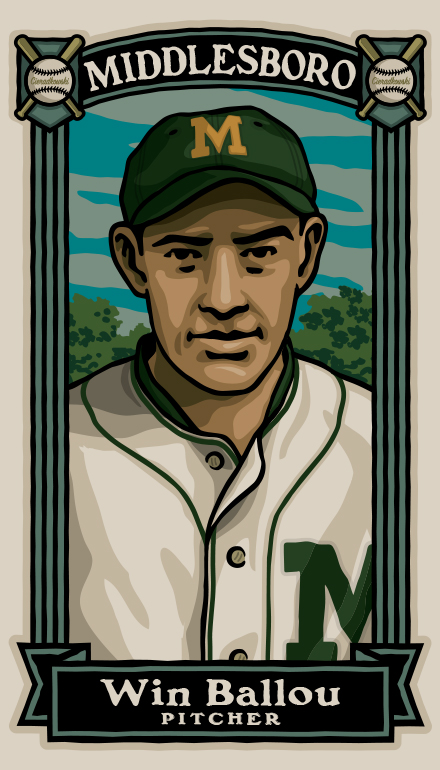
(Blogathon ’16) Gary Cieradkowski: Win Ballou

This guest-post is part of the 2016 Baseball Continuum Blogathon For Charity, benefiting the Roswell Park Alliance Foundation. The Roswell Park Alliance Foundation is the charitable arm of Roswell Park Cancer Institute and funds raised will be “put to immediate use to increase the pace from research trials into improved clinical care, to ensure state-of-the-art facilities, and to help improve the quality of life for patients and their families.” Please donate through the Blogathon’s GoFundMe page. Also, please note that the opinions and statements of the writer are not necessarily those of the Baseball Continuum or it’s webmaster.

winSince I was a kid, I was always more fascinated with baseball’s “small stories”. While guys like The Babe and Hank Aaron have great stories, I gravitated towards the players you don’t find in the record books. For every Walter Johnson there were hundreds of players who toiled anonymously. Each one had a unique and often interesting story to tell. This is one of those “small stories”.

Back during the teens and twenties, professional teams would schedule exhibition games against small town semi-pro teams to both generate revenue and scout young ball players. When the minor league Chattanooga Lookouts came to Middlesboro, Kentucky in 1920 to play the local nine, they expected an easy win. Unfortunately this small Kentucky town possessed a secret weapon named “Win”.

Noble Winfred Ballou was a recent Eastern Kentucky University grad from Mount Morgan. By the time he pitched and beat Chattanooga that day, Win had earned a reputation as a pitcher for hire who lived up to his name. Like many other young ball players, each weekend Win Ballou suited up for a few different town or factory teams, a temporary superstar brought in to even the odds or settle once and for all a heated town rivalry.

After Chattanooga’s loss, their manager tried his best to sign Ballou, but the pitcher’s friends convinced him to remain in Kentucky. Later that summer, Chattanooga’s manager secretly arranged for a town farther away to hire Ballou. Separated from his friends, the young pitcher was convinced to sign a professional contract.

The Washington Senators brought Ballou up to the majors at the end of the 1925 season, and within weeks he was pitching in the World Series against the Pirates. Ballou jumped around from the Senators to the Browns and finally the Dodgers before he was returned to the minors in 1930. Playing in the Pacific Coast League, Ballou found his niche as a relief pitcher, one of the first to perfect that role. A fan favorite and nicknamed “Old Pard” because of his age and reliability, Ballou pitched for the Los Angeles Angels and San Francisco Seals until he was 45. When Win Ballou passed away in 1963 he was admiringly eulogized in the West Coast newspapers as a beloved fixture of West Coast baseball.

Ol’ Win Ballou didn’t set any records, nor did he leave any mark on the history of the game besides some forgotten box scores. Yet it’s guys like Win who make the history of the game fun. Imagine what he must have felt like – a kid reluctant to leave to hills of his native Kentucky and just a few years later pitching in a World Series! Sure it’s a small story, but it’s those small stories that combine to make up the greatest game ever invented.

Gary Joseph Cieradkowski is the artist and writer behind The Infinite Baseball Card Set blog and the book “The League of Outsider Baseball: An Illustrated History of Baseball’s Forgotten Heroes“. He is also the 2015 recipient of the Tony Salin Award for contributions to baseball history. An award winning graphic artist and illustrator, chances are you have visited or bought something he designed: Bicycle Playing Cards, the music department of Barnes & Noble, the Folgers Coffee can, and the graphics for Oriole Park at Camden Yards, still regarded as the best designed ballpark in the Majors. Growing up a New York Mets fan in the 1970s, Gary learned to live with pain and disappointment until he married his beautiful wife Andrea. The two live happily in Northern Kentucky, unless they discuss the merits of the designated hitter rule. You can visit his blog at www.infinitecardset.blogspot.com.

This guest-post is part of the 2016 Baseball Continuum Blogathon For Charity, benefiting the Roswell Park Alliance Foundation. The Roswell Park Alliance Foundation is the charitable arm of Roswell Park Cancer Institute and funds raised will be “put to immediate use to increase the pace from research trials into improved clinical care, to ensure state-of-the-art facilities, and to help improve the quality of life for patients and their families.” Please donate through the Blogathon’s GoFundMe page. Also, please note that the opinions and statements of the writer are not necessarily those of the Baseball Continuum or it’s webmaster.