(Blogathon ’16) Ron Kaplan- Read All About It: Blogs That Will Keep You Up on Baseball Books

This guest-post is part of the 2016 Baseball Continuum Blogathon For Charity, benefiting the Roswell Park Alliance Foundation. The Roswell Park Alliance Foundation is the charitable arm of Roswell Park Cancer Institute and funds raised will be “put to immediate use to increase the pace from research trials into improved clinical care, to ensure state-of-the-art facilities, and to help improve the quality of life for patients and their families.” Please donate through the Blogathon’s GoFundMe page. Also, please note that the opinions and statements of the writer are not necessarily those of the Baseball Continuum or it’s webmaster.

It’s been often said that baseball is one of the most literary of sports. I think it’s safe to say without the benefit of, you know, actual facts, that there have been more books on the national pastime than any other sport.

I launched my Baseball Bookshelf with the idea of providing a wide array of news about the genre, including original pieces plus links to reviews; interviews with creators, not just of words, but art, music, film; and other pertinent items.

But lest you think this is the only game in town, here are some other great places to find out what’s good in the world of baseball lit:

  • John Thorn, the official historian of Major League Baseball, often writes about books on his blog, Our Game, especially those that deal with the early years.
  • The Society for American Baseball Research has lots of information about books. Sadly, their Bibliography Committee is no longer around, but the newsletters are still somewhere on the site, which can be a bit intimidating to navigate. Some pages of their site can be accessed for free; others are members-only. But it’s well worth the $65 fee since SABR includes several wonderful titles each year as part of its premiums. The most recent: An assessment of baseball through the hit animated TV series, The Simpsons.
  • The National Pastime Museum recently concluded its series on “The Baseball Book That Changed My Life,” with essays from an assortment of authors and scholars.
  • Spitball: The Literary Magazine has lots of news and reviews about books.
  • Gregg Kersey posts his original reviews about baseball books.
  • James Bailey’s site is still up and although he doesn’t add to it as often as in past years, you can still find a good chunk of material.
  • Baseballbookreview.com is another defunct site that can still be an asset.
  • The Baseball Almanac includes several dozen reviews on this page.

Of course, you can simply do a web search for “baseball book reviews,” but these are among the sites that will give you the biggest bang for your buck.

Ron Kaplan runs Ron Kaplan’s Baseball Bookshelf and the author of 501 Baseball Books Fans Must Read before They Die. A signed copy will be given to one lucky donor to the GoFundMe page.

This guest-post has been part of the 2016 Baseball Continuum Blogathon For Charity, benefiting the Roswell Park Alliance Foundation. The Roswell Park Alliance Foundation is the charitable arm of Roswell Park Cancer Institute and funds raised will be “put to immediate use to increase the pace from research trials into improved clinical care, to ensure state-of-the-art facilities, and to help improve the quality of life for patients and their families.” Please donate through the Blogathon’s GoFundMe page. Also, please note that the opinions and statements of the writer were not necessarily those of the Baseball Continuum or it’s webmaster.
(Blogathon ’16) CONTINUUM CLASSIC: 2007 AAA BASEBALL HEROES

This piece from the blog’s archives is part of the 2016 Baseball Continuum Blogathon For Charity, benefiting the Roswell Park Alliance Foundation. The Roswell Park Alliance Foundation is the charitable arm of Roswell Park Cancer Institute and funds raised will be “put to immediate use to increase the pace from research trials into improved clinical care, to ensure state-of-the-art facilities, and to help improve the quality of life for patients and their families.” Please donate through the Blogathon’s GoFundMe page.

Originally published June 19, 2013.

In Bizarre Baseball Culture, I take a look at some of the more unusual places where baseball has reared it’s head in pop culture and fiction.

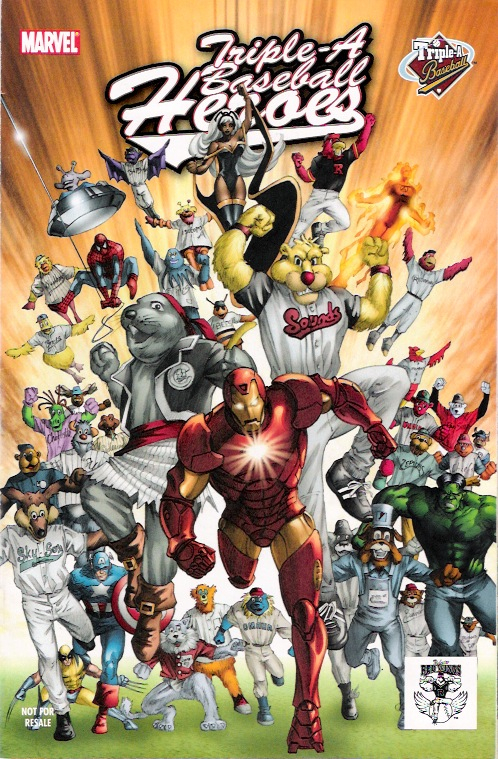
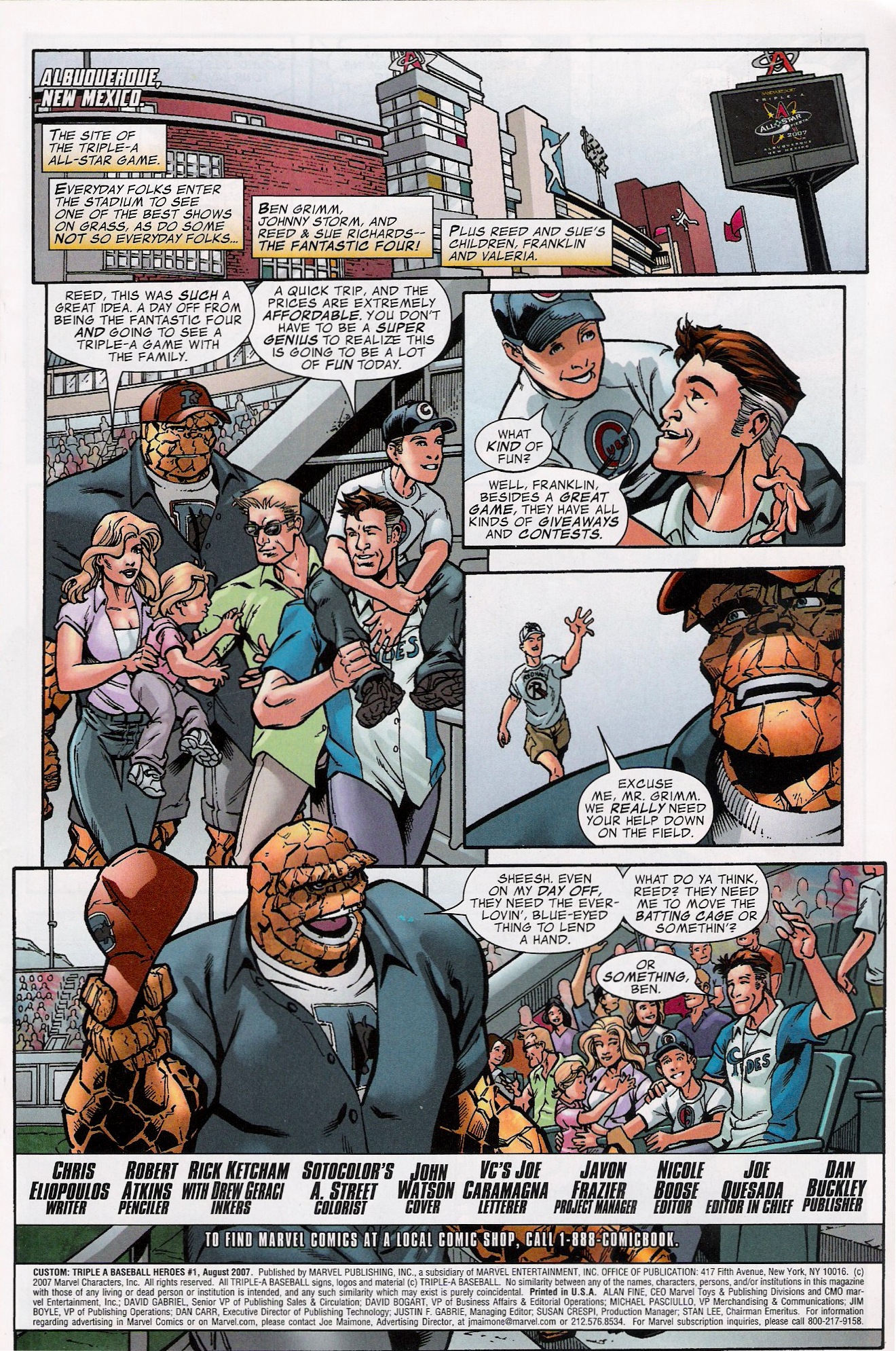
I warned you. I told you it was coming. You could have gone away, but, no, you had to go and actually come here and read this installment of Bizarre Baseball Culture. This is a very special Bizarre Baseball Culture, as, for the first time, it’s something that I actually have in my very small personal collection of comic books. You see, in 2007, each Triple-A baseball team had a day celebrating superheroes, and as a giveaway, there was this comic:

2007GiveawayComic copyAnd, as you can probably guess, I was at that game and got the giveaway. And so, it sat in a drawer for almost seven years, ignored. Until today. Yes, true believers, tremble and prepare yourself for the 2007 edition of Triple-A Baseball Heroes, featuring the superheroes of Marvel Comics.

Now, a few notes before we get going here:

  • All of the images in this post were scanned by yours truly, and any problems with the quality of the images are my fault.
  • All characters and logos in the comic are property of their respective owners (such as Marvel Comics or Minor League Baseball). The excerpts from this comic used in this post are being used under fair use doctrine and are meant merely to support and enhance the opinions and facts stated in said post.
  • Click on any of the images to make them bigger.
  • To the best of my knowledge, the only way to get this comic nowadays is to find it on eBay or have gone to the games that had them released.

Now, go below the jump for the rest of the post:

Continue reading

The 50th BIZARRE BASEBALL CULTURE: DC’s greatest heroes and villains… PLAY BASEBALL? (BLOGATHON ’16)

This post is part of the 2016 Baseball Continuum Blogathon For Charity, benefiting the Roswell Park Alliance Foundation. The Roswell Park Alliance Foundation is the charitable arm of Roswell Park Cancer Institute and funds raised will be “put to immediate use to increase the pace from research trials into improved clinical care, to ensure state-of-the-art facilities, and to help improve the quality of life for patients and their families.” Please donate through the Blogathon’s GoFundMe page.

In Bizarre Baseball Culture, I take a look at some of the more unusual places where baseball has reared it’s head in pop culture and fiction.

What more can be said about DC Super-Stars #10 that has not already been said? Larry Granillo has looked at it, so did internet-based comics fan extraordinaire Chris Sims, a comic book blog ran a whole series on it, SI Kids actually pulled up WPA for the game, and probably plenty of others have also done a look at it.

But… if there is something better suited for the 50th installment of Bizarre Baseball Culture, this site’s signature series, I don’t know what it is. So buckle up, because here we go with DC Super-Stars #10 from 1976… “The Great Super-Star Game!”

superstargamecoverGO BELOW THE JUMP FOR MORE:

Continue reading

(Blogathon ’16!) The Sliding Scale of Fictional Baseball Realism

This post is part of the 2016 Baseball Continuum Blogathon For Charity, benefiting the Roswell Park Alliance Foundation. The Roswell Park Alliance Foundation is the charitable arm of Roswell Park Cancer Institute and funds raised will be “put to immediate use to increase the pace from research trials into improved clinical care, to ensure state-of-the-art facilities, and to help improve the quality of life for patients and their families.” Please donate through the Blogathon’s GoFundMe page.

Earlier today, in my look at Touch, I mentioned that you can make a 0-10 scale of baseball realism in works of fiction, with zero being baseball-in-name-only and ten being actual footage of a game.

Well, I’m going to expand upon that:

0: Baseball In Name Only

In this category, it’s not really baseball at all. They may call it baseball, but it certainly isn’t the actual sport that we know. The Moe Cronin version of baseball fits here.

1: Utterly Absurd

In this category, while it’s clearly meant to be baseball, the rules of the game and the laws of physics have clearly taken a vacation. Some classic cartoons fall into this category.

2: Very Absurd, but still with some realism

In this category, the work might have cartoonish physics and occurrences, but it still is grounded in reality enough to have the rules of baseball still be mostly the same. In theory, a baseball movie where the rules are not consistent or are wildly different but where everything else is played straight could also qualify here. Classic cartoons that aren’t “utterly absurd” usually fall in this category.

3: Absurd, but mostly consistent

Works in this category are clearly absurd and cartoonish, but are at least consistent: the laws of physics may not be what they are in the real world, but they don’t suddenly change mid-game, nor do the rules suddenly change simply because the story demands it. Most “cartoon” baseball video games, like Backyard Baseball and the Mario Baseball series, fit in this category.

4: Many absurd elements

While clearly meant to be a realistic world that has our baseball’s rules and our laws of physics, the amount of absurd, cartoonish or unrealistic elements in the work make it more strange than realistic. Consider Mr. Go, for example, which has two baseball-playing gorillas, a little girl acting as a first-base coach and a finale that involves the baseball coming undone into a million pieces, which sort of overwhelms what would probably otherwise be a 6 if, say, it only had one gorilla.

5: Equal Mix of Realism and Fantasy

A work that sort of teeters between being realistic and being bizarre. This is more of a transitional spot on the scale, as it’s rare that anything ever stays at 5, inevitably going to 4 or 6 instead.

6: Realistic, but with one or two “big lies”

This is mostly realistic but it has one or two big elements (or the equivalent of one or two big elements made up of lots of smaller elements) that keep it from being something that you can honestly expect to ever happen in the real world. Sidd Finch could fit here, as could most of the movies in which a kid becomes a big league skipper or ballplayer.

7: Realistic, but highly unlikely

There’s nothing in this work that couldn’t happen, but it’s highly unlikely and any real event like this would probably instantly become one of the most notable things in baseball history. You could argue that Major League fits here, sort of.

8: Near total-realism

While some rules might be bent or not enforced on a strict basis, and some things might happen that are unlikely (although not nearly as unlikely as things that fall at seven on the scale), this is pretty realistic. Casey At The Bat, the classic poem, could be considered as this, with only the ability of everybody to seemingly hear everything keeping it from being a nine.

9: Utter realism

The only things that are not realistic in works of this category are omnipresent techniques like camerawork and editing for time, or stylish touches added in to indicate, say, that a player is angry. Bull Durham could, in theory, fit in this category, as could most (but not all) fairly true-to-history biopics and most realistic baseball video games.

10: Actual Baseball Footage used/Documentary

If you are watching an actual baseball game, or watching a documentary that uses baseball footage and does so without changing things for dramatic effect, you are watching a 10.


Feel free to consider where on the sliding scale your favorite piece of baseball fiction would fall!

6 PM: First References

This post has been part of the 2016 Baseball Continuum Blogathon For Charity, benefiting the Roswell Park Alliance Foundation. The Roswell Park Alliance Foundation is the charitable arm of Roswell Park Cancer Institute and funds raised will be “put to immediate use to increase the pace from research trials into improved clinical care, to ensure state-of-the-art facilities, and to help improve the quality of life for patients and their families.” Please donate through the Blogathon’s GoFundMe page.


(Blogathon ’16) Three Mini-Book Reviews

This post is part of the 2016 Baseball Continuum Blogathon For Charity, benefiting the Roswell Park Alliance Foundation. The Roswell Park Alliance Foundation is the charitable arm of Roswell Park Cancer Institute and funds raised will be “put to immediate use to increase the pace from research trials into improved clinical care, to ensure state-of-the-art facilities, and to help improve the quality of life for patients and their families.” Please donate through the Blogathon’s GoFundMe page.

And now, short reviews of three baseball-related books I’ve read somewhat recently:

Spalding’s World Tour: The Epic Adventure that Took Baseball Around the Globe – And Made It America’s Game, by Mark Lamster: Fun book on the Spalding world tour of 1888-89, set alongside the backdrop of the emergence of America as a world power, Spalding’s entrepreneurial and publicity-seeking abilities, and early labor tensions in baseball. Informative and entertaining about an interesting topic that isn’t wide known, and also provides several examples of Cap Anson being such an asshole you want to find a time machine in order to go back and throttle him. Seriously, Cap Anson was just the worst.

Yes, It’s Hot in Here: Adventures in the Weird, Wooly World of Sports Mascots, by AJ Mass: Written by a former Mr. Met turned ESPN fantasy sports writer, this book is a funny look at the world of mascots, and includes disputes with the Famous Chicken, the Mets’ front office being clueless, and looks at the many different people who don the mascot costumes. Not exactly hard-hitting and deep, but it doesn’t need to be.

Nuclear Powered Baseball: Articles inspired by The Simpsons episode “Homer at the Bat”, edited by Emily Hawks and Bill Nowlin: This e-book from SABR reprints biographies and articles about the classic “Homer at the Bat” episode, as well as a faux-“bioproject” entry for Homer Simpson himself, a listing of baseball players referenced on the show, and Joe Posnanski’s article on “MoneyBART”, the episode of The Simpsons about sabermetrics. Available free to SABR members (but available for sale to non-members), I don’t know if I’d pay money for it, but it’s definitely a fun tribute to one of the greatest baseball episodes in TV history.

At 1 PM: A short break to let you know what is available as giveaways if you donate to the Blogathon.

This post has been part of the 2016 Baseball Continuum Blogathon For Charity, benefiting the Roswell Park Alliance Foundation. The Roswell Park Alliance Foundation is the charitable arm of Roswell Park Cancer Institute and funds raised will be “put to immediate use to increase the pace from research trials into improved clinical care, to ensure state-of-the-art facilities, and to help improve the quality of life for patients and their families.” Please donate through the Blogathon’s GoFundMe page.

Coming later this month: “International Baseball Culture”

Bizarre Baseball Culture is perhaps my most popular segment on the Baseball Continuum. In it, I, as I say: “…take a look at some of the more unusual places where baseball has reared it’s head in pop culture and fiction.” It’s seen comic books, video games, novels, TV episodes, animated shorts, a radio drama, and even a full-length movie. They’ve ranged from the well-known to the hyper-obscure, leading Michael Claire to dub me the “Indiana Jones of baseball comics“, which I guess isn’t the worst thing to be put on a tombstone.

Anyway, in search of good material, I have recently began to look overseas. Some of my favorite Bizarre Baseball Culture posts have been from elsewhere in the world. The Pokémon episode, for example, was pretty popular. Mr. Go might have been the most fun I’ve ever had doing Bizarre Baseball Culture (well, until you see what the 50th installment is). My most recent installment was, of all things, an episode of an Ultraman TV series.

However, here’s the thing: it is stupid to assume that everything foreign is bizarre. Oh, to be sure, plenty of it is, just like how the American-made works of fiction I’ve covered here on the Continuum have been bizarre (intentionally or not). I mean, no matter what country it was made in, a movie about a gorilla playing baseball would have been bizarre.

But to say it is all bizarre, simply because it is foreign, would be highly ignorant and also disrespectful. These are places with their own traditions, not only in baseball but in their popular culture. To immediately dub a fairly mundane (i.e. no baseball-playing gorillas or evil glove monsters) baseball comic from Japan or a baseball film from Korea “bizarre” would be like being the baseball entertainment equivalent of the crotchety old columnist who claims that Latin American players aren’t playing the game the “right way” despite the fact that that’s the way they’ve played all their lives. And, guess what, I am not a crotchety old columnist, although I wish I was being paid like one.

So, with that out of the way, I am proud to announce that, starting with a piece in this year’s blogathon, there will be a new recurring feature on the Baseball Continuum: International Baseball Culture. It will cover baseball entertainment from outside the United States and sometimes Canada* that isn’t “bizarre”. Now, there will continue to be foreign-sourced baseball works in Bizarre Baseball Culture, but they will only be those that would qualify for the series due to their content. If it turns out that there’s a Mexican movie in which luchadores play baseball against mermen from Atlantis, that’s still going into Bizarre Baseball Culture. But if it’s a serious drama about a baseball team called the “Luchadores” who are playing a team called the “Mermen”, that would be International Baseball Culture.

So, please join me during the Blogathon when I begin my International Baseball Culture travels with the beginning of a series of articles on Mitsuru Adachi’s Touch, a baseball dramedy/romance manga and anime that won awards, set viewership records in the 1980s, and was in 2005 named one of the ten greatest anime ever… and yet has never seen an official release in North America.

*I’ll be taking Canada on a case-by-case basis. For example, you could argue that the works of W.P. Kinsella are Canadian because Kinsella is from Canada, but you’d be ignoring the fact that most of his baseball stories are set in America and deal pretty specifically with American baseball. But if somebody were to make a French-language drama about a man and a woman who fall in love over their shared longing for the return of the Montreal Expos, that would probably fall under International Baseball Culture.

BEST OF 2015: BIZARRE BASEBALL CULTURE- The Time That Bullseye had a 2-issue Baseball Miniseries

Originally published May 16, 2015.
In Bizarre Baseball Culture, I take a look at some of the more unusual places where baseball has reared it’s head in pop culture and fiction.

One of the things you realize when you think about superhero fiction too hard is that a lot of the criminals could probably become rich using their technology or skills in more legal pursuits. For example, find the right quiz show for the Riddler, and he’s rolling in dough. Captain Cold or Mister Freeze could easily make a mint if they applied their freeze-weapons toward something like refrigeration. Heck, even the people who write the comics know this, and in the 1980s they turned Lex Luthor from a supergenius with lots of high-tech inventions into a corrupt supergenius billionaire superexecutive who had made his money from his many high-tech inventions.

Which leads me to Bullseye. Bullseye’s a Daredevil villain, created by Marv Wolfman and John Romita Sr. in the 1976 and perfected by Frank Miller in his run on Daredevil’s comic book. Bullseye’s entire shtick is that he basically has perfect killer accuracy with basically everything, even harmless stuff like playing cards. He’s arguably Daredevil’s second-greatest foe (after the Kingpin), and is directly or indirectly responsible for the death of at least two of Daredevil’s girlfriends (only one of whom got better).

But, still, that shtick with the accuracy, wouldn’t you think he could make a great pitcher?

Well, there was a 2-part miniseries at the turn of this decade that basically grabbed a hold of that idea and ran with it… Bullseye: Perfect Game.

It’s a surprisingly good short look at obsession and perfection, with some nice easter eggs for fans of baseball and of comics and a great ending that I’m sort of bummed out I’ll spoil in my summary…. BELOW THE JUMP:

Continue reading

Where You Can Buy “Bizarre Baseball Culture”

Alas, this is not proof that I have written a book about “Bizarre Baseball Culture”, as great as that would have been. Instead, it’s a rundown of places where things I have covered from Bizarre Baseball Culture can be purchased. Also, note that in many cases, particularly with the comics, it probably is cheaper to just look for the individual issue on eBay or elsewhere. In cases where the piece of Bizarre Baseball Culture is in the Public Domain or is available legally for free, I have not included it:

“The Double Trouble Header” can be found on Amazon on the DVD “Pokemon All-Stars: Chikorita”.

Mr. Go is available, with English subtitles, from YESASIA or from Amazon.

“Pinky At The Bat” is available on Pinky and the Brain Vol. 3, available at Amazon.

Action Comics #50 can be found in Superman Chronicles Volume 9, available from Things From Another World and Amazon.

Brittle Innings is available from Amazon.

The Franklin Richards baseball story can be found in the Franklin Richards: Son Of A Genius Ultimate Collection at Things From Another World and Amazon.

Captain America’s “Death Loads The Bases” story is collected in Marvel Masterworks Golden Age Captain America Volume 2, available from Things From Another World and Amazon.

Peter Parker: Spider-Man #33, about Spider-Man and the Mets, can found in
Peter Parker, Spider-Man Vol. II: One Small Break, available from Amazon.

It’s Tokyo, Charlie Brown! can be found at Things From Another World and Amazon.

“The Twisker Pitcher” can be found in Popeye The Sailor: 1933-1938: The Complete First Volume, available from Amazon.

Fallout 4 can also be purchased from Amazon (click the link).
I will be updating this post in the future and will also be including it in all future Bizarre Baseball Culture run-downs.

“Fantastic Four” Bizarre Baseball Cultures that are probably way better than the new movie

The new Fantastic Four movie recently came out. It was a total and utter disaster, with a Rotten Tomatoes score that can only be seen with a microscope and a box office performance so pitiful it couldn’t even win it’s week. It’s hardly surprising, really, as A) it was not made by Marvel itself, but rather FOX, which only has the rights to make these movies due to a deal it made way back in the early 1990s when Marvel was in the direst of financial straits, and B) it was trying to turn what is arguably the most optimistic and adventuresome of comic books into a dark and moody techno-thriller. I mean, seriously? SERIOUSLY?!?!?

With luck, this failure will lead to the Fantastic Four and their stable of villains (most notably DOCTOR DOOM) back to the Marvel line, so we can see a real and proper movie featuring the FF, with Doctor Doom done right, and maybe with a Hulk-Thing fight thrown in, too, because after how badly this and the previous movies have hurt the reputation of “Marvel’s First Family”, they’re going to have to go all out to win back the crowd.

But, anyway, enough rambling. Here are the Bizarre Baseball Cultures that featured the Fantastic Four. All of them, no doubt, are better than the current film:

2007’s AAA Baseball Heroes

This Marvel/AAA Baseball crossover is great in that it shows off how the Fantastic Four are basically an ordinary family who happen to go exploring alternate dimensions and fight space-gods in their spare time. I mean, look, they all are at a ballgame together!


2007GiveawayComicPage1From what I understand, the latest movie has none of this stuff. And it flopped big time. Coincidence? I think not.

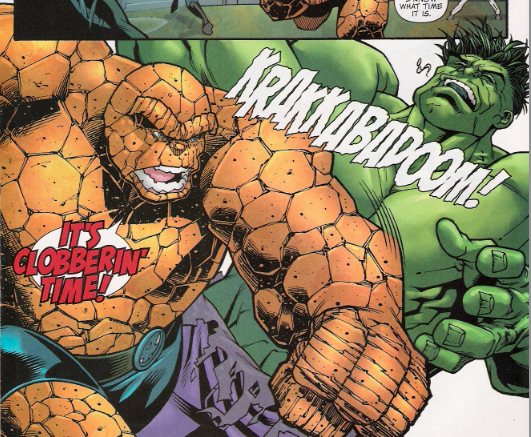
It also has a Hulk-Thing fight and this, the greatest image in the history of art:

Screen Shot 2013-06-18 at 5.53.33 PM2008’s AAA Baseball Heroes

This installment of the Marvel/AAA Baseball didn’t have as much Fantastic Four fun, really only featuring Reed Richards and the Mole-Man (who served as the villain). However, unlike the new movie, it showed the Fantastic Four as part of a large and vibrant universe and as close allies and friends with characters like Iron Man and Spider-Man. Which, if you ask me, instantly makes it better than whatever piece of crap 20th Century Fox just put out.

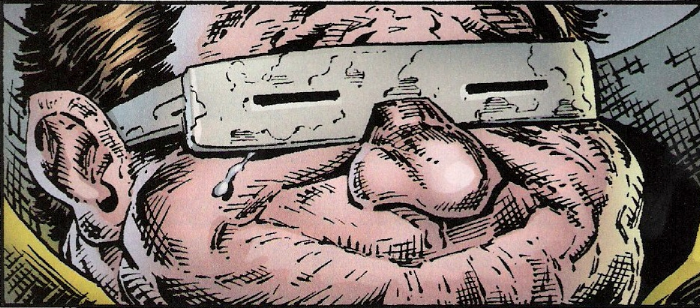
We also see the Mole Man cry tears of joy, which still makes me laugh for some reason:

And the Mole Man wept...

Franklin Richards: Son of a Genius Super Summer Spectacular

A good, innocent, all-ages comedy comic about Franklin Richards, the eldest son of Reed and Sue Richards, as he tries to cheat in little league by using a Flubber-like explosive substance on his bat to hit some home runs.

It also has this image:

Screen Shot 2013-11-30 at 10.37.50 PMAh, such light-hearted whimsy. If only the new Fantastic Four movie had some of that, maybe it wouldn’t have been called something that “not only scrapes the bottom of the barrel; it knocks out the floor and sucks audiences into a black hole of soul-crushing, coma-inducing dullness.”

That’s something that somebody actually wrote. Go look on Rotten Tomatoes.

Cameos

The FF has also made brief appearances in my run-down of Marvel Universe appearances by Yankee Stadium, and in the Bullseye miniseries. I won’t go in depth on those, as we are forgetting about the unofficial fifth member of the Fantastic Four, their arch-nemesis, the greatest villain in Marvel comics….

DOCTOR DOOM….. who once tried to kidnap Jeff Conine

Okay, this is what Doctor Doom apparently looks like in the new movie:

What. The. Hell. That isn’t Doctor Doom. That’s, like, I dunno, what would happen if evil C3PO had a baby with a Gothic Crash-Test Dummy. Jeez, is it THAT EFFING HARD, FOX?!?! THIS IS WHAT DOOM LOOKS LIKE, IN BATTLE WITH TWO OF HIS GREATEST FOES:

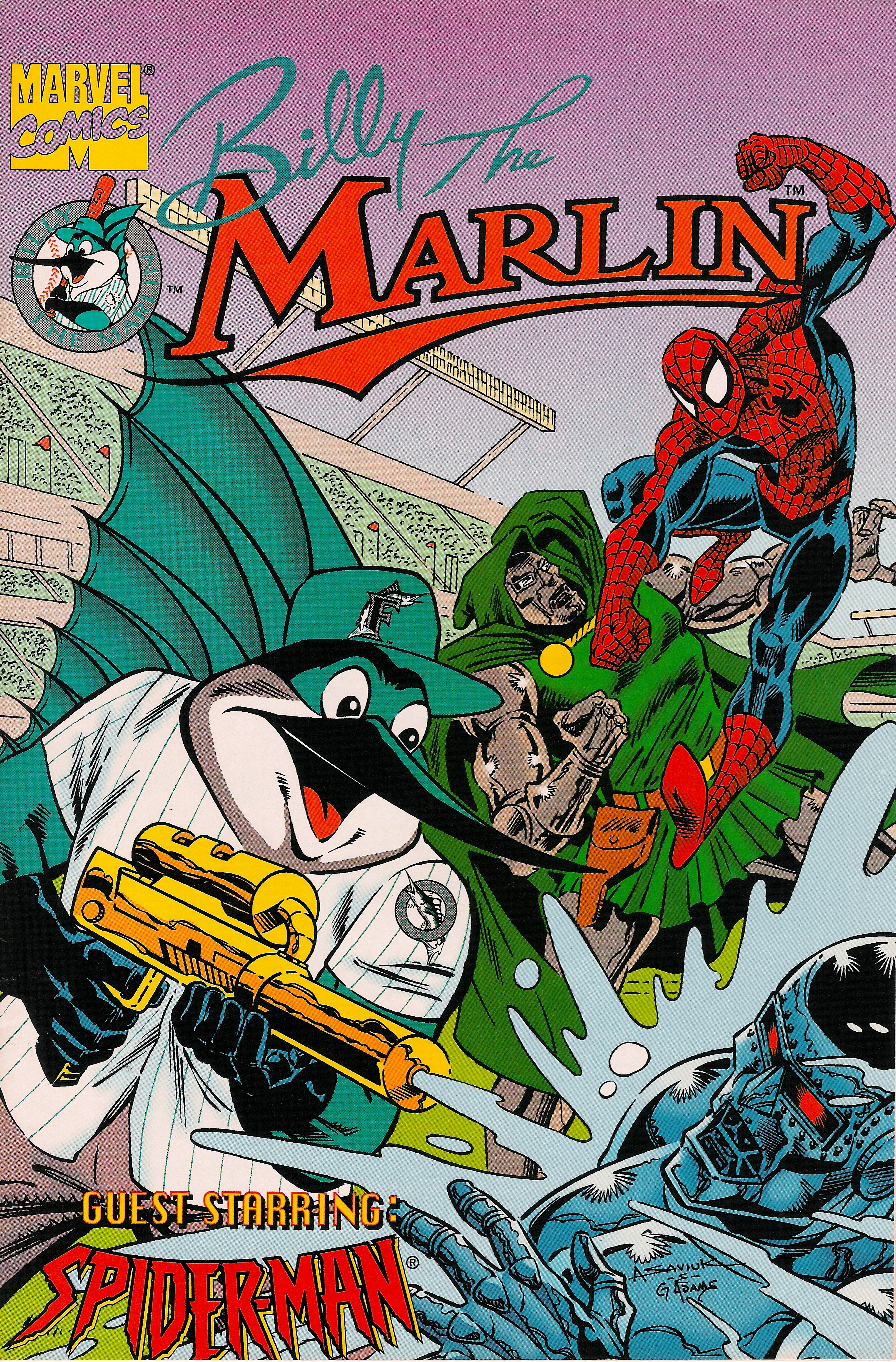
BILLY THE MARLIN and SPIDER-MAN!

MarlinsSpideyCoverI mean, jeez, that’s one of the most iconic things in comic books. It was the partial inspiration for Darth freaking Vader. But, NOOOOOOOO, you have to go make Doom like like a human vacuum cleaner that just got put in the oven for too long.

…Seriously, FOX, give back the rights to Marvel. They’re Disney. They have the money. They have the X-Men television rights you want. For the good of all that is holy. PLEASE!

(ahem)

Anyway, Doctor Doom made one of the most notable appearances in Bizarre Baseball Culture when he went and tried to kidnap Jeff Conine to force him to play for the Latverian national baseball team, only to be foiled by Billy the Marlin and Spider-Man. Truly, words cannot describe the greatness of this story. If Marvel ever gets the rights to Doctor Doom back, the very first thing they should do is make a deal with a Marlins and put into production a adaptation of this, albeit with Giancarlo Stanton taking the Jeff Conine spot.

I mean, look at this brilliance:

Screen Shot 2013-09-27 at 11.05.15 PMI mean, behold this:

Screen Shot 2013-09-28 at 1.44.38 PMSeriously, this is probably better than that new movie, and the Fantastic Four aren’t even in it!

…So, anyway, that concludes a look back at Fantastic Four appearances in Bizarre Baseball Culture. Keep an eye open in the next few days for the next installment, featuring Popeye the Sailor Man, a known user of performance-enhancing substances (i.e. spinach).


Bizarre Baseball Culture: Marvel’s Menagerie of Yankee Stadium appearances

In Bizarre Baseball Culture, I take a look at some of the more unusual places where baseball has reared it’s head in pop culture and fiction.

Sometimes, baseball plays a role in a piece of fiction, but not really a big enough one where I can do a full piece on it. Take Marvel, for example. The fact that 95% of their heroes are in New York City means that there are plenty of stories where heroes or villains visit Yankee Stadium but where their visit isn’t long enough or baseball-focused enough to really justify giving them the full Bizarre Baseball Culture treatment.

So, this time, I’m killing many birds with one stone and showcasing some of Yankee Stadium’s appearances in Marvel comics. Go below the jump to see some of them:

Continue reading