Bizarre Baseball Culture: Cal Ripken orders the 2001 Yankees to Save The World

In Bizarre Baseball Culture, I take a look at some of the more unusual places where baseball has reared it’s head in pop culture and fiction.

Wolverine of the X-Men has a habit of appearing in comics he technically isn’t supposed to be in, simply because he’s popular. Well, Cal Ripken is the Wolverine of Baseball Comic Books.  He’s joined forces with Batman, led the Shortstop Squad, and been the subject of a bio-comic. Also, like Wolverine, Cal Ripken seemed to be able to recover from any injury, no matter how severe. But, it’s the first similarity that I’m focusing on, because, in the comic I will be looking at today, Cal Ripken appears in a story about the 2001 New York Yankees being Superheroes.

Let that sink in. The New York Yankees, in a comic that they themselves ordered and gave away, still had Cal Ripken in their comic and had him on the cover too.
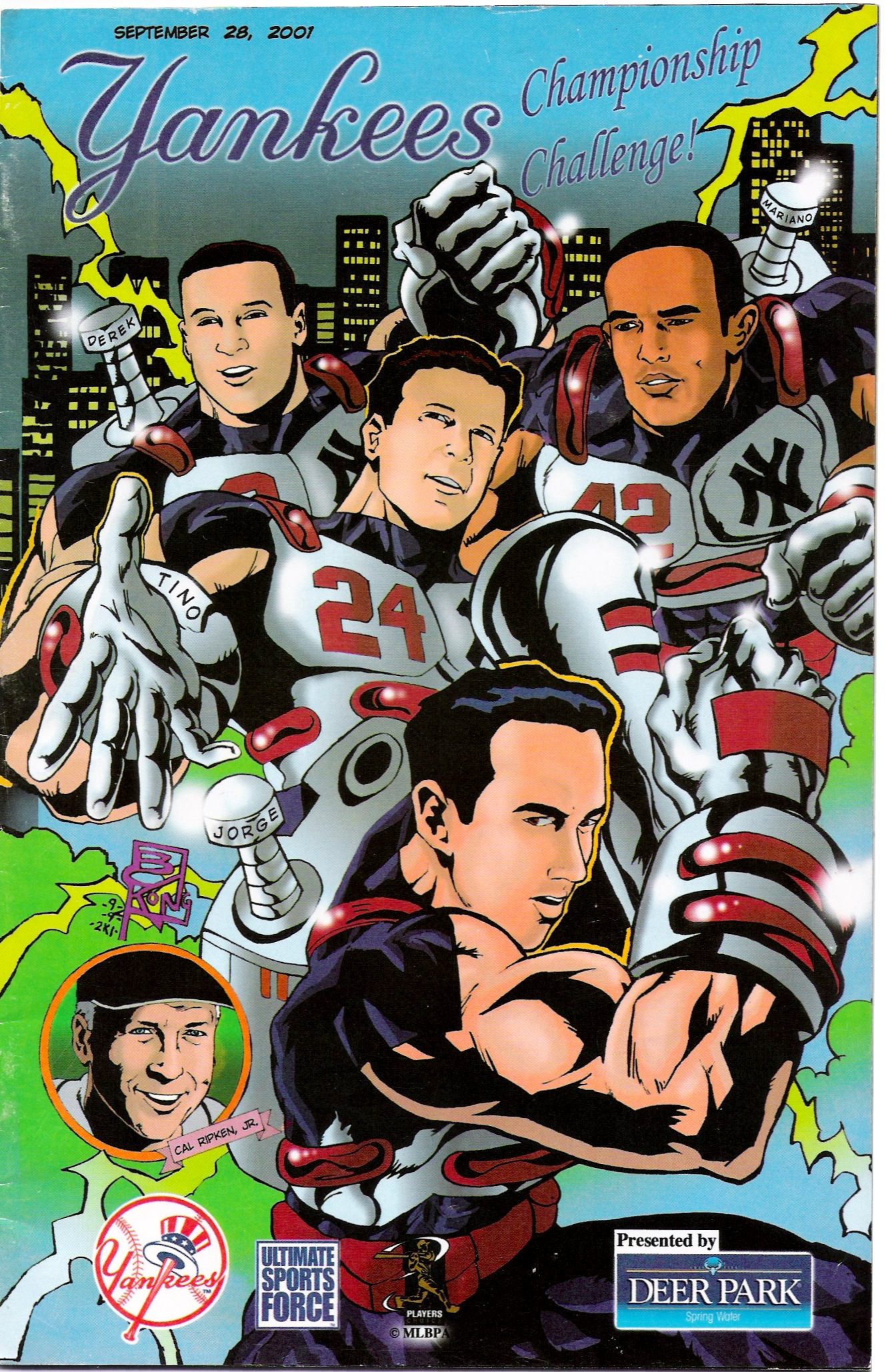
YanksCalCover

Entitled “Championship Challenge” and given out September 28, 2001, it stars, as you can see, four of the greatest stars the Yankees had that season. Mariano Rivera! Tino Martinez! Jorge Posada! And, of course, the Once and Future Captain, Derek Jeter himself. But, of course, we also see Cal RIpken on the cover, letting everybody know that the Iron Man will be there! With such Ultimate Sports Force stalwarts as Rick Licht writing and Brian Kong doing the art, this was partially made as part of the Ripken farewell celebration, and it becomes even more obvious when you realize that originally Ripken’s final series would have been at Yankee Stadium if not for the schedule reshuffling that MLB did after the 9/11 attacks.

Anyway, go below the jump to read about the story:

Continue reading

Famous for Something Else: Larry Colton would go on to be nominated for a Pulitzer Prize

I was watching the documentary The Battered Bastards of Baseball last night. It’s a documentary on the Portland Mavericks of the Northwest League in the 1970s. Owned by actor Bing Russell (Kurt‘s father), it was a truly independent minor league team in affiliated baseball. A good documentary, and you should check it out if you have Netflix.

But anyway, among the players for the Mavericks was a pitcher named Larry Colton, who had played in one game with the Phillies back in 1968. After retiring from baseball, he’d become a writer, and his book Counting Coup, about a girls’ basketball team in Montana, was nominated for a Pulitzer Prize.

Here’s Colton’s MLB stats:

Year Age Tm Lg W L ERA G GS GF CG SHO SV IP H R ER HR BB IBB SO HBP BK WP BF ERA+ FIP WHIP H9 HR9 BB9 SO9
1968 26 PHI NL 0 0 4.50 1 0 0 0 0 0 2.0 3 1 1 0 0 0 2 0 0 0 9 84 0.38 1.500 13.5 0.0 0.0 9.0
1 Yr 0 0 4.50 1 0 0 0 0 0 2.0 3 1 1 0 0 0 2 0 0 0 9 84 0.38 1.500 13.5 0.0 0.0 9.0
162 Game Avg. 0 0 4.50 68 0 0 0 0 0 136 204 68 68 0 0 0 136 0 0 0 612 84 0.38 1.500 13.5 0.0 0.0 9.0
Provided by Baseball-Reference.com: View Original Table
Generated 9/21/2014.

And here are his Minor League stats (first pitching, then hitting, as he also played as a position player):

Year Age AgeDif Tm Lg Lev Aff W L W-L% ERA G GS CG SHO SV IP H R ER HR BB IBB SO HBP BK WP WHIP H9 HR9 BB9 SO9 SO/W
1965 23 1.1 Eugene NORW A PHI 12 10 .545 2.89 26 26 193.0 172 80 62 8 63 1.218 8.0 0.4 2.9
1966 24 0.7 Macon SOUL AA PHI 11 8 .579 3.77 27 26 186.0 179 94 78 11 73 125 1.355 8.7 0.5 3.5 6.0 1.71
1967 25 -0.6 San Diego PCL AAA PHI 14 14 .500 3.09 31 31 12 1 201.0 207 84 69 9 50 2 106 2 0 7 1.279 9.3 0.4 2.2 4.7 2.12
1968 26 -0.1 San Diego PCL AAA PHI 5 7 .417 3.45 15 14 5 1 99.0 99 45 38 4 24 2 52 0 0 2 1.242 9.0 0.4 2.2 4.7 2.17
1969 27 1.1 Eugene PCL AAA PHI 11 9 .550 4.18 26 25 8 1 0 155.0 150 81 72 12 54 4 79 0 1 6 1.316 8.7 0.7 3.1 4.6 1.46
1970 28 2.6 Tacoma PCL AAA CHC 12 14 .462 4.24 32 28 12 2 1 221.0 226 116 104 24 76 7 118 2 2 17 1.367 9.2 1.0 3.1 4.8 1.55
1975 33 11.7 Portland NORW A- 0 2 .000 10.64 3 3 1 0 0 11.0 18 16 13 3 5 0 2 0 0 0 2.091 14.7 2.5 4.1 1.6 0.40
7 Seasons 65 64 .504 3.68 160 153 38 5 1 1066.0 1051 516 436 71 345 15 482 4 3 32 1.310 8.9 0.6 2.9 4.1 1.40
A- (1 season) A- 0 2 .000 10.64 3 3 1 0 0 11.0 18 16 13 3 5 0 2 0 0 0 2.091 14.7 2.5 4.1 1.6 0.40
A (1 season) A 12 10 .545 2.89 26 26 193.0 172 80 62 8 63 1.218 8.0 0.4 2.9
AA (1 season) AA 11 8 .579 3.77 27 26 186.0 179 94 78 11 73 125 1.355 8.7 0.5 3.5 6.0 1.71
AAA (4 seasons) AAA 42 44 .488 3.77 104 98 37 5 1 676.0 682 326 283 49 204 15 355 4 3 32 1.311 9.1 0.7 2.7 4.7 1.74
Provided by Baseball-Reference.com: View Original Table
Generated 9/21/2014.
Year Age AgeDif Tm Lg Lev Aff G PA AB R H 2B 3B HR RBI SB CS BB SO BA OBP SLG OPS TB HBP SH SF
1965 23 0.8 Eugene NORW A PHI 34 73 24 3 0 0 .329 .370 27
1966 24 0.3 Macon SOUL AA PHI 36 76 69 6 15 2 0 0 7 0 0 7 28 .217 .289 .246 .536 17
1967 25 -1.6 2 Teams 2 Lgs AAA-WRk PHI 34 79 5 18 4 0 0 8 0 0 4 31 .228 .278 22 0 5 0
1967 25 Phillies FLIL WRk PHI
1967 25 -1.6 San Diego PCL AAA PHI 34 88 79 5 18 4 0 0 8 0 0 4 31 .228 .265 .278 .544 22 0 5 0
1968 26 -0.4 2 Teams 2 Lgs AAA-WRk PHI 17 39 2 10 2 1 0 3 1 0 1 13 .256 .359 14 0 0 0
1968 26 Phillies FLIL WRk PHI
1968 26 -0.4 San Diego PCL AAA PHI 17 40 39 2 10 2 1 0 3 1 0 1 13 .256 .275 .359 .634 14 0 0 0
1969 27 1.4 Eugene PCL AAA PHI 27 63 52 7 15 2 0 2 5 0 0 8 17 .288 .383 .442 .826 23 0 3 0
1970 28 2.9 Tacoma PCL AAA CHC 32 82 70 7 12 2 1 1 10 0 0 7 21 .171 .247 .271 .518 19 0 5 0
1975 33 12.1 Portland NORW A- 11 24 20 2 6 3 0 1 7 0 0 3 3 .300 .375 .600 .975 12 0 0 1
7 Seasons 191 446 402 29 100 18 2 4 40 1 0 30 113 .249 .300 .333 .634 134 0 13 1
WRk (2 seasons) WRk
A- (1 season) A- 11 24 20 2 6 3 0 1 7 0 0 3 3 .300 .375 .600 .975 12 0 0 1
A (1 season) A 34 73 73 24 3 0 0 .329 .329 .370 .699 27
AA (1 season) AA 36 76 69 6 15 2 0 0 7 0 0 7 28 .217 .289 .246 .536 17
AAA (4 seasons) AAA 110 273 240 21 55 10 2 3 26 1 0 20 82 .229 .288 .325 .613 78 0 13 0
Provided by Baseball-Reference.com: View Original Table
Generated 9/21/2014.

Bizarre Baseball Culture: Trying to find any sort of meaning in Blue Bolt V9 #1

In Bizarre Baseball Culture, I take a look at some of the more unusual places where baseball has reared it’s head in pop culture and fiction.

The “Dick Cole” story in Blue Bolt (Volume 9) #1 is one of the most pedestrian stories I’ve ever featured here. There are no superheroes, science fiction elements, cartoon elements, or unintentionally hilarious outdated views on concussions. And yet, it is also just like a ton of other stories, in that it’s about somebody trying to fix a amateur game of baseball. So, in search of any way to make this interesting whatsoever, I’m going to look at this from various perspectives, trying to find any sort of meaning in it.

Here’s what I mean:

Back in college, we learned all about stuff like close reading and literary criticism, and more-or-else I realized that anybody can find anybody if they look closely enough. A Marxist, looking at Wizard of Oz close enough, will be able to find enough things to make him or her claim that it’s a Marxist work. Feminists looking at the same thing can also find something that will make them claim it is a feminist work. Still others can find meaning by looking at something psychoanalytically. There are countless others as well. Symbolism! Biography! Deconstructionism! Post-Modernism!

So, surely some sort of meaning in this story can be found by looking at it from various ways… right?

Right?

In the public domain, it is the first story here. So, from June 1948 and Novelty Press, it’s the Dick Cole story from Blue Bolt (Volume 9) #1.

Here’s the cover, the rest is after the jump:

0

GO BELOW THE JUMP FOR MORE!

Continue reading

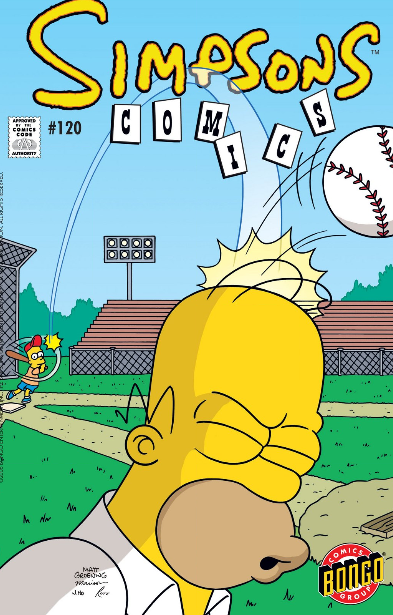
Bizarre Baseball Culture: Simpsons Comics #120

In Bizarre Baseball Culture, I take a look at some of the more unusual places where baseball has reared it’s head in pop culture and fiction.

As I write this, America is in the grasp of the Every Simpsons Ever Marathon on FXX. To be more exact, we’re currently on Day 10 of 12. Maybe Day 11 of 12. Depends on when this goes up (probably Day 11). But, don’t let FXX lie to you: They don’t have every Simpsons ever. No, they are lacking the original Tracey Ullman Show shorts, the Butterfingers commercials, at least one other short, at least two music videos, and, of course, countless comics.

The Simpsons has long been a staple of Bongo Comics, the publishing group co-founded by Matt Groening to produce comics based on his TV shows, and this time on Bizarre Baseball Culture, I look at Bongo Comics’ Simpsons Comics #120, which tells the tale of Homer, Bart, and a record-setting baseball.

So, it’s time to get up and…. D’OH!

Screen Shot 2014-08-30 at 1.43.32 PMGO BELOW THE JUMP FOR MORE:

Continue reading

Bizarre Baseball Culture: A Cal Ripken Bio-Comic

In Bizarre Baseball Culture, I take a look at some of the more unusual places where baseball has reared it’s head in pop culture and fiction.

There is a special type of baseball culture that I haven’t really covered yet… the baseball biography comic. Whether authorized or unauthorized, the baseball bio-comic is it’s own small subgenre of weird.

Take Baseball Superstars Comics‘ bio-comic on Cal Ripken, Jr. from 1992. A black-and-white comic from the now long-defunct “Revolutionary Comics” and seventh in a series of baseball bio-comics, it’s like a fever-dream of a look into the life and times of the Orioles great up through the 1991 season. The art is disturbing, the writing wooden, and the facts sometimes feel wrong.

That said, it’s not all bad. It’s got a so-bad-it’s-good quality at times, and any comic that features two pages devoted to the longest game ever is going to get my attention.

So, on his 54th birthday, here’s a look at the Baseball Superstars comic on Cal Ripken Jr…. after the jump:

Continue reading

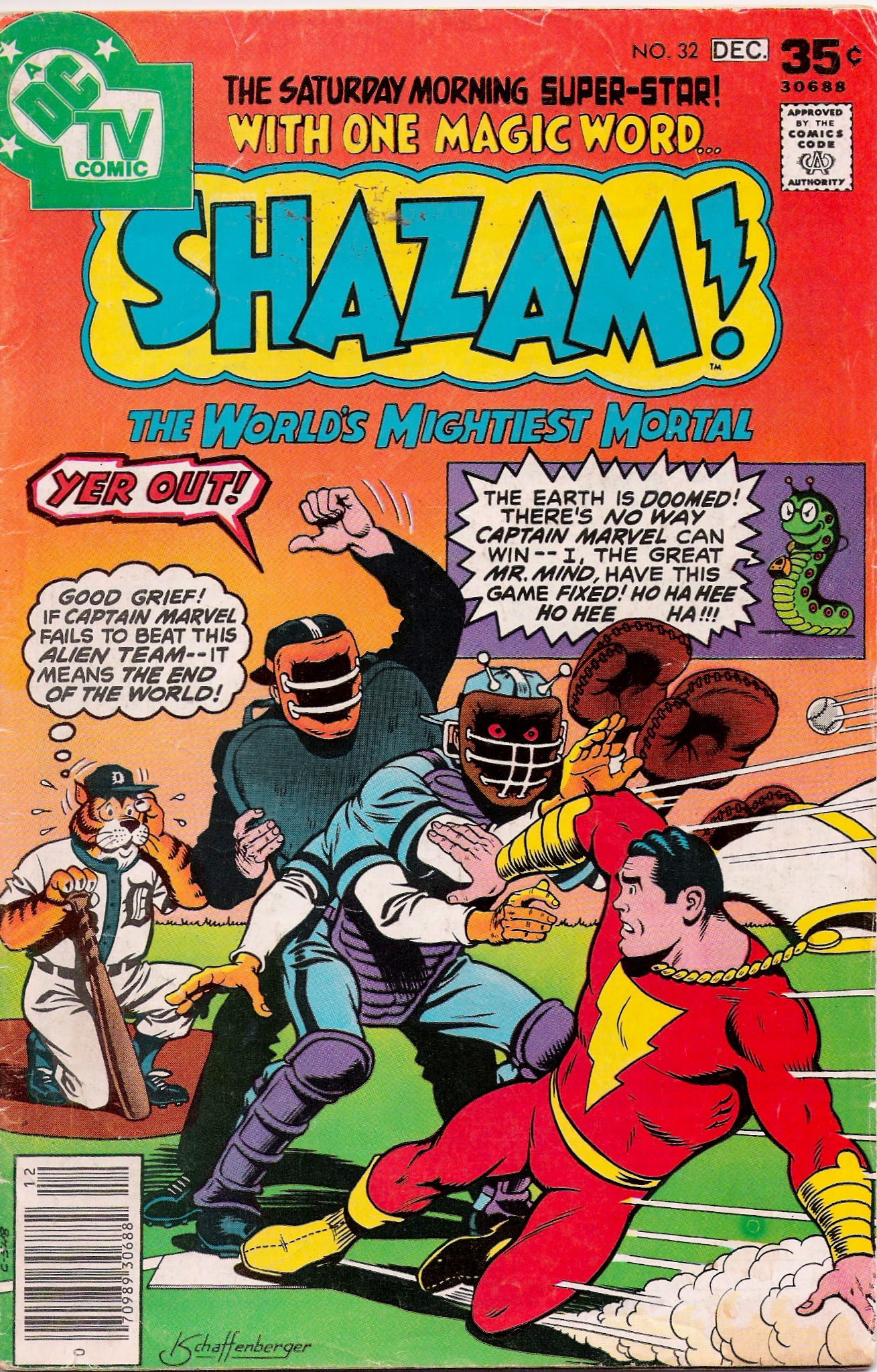
Bizarre Baseball Culture: The Detroit Tigers, A Talking Tiger, and the Power of SHAZAM!

In Bizarre Baseball Culture, I take a look at some of the more unusual places where baseball has reared it’s head in pop culture and fiction.

Nothing is going to beat Mr. Go. It just can’t be done. But, I’ll give it my best shot by bringing to you a comic from 1977 in which DC’s Captain Marvel and his talking anthropomorphic tiger mascot Tawky Tawny join the Detroit Tigers to defeat a team of alien All-Stars.

It’ll have to do.

SHAZAM1977COVERSCAN

So, here’s Shazam! number 32, from late 1977. I covered most of Captain Marvel’s complicated history (and why most people think he’s called Shazam) way back in May 2012, so if you want to know that, go there. However, an update is in order: DC has more or less given up calling him “Captain Marvel” and now is referring to him as “Shazam”. This is partly because everyone who doesn’t read comic books calls him that anyway, and also partly because Marvel has recently given the title of “Captain Marvel” to a character named Carol Danvers (who appeared as “Ms. Marvel” back in one of the AAA baseball comics) to great success, to the point where it’s thought they might make a movie starring her, likely with the name “Captain Marvel”.

Personally, the Shazam Captain Marvel will always be the real Captain Marvel to me, but, hey, you can’t beat copyright/trademark law, I guess.

(Incidentally, the Hero-Formerly-Known-As-Captain-Marvel-And-Now-Officially-Known-As-Shazam will reportedly be played by The Rock in a future movie.)

(Also, all characters, images and panels from the comic are trademarked and copyrighted to their owners and rights holders, all pictures here are are being used under fair use doctrine and are meant merely to support and enhance the opinions and facts stated in this post.)

But enough Captain Marvel background, go below the jump for an analysis/review of this comic!

Continue reading

Off-Topic Thursday: Starting next Thursday, Off-Topic Thursday returns with a new feature… Bizarre (Not-Baseball) Culture!

It’s been since last July that I had an Off-Topic Thursday, where I write about things that aren’t baseball. I’ve felt bad about that, so, starting next week, I’m proud to announce that Off-Topic Thursday (and it’s off-season cousin, Off-Topic Tuesday) will return, carrying with them a brand new feature here at the Continuum:


BIZARRE NOT-BASEBALL CULTURE.

Yes, all the fun of Bizarre Baseball Culture, only with… less baseball. What does “Bizarre” mean? Well, whatever I want it to mean, but in general it’ll mean something other than the usual mainstream. One week it could be a comic book, the next week an episode of a TV series, or it could be several weeks full of Godzilla movies. In other words, every Thursday that I’m able to, you’ll see something… uhh… different.

And don’t expect the usual Bizarre Baseball Culture to disappear, oh, it very much will continue to appear on it’s irregular schedule that can best be described as “when the time is right”.

But, until then, I hope you come back next week for the first installment of Bizarre Not-Baseball Culture

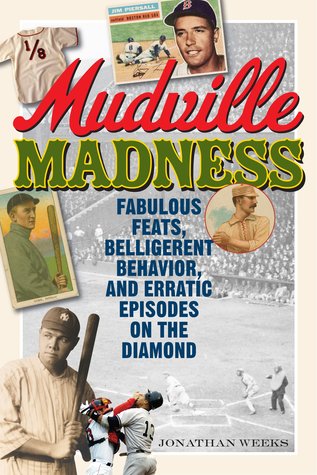
“Mudville Madness” by Jonathan Weeks (with some fact-checking by me) is now out

Some of you may remember when I reviewed Celler Dwellers by Jonathan Weeks.  Well, Jonathan Weeks saw it, and actually wrote me asking if I wanted to help proof-read his next book.

Well, that book is now out:

Mudville Madness is about the weird things that have happened in baseball, going in chronological order as Weeks goes through brawls, strange plays, and countless other unusual incidents in baseball history. While I cannot give my honest opinion on it, given the fact I helped fact-check it, I can say that it is available now in bookstores and online at places like Amazon.


Bizarre Baseball Culture: Green Arrow and Elongated Man in a tale with Baseball

In Bizarre Baseball Culture, I take a look at some of the more unusual places where baseball has reared it’s head in pop culture and fiction.

Earlier this week, the season finale of the second year of Arrow aired. And, to belatedly honor that, here’s a look at the time that Green Arrow and the Elongated Man fought a guy dressed as a calculator during the World Series.

Yes, really.

JUMP for the rest:

Continue reading

Bizarre Baseball Culture: Spider-Man, Uncle Ben, and the Mets

In Bizarre Baseball Culture, I take a look at some of the more unusual places where baseball has reared it’s head in pop culture and fiction.

(Note: This article may have spoilers to Amazing Spider-Man 2, since I reference a major storyline that I’m going to guess shows up in the movie. It’s in the second-to-final paragraph before the jump, if you want to know what to skip to avoid the spoiler.)

As the sequel to the reboot of Spider-Man comes out, entitled The Amazing Spider-Man 2, now is as good as any to do a Bizarre Baseball Culture on a comic entirely about Spider-Man and his baseball fandom. Now, ole’ Web-Head is no stranger to Bizarre Baseball Culture, having shown up in the past on at least three occasions (most recently fighting Doctor Doom alongside Billy the Marlin), but those were promotional comics that happened to feature Spider-Man. This time, we are looking at an honest-to-goodness Spider-Man comic: Peter Parker Spider-Man (Volume 2) #33. This issue from 2001 is about Peter Parker’s relation with his late Uncle Ben, and how baseball was a bond between them.

Now, before we begin, I’d like to write a bit about Spider-Man in general. What made the Marvel characters different when they first started appearing in the 1960s was that they were, in general, more relatable and flawed than the DC counterparts and the Marvel superheroes that had been created in the 30s and 40s. The Fantastic Four was often bickering with each other (like an family does), the X-Men were shunned by most of society (Stan Lee has said that being a mutant is basically meant to be a stand-in for being a minority), the Hulk was shunned by basically all of society… and Spider-Man, for lack of a better term, was a loser.

Okay, maybe not a loser, but definitely the closest thing there had been up to that point: an unpopular kid with no parents, only one family member of any sort (Aunt May) and little money. To make matters worse, when supervillains weren’t coming after him, the press and/or the police were. If things could go wrong for Peter Parker, they probably have. Parents? Dead. Uncle? Dead. Aunt? Perpetually sick. First true love (Gwen Stacy)? Murdered (and, amazingly, never came back to life). Second true love (Mary Jane)? Marriage magically annulled in a story far too stupid to talk about. Heck, while I haven’t read it, apparently most recently poor Peter Parker saw his body body-snatched by Doctor Ocopus while he was forced to die in “Doc Ock’s” cancer-ridden body (don’t worry, he got better). But all of this pales in comparison to the greatest, most horrible fate to ever fall upon Spider-Man:

Being a fan of the New York Mets.

(JUMP)

Continue reading