30 Teams, 30 Posts (2015): The Philadelphia Phillies are a pit of doom and despair

In 30 Teams, 30 Posts, I write a post about every MLB team in some way in the lead-up to the beginning of the 2015 season. This is the first post of the series.

Let’s start this off with the most depressing of all Major League Baseball teams: The Philadelphia Phillies. After all, there is nothing more depressing than seeing something that was once great, only to have fallen into horrible disrepair and general despair.

And, man, that totally fits the Phillies. It was less than seven years ago that the Phillies won the World Series, less than six years since they lost to the Yankees in the World Series, and less than four years since the grand rotation of Roy Halladay, Cliff Lee, Cole Hamels, Roy Oswalt and Joe Blanton were knocked out in the first round of the playoffs by the Cardinals, with Ryan Howard injuring himself on the final play of the series.

It’s been all downhill from there. And now, they are, without question, the most hopeless of all teams in Major League Baseball. Some teams like the Twins may well end up being worse than the Phillies in the standings, but they have better prospects for the future and better people at the helm. The Phillies, meanwhile, have… Ruben Amaro Jr.

Ruben Amaro has become something of a bogey-man in baseball internet circles. It is a scary place to be in, where Dusty Baker stalks young pitchers by night attempting to ruin their arms and Joe West purposely gets calls wrong just to piss us all off.

The internet’s characterization of Amaro can perhaps best be described as seeing him as Nero, fiddling while Rome burns. And, to a certain extent, there is some truth to that. The results of the Phillies have to a certain extent gotten worse with every passing season since he took over after the 2008 season, and the playoff appearances early in Amaro’s tenure can more be drawn up to the after-effects of Pat Gillick‘s work. He was the one who gave Ryan Howard a 5-year extension that was recently named the 7th-worst in baseball, and they remain one of the few- perhaps the only– team to not hold statistical analysis in a high regard (perhaps that is why he is known to overvalue the players he does have). Last year, I attended a Moneyball screening with a post-show discussion on statistics by FanGraphs editor/writer Dave Cameron. He said that the Phillies have one statistical analyst, and that Major League Baseball more-or-less may have forced them to take it.

I think he was only half-joking.

And so, as a result of all of this, the Phillies enter this spring training as one of the few teams that can truly be said to not have any chance. Jimmy Rollins is now gone to Los Angeles, and Amaro is still probably trying (perhaps in vain, given how much he wants for them) to get rid of Hamels and Howard. Oh, and did I mention that Amaro has literally said that the team would be better off without Howard? Because he totally did.

No wonder some are saying this might be one of the most awkward spring trainings in the team’s history.

Now, to be fair, it isn’t all bad for Philadelphia. They do still have some prospects left, including young SS J.P. Crawford, who is MLB.com’s 21st best prospect, #37 prospect Aaron Nola, a RHP who made it as high as AA last season, and #55 prospect Maikel Franco, a power-hitting corner-infielder who made his debut in the bigs as a September call-up.

They won’t nearly be enough to turn around the Phillies anytime soon however (Keith Law recently named the Phillies the 25th best farm system in baseball), and so, the team that only a few years ago was a perpetual contender for the World Series crown is currently in a holding pattern of horribleness, filled with has-beens, never-will-bes, and players who may just be a year or two away from falling into one of those categories. It somewhat reminds me of the Orioles of the mid-to-late 1990s, who went from two straight ALCS in 1996 and 1997 to a team not unlike the Phillies of today.

The Orioles didn’t return to the playoffs until 2012. It’s not that out of the realm of possibility that the Phillies could be facing a similar wait.
In Defense of the Little League World Series being on TV

I didn’t expect to write a post about the Little League World Series today, but, alas, current events have other plans. As you may have heard, the Jackie Robinson West Little League of Chicago has been stripped of it’s US Title for last year’s World Series, due to revelations that they used players from outside their district.

It’s a sad ending for what was an inspiring story- the first team in history to win the US title made up entirely of African-Americans, coming at a time when participation in the sport by African-Americans continues to drop and racial issues were increasingly in the news. It’s all the more sad because this was the result not of any child, but rather the adults.

And, with that, the many issues people have with youth sports again have arisen. Among them being that the LLWS being on television is, according to some people, an abomination that promotes behavior like this while exploiting 12-year-olds for profit.

In many ways, they do have a point. It is wrong that ESPN, it’s sponsors, and the overall organization of Little League make large amounts of money off 12-year-olds while those 12-year-olds receive no cut or royalty from it. And, yes, having that much pressure and attention placed on a kid is a recipe for possible disaster psychologically when you are so young. The Little League World Series is far from perfect, and at the very least something should be done to compensate the kids who draw in large audiences every year (perhaps have some sort of college trust fund or hold money in escrow or something).

However, I am here to argue that those people who believe that the Little League World Series doesn’t belong on television regardless are wrong. Go below the jump for more:

Continue reading

BIZARRE BASEBALL CULTURE/CONTINUUCAST 4: “THE DAY BASEBALL DIED”

In Bizarre Baseball Culture, I take a look at some of the more unusual places where baseball has reared it’s head in pop culture and fiction.

This installment of Bizarre Baseball Culture can only be found through the Baseball Continuum’s Continuucast! Hit play above, download by right-clicking here, follow the RSS feed here or follow on iTunes here (if the latest episode isn’t up yet, it will be shortly).

The Continuucast has it’s first true “Bizarre Baseball Culture” segment as Dan looks at the 1946 Columbia Workshop radio-play, “The Day Baseball Died.” In addition, he takes a quick look “Around the Continuum” of international baseball and has a brief complaint about the fact MLB Network doesn’t show the Caribbean World Series.

Music/Sounds Featured:

“The National Game” by John Phillip Sousa

“Flight of the Bumblebee” (AKA The Green Hornet Theme) by Nikolai Rimsky-Korsakov performed by the US Army Band (special “Bizarre Baseball Culture” remix by Dan Glickman featuring the Pablo Sanchez Theme and clips from previous and future Bizarre Baseball Culture pieces)

“Prelude to Act I” from Carmen by Georges Bizet (AKA the Bad News Bears theme)

Excerpt of “Pennant Fever” from the Major League soundtrack

All sound and music used is either public domain or is a short snippet that falls under fair use.


Go below the jump for links to previous Bizarre Baseball Cultures.

Continue reading

For Super Bowl Weekend: “Famous For Something Else” Football Players

Here are the previous “Famous For Something Else” installments about players who dabbled in baseball but who are more famous for playing (or coaching) football:

Urban Meyer

Herman Wedemeyer (also an actor)

Ernie Nevers

Russell Wilson

Vic Janowicz

Jim Thorpe (also, perhaps most famously, an Olympian)

George Halas

Josh Booty

John Lynch

John Elway

Ricky Williams


There are, of course, still others who have played both baseball and football, and they will be covered in future “Famous For Something Else” installments!


BIZARRE BASEBALL CULTURE: Strange Sports Stories #1… “TO BEAT THE DEVIL!”

In Bizarre Baseball Culture, I take a look at some of the more unusual places where baseball has reared it’s head in pop culture and fiction.

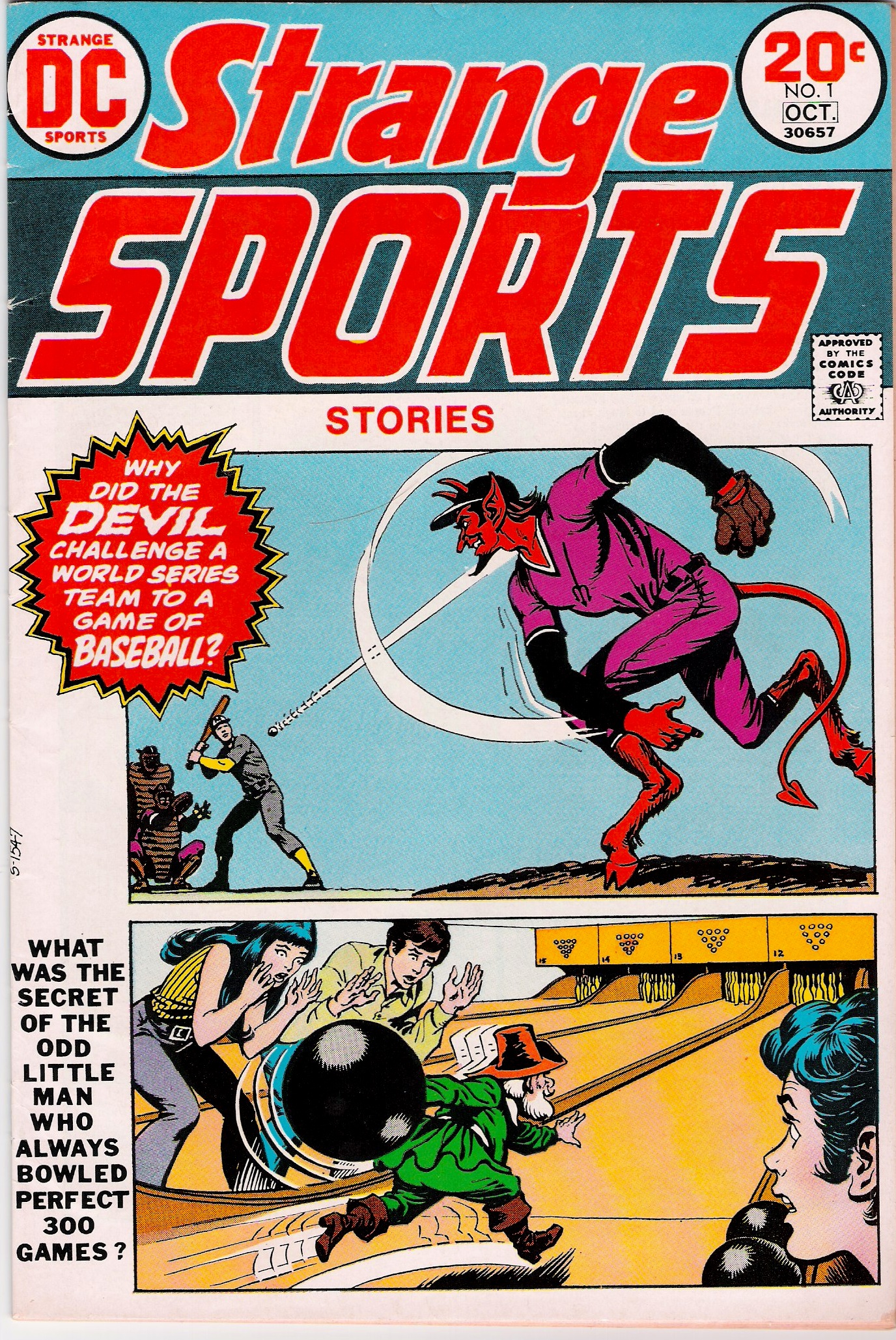
Last time, I introduced you to “Strange Sports Stories”, the on-and-off anthology of DC Comics’ Science-Fiction and/or Fantasy tales involving sports. That past installment was from the 1960s Brave and The Bold run of SSS, but this time, we’re looking at the Strange Sports Stories stand-alone series, from 1973. It only lasted six issues, but it’s first issue prominently featured baseball (amazingly, it wasn’t in any of the other five issues, and as far as I can tell no sport was featured more than once) in a tale called “To Beat The Devil!”

DevilBallcover

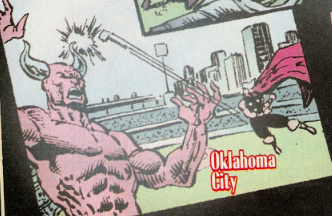
Written by Frank Robbins (who was primarily an artist, most notable for having helped create the character of the Man-Bat for DC Comics), penciled by Curt Swan (who is best known for his work on Superman comics) and inked by Dick Giordano (best known for his partnership with artist Neal Adams on Batman and the socially-conscious Green Lantern/Green Arrow book), this tale, as the cover (done by Nick Cardy, who according to Wikipedia is best known for his work with Aquaman and the Teen Titans) indicates, is about a face-off between a baseball team and the devil himself. The Devil, of course, is no stranger to baseball, primarily known for his involvement in baseball-themed musicals, but this is the first appearance by Satan in Bizarre Baseball Culture. Well, unless you count this weird guy from the second AAA Baseball/Marvel comic. I don’t.

Anyway, go below the jump for more:

Continue reading

Baseball Continuum Continuucast 3: Scherzer, Around the Continuum, and What’s Ahead

Click above for the latest Baseball Continuum Continuucast, or press here to download it.

In this edition of the Continuucast…

Dan does a much better job this time around as he talks about Max Scherzer’s signing, going-ons in Global Baseball (including the Premiere 12 tournament being announced), and also talks about Ichiro Suzuki. Finally, he announces he’ll finally get these on iTunes. Yeah!

Music/Sounds Featured:


“The National Game” by John Phillip Sousa


“Ichiro’s Theme” by Ben Gibbard


“Ichiro Goes To The Moon” by The Baseball Project


“Flight of the Bumblebee” (AKA The Green Hornet Theme) by Nikolai Rimsky-Korsakov performed by the US Army Band (special “Bizarre Baseball Culture” remix by Dan Glickman featuring the Pablo Sanchez Theme and clips from previous and future Bizarre Baseball Culture pieces)


All sound and music used is either public domain or is a short snippet that falls under fair use.


And, keep an eye on iTunes, as sometime within the next week the Continuucast will be on iTunes!


Thanks!

FAMOUS FOR SOMETHING ELSE: Kevin Johnson, NBA Star and Sacramento Mayor

Kevin Johnson is the current mayor of Sacramento, and was also a three-time All-Star for the Phoenix Suns. But he also briefly had a baseball career of two games in 1986 in the Athletics organization:

Year Age AgeDif Tm Lg Lev Aff G PA AB R H 2B 3B HR RBI SB CS BB SO BA OBP SLG OPS TB HBP SH SF IBB
1986 20 -2.5 Modesto CALL A OAK 2 2 2 1 0 0 0 0 0 0 0 0 2 .000 .000 .000 .000 0 0 0 0 0
1 Season 2 2 2 1 0 0 0 0 0 0 0 0 2 .000 .000 .000 .000 0 0 0 0 0
Provided by Baseball-Reference.com: View Original Table
Generated 1/17/2015.

And now you know!

Continuucast 2: Electric Boogaloo (AKA: “That Could Have Gone Better”)


Dan Glickman’s second foray into podcasting turns into a disaster during the second segment as he tries to tie together pitch clocks, Rob Manfred’s “One Baseball” idea and the Anti-Trust Exemption into something coherent but finds that what sounds good in his head is kind of a bit of rambling when he speaks it. He totally is going to have to write down stuff more in the future, and also expand upon what he was TRYING to say in a blog post.

Also, he said he’d discuss the 2016 All-Star Game being rewarded to San Diego, and ended up not. What a doofus.

Oh well, better luck next time, Dan!

The download link can be found here. The Continuucast will arrive on iTunes and similar services in the near future.

Music/Sounds Featured:

“The National Game” by John Phillip Sousa

“The Sorcerer’s Apprentice” by Paul Dukas, as performed by the Minneapolis Symphony Orchestra in 1941

“The Entertainer” by Scott Joplin

“Entry of the Gladiators” (AKA The Circus Clown music) by Julius Fucik

All sound and music used is either public domain or falls under fair use.

Baseball Continuum Continuucast 1: Intro, News and Thoughts, Bizarre Baseball Culture, and a short tribute to Justin Huber

The first Baseball Continuum Continuucast, presented by Dan Glickman. In this episode, you finally hear the voice behind the Baseball Continuum blog as he boldly tries to make a podcast despite having a voice that was made for the written word. Hear his thoughts on the Cubs and the Hall of Fame, get updated on what’s going on outside of North America and MLB as he takes a look “Around the Continuum”, learn about the “Bizarre Baseball Culture” that Dan has never been able to do, and hear a short tribute to Justin Huber.

The podcast can be heard using the player above, or can be downloaded from here. You may need to click “Save Link As…” I am currently working on getting it up on iTunes and similar services.

Music/Sounds Featured:

“The National Game” by John Phillip Sousa

“Chicago” by the Paul Elkins Orchestra

“Flight of the Bumblebee” (AKA The Green Hornet Theme) by Nikolai Rimsky-Korsakov performed by the US Army Band (special “Bizarre Baseball Culture” remix by Dan Glickman featuring the Pablo Sanchez Theme and clips from previous and future Bizarre Baseball Culture pieces)

“News Intro” by Maximilien

“Waltzing Matilda”, written by Banjo Paterson, tune by CambridgeBayWeather on Wikipedia

“Advance Australia Fair” instrumental written by Peter Dodds McCormick and performed by the US Navy Band

All sound and music used is either public domain or falls under fair use.

Famous For Something Else: NBA Ref David Guthrie

David Guthrie is a referee in the National Basketball Association. But before he was a ref on the hardwood, he played hardball in the Reds organization. Drafted in the 26th round of the 1995 draft out of NC State, Guthrie played infield positions from 1995 to 1998. Although he never hit well, he did reach AA by the end of his career:

Year Age AgeDif Tm Lg Lev Aff G PA AB R H 2B 3B HR RBI SB CS BB SO BA OBP SLG OPS TB GDP HBP SH SF IBB
1995 21 1.1 Princeton APPY Rk CIN 55 207 181 28 37 11 0 0 13 7 1 18 41 .204 .286 .265 .551 48 4 3 4 1 1
1996 22 1.4 Billings PION Rk CIN 48 219 181 45 41 6 3 4 28 10 1 26 48 .227 .343 .359 .702 65 4 7 3 2 0
1997 23 1.5 Charleston WV SALL A CIN 73 264 233 27 50 7 2 3 26 6 2 20 75 .215 .295 .300 .595 70 5 7 3 1 0
1998 24 -0.1 Chattanooga SOUL AA CIN 67 225 203 23 39 5 4 0 9 1 1 16 58 .192 .261 .256 .517 52 3 3 3 0 0
4 Seasons 243 915 798 123 167 29 9 7 76 24 5 80 222 .209 .296 .294 .590 235 16 20 13 4 1
Rk (2 seasons) Rk 103 426 362 73 78 17 3 4 41 17 2 44 89 .215 .315 .312 .627 113 8 10 7 3 1
A (1 season) A 73 264 233 27 50 7 2 3 26 6 2 20 75 .215 .295 .300 .595 70 5 7 3 1 0
AA (1 season) AA 67 225 203 23 39 5 4 0 9 1 1 16 58 .192 .261 .256 .517 52 3 3 3 0 0
Provided by Baseball-Reference.com: View Original Table
Generated 1/9/2015.

By the way, the players who Guthrie was drafted before in the 1995 draft and signed a contract include Pedro Feliciano, Justin Speier, and Gabe Kapler.